Table of Contents
- Junk Removal Donation vs Landfill: The Real Difference
- What Items Can Be Donated Instead of Tossed
- The Junk Removal Donation Process, Step by Step
- Junk Removal Recycling: Where Materials Actually Go
- Donation Pickup vs. Junk Removal: Which Fits Your Situation
- Items That Cannot Be Donated or Recycled
- Frequently Asked Questions
Last Updated: October 9, 2026
Junk Removal Donation vs Landfill: The Real Difference
Every year, Americans throw away mountains of usable furniture, working appliances, and household goods. When you book a junk removal donation service, you decide whether those items get a second life or get buried in a landfill. That single choice has real environmental consequences, and it is the difference between a cleanout that helps your community and one that just makes your clutter disappear.
At Hoosier Junk Daddy, we have handled residential and commercial cleanouts for nearly five years, and we have seen how much of what people call “junk” never belonged in a landfill at all. Our crews divert up to 60% of hauled items through recycling, reuse, or donation before anything goes to the dump.
Here is what most people get wrong: they assume junk removal means everything goes straight to the landfill. That is not how responsible hauling works. The real difference between junk removal donation and landfill disposal comes down to sorting, condition, and where the items end up.
Below, we break down exactly what can be donated, how the donation process works, and when a landfill is genuinely the only option.
What Items Can Be Donated Instead of Tossed
The short answer: anything in usable condition that a charity will accept. Donation centers want items they can resell or give directly to people who need them, so condition matters more than category.
Here is what typically qualifies for donation:
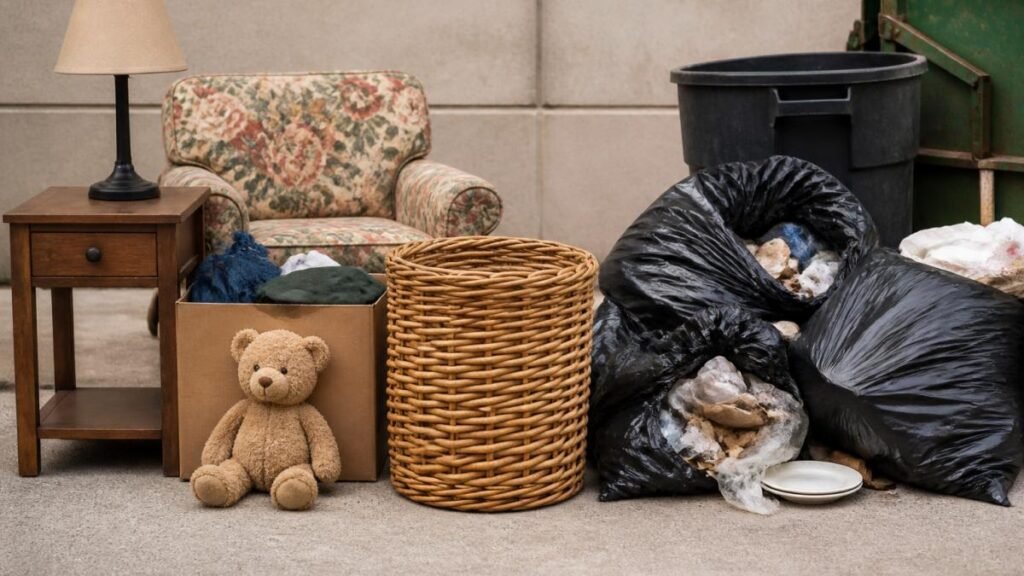
- Bulky furniture in good condition, including sofas, dressers, tables, and bookshelves
- Household items like dishes, pots, pans, lamps, and small appliances that still work
- Kids’ toys, games, bicycles, and baby gear that meet current safety standards
- Clothing, shoes, and linens that are clean and free of major damage
- Books, electronics, and working small appliances
The key phrase is “usable condition.” A stained mattress or a shattered coffee table is not a donation candidate. A solid oak dresser with a few scratches usually is.
Sort before you haul. We tell customers to make three piles: donate, recycle, and trash. Separating items at the curb saves time on pickup day and keeps genuinely reusable goods out of the landfill stream.
The Junk Removal Donation Process, Step by Step
A donation-first hauling process follows a predictable sequence, and knowing it helps you prepare. Here is how a professional junk removal donation job typically runs from start to finish.
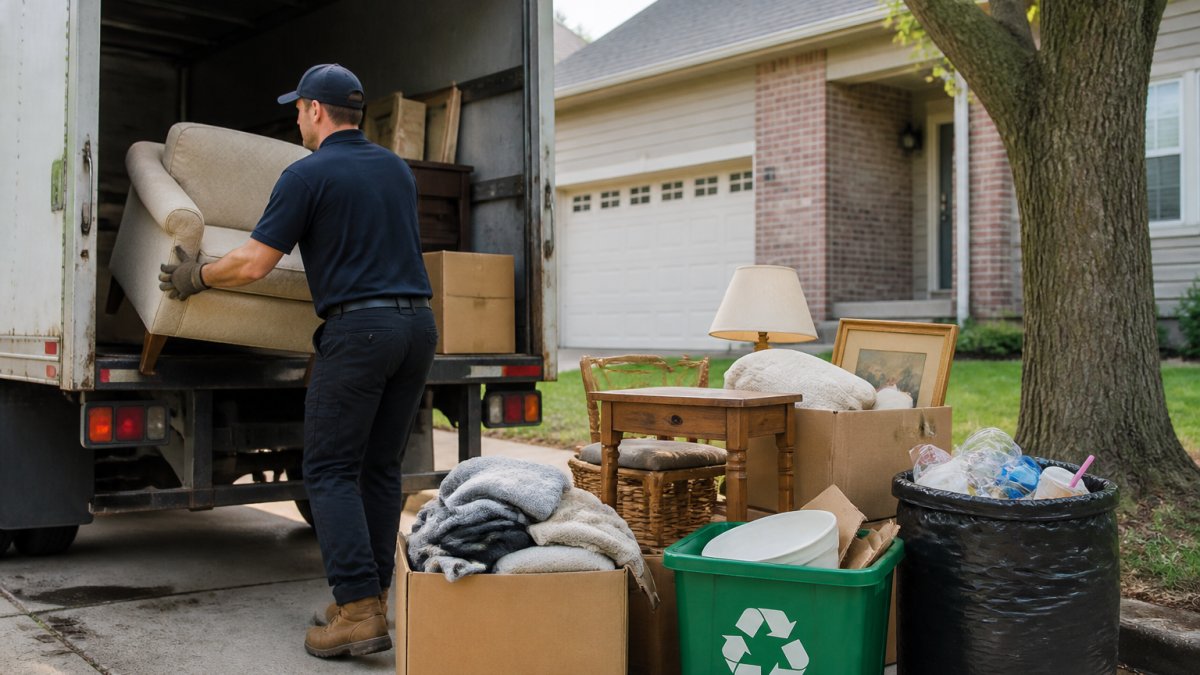
- On-site assessment. The crew walks your space, identifies what can be donated, recycled, or landfilled, and gives you a free estimate before any work starts.
- Sorting and separation. Items get divided into donation, recycling, and landfill categories on the spot.
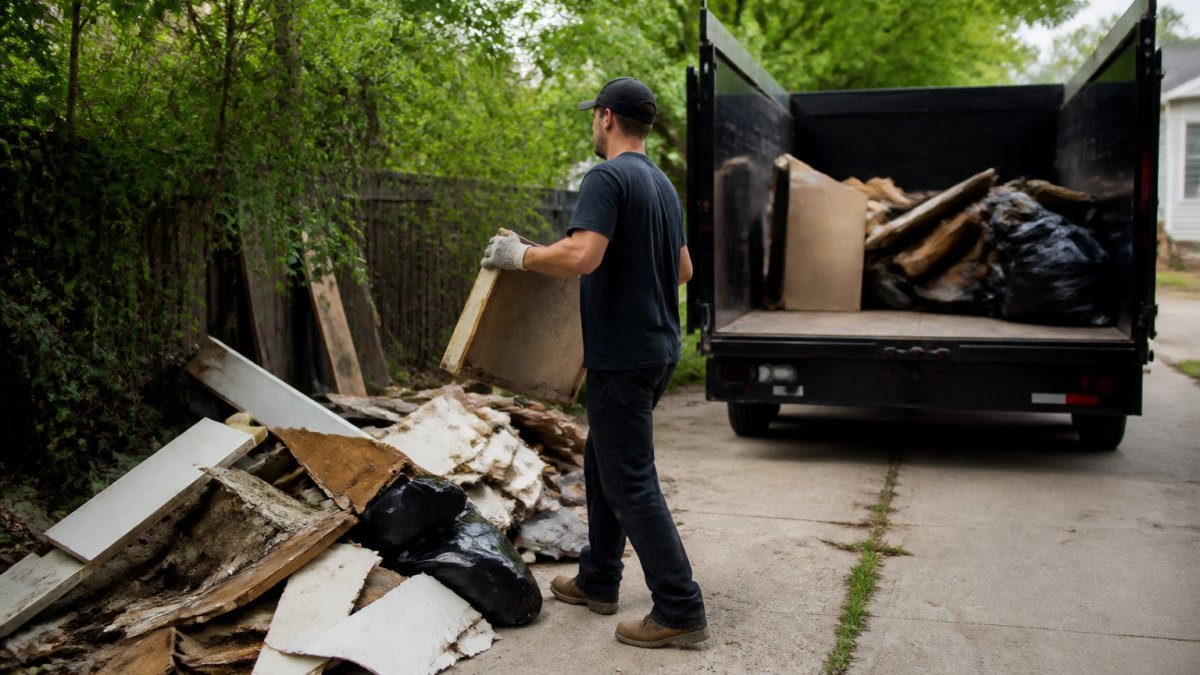
- Removal and hauling. The team loads everything, does the heavy lifting, and cleans up afterward.
- Donation drop-off. Usable items go to local charitable organizations and donation centers.
- Recycling and final disposal. Recyclable materials head to recycling facilities; only true waste goes to the landfill.
That fourth step is where the environmental payoff happens. When you choose a hauler that actually sorts, reusable items reach charities instead of a dump.
Junk Removal Recycling: Where Materials Actually Go
Recycling is the middle path between donation and landfill, and it handles the items charities cannot take. Metal, cardboard, electronics, and certain plastics can be processed into new raw materials rather than buried, but only if they reach the right facility, and only if they are clean enough to be accepted.
Where common materials actually end up:
- Scrap metal, appliances, file cabinets, bed frames, and lawn equipment go to a scrap yard, where they are sorted by alloy, shredded, and sold to mills as feedstock.
- Cardboard and paper, baled at a transfer station and sold to paper mills, provided it is dry and free of grease or food residue.
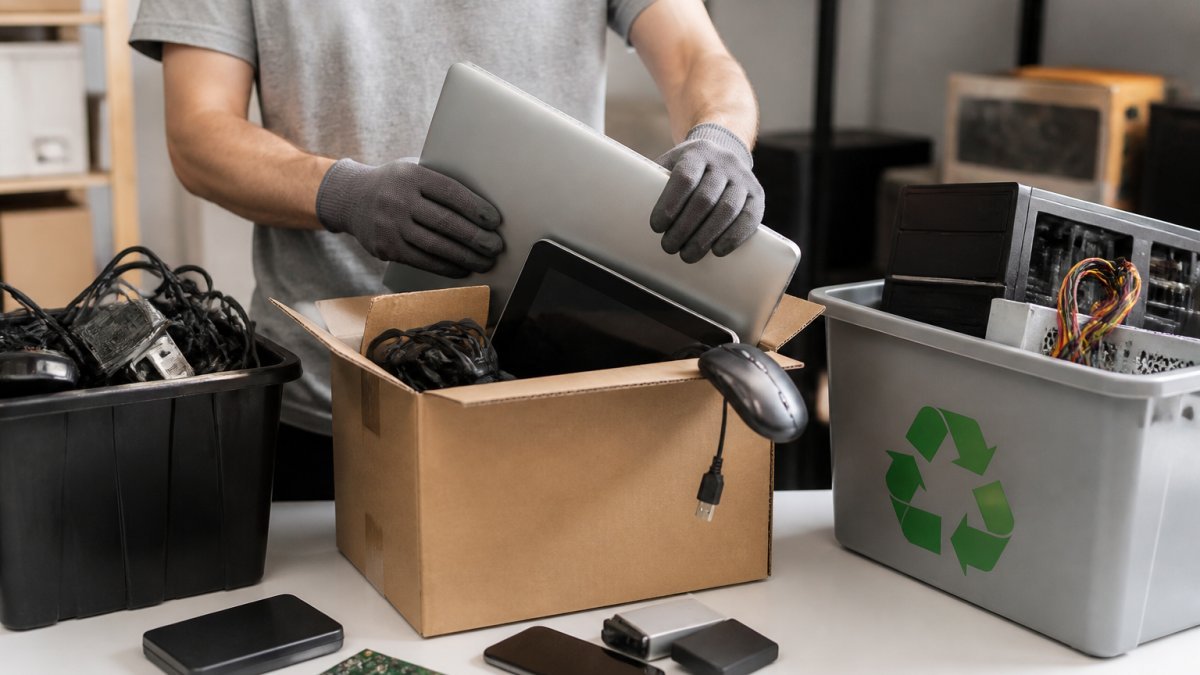
- E-waste, televisions, computers, and small electronics go to a certified electronics recycler that dismantles them, recovers metals and plastics, and handles hazardous components like batteries and circuit boards under controlled conditions.
- Concrete, brick, and asphalt, crushed and reused as aggregate base for roads and driveways.
- Yard waste, chipped or composted rather than landfilled, in communities that operate a composting program.
- Mattresses, where a recycling program exists, steel springs, foam, and fabric are separated and sold as raw material.
What “diversion rate” actually means. A diversion rate is the share of total hauled material that avoids the landfill through donation, recycling, or another recovery path. It is calculated by weight, not by volume, and it depends entirely on what the hauler counts as diverted. A company that counts every scrap of metal and cardboard can post a high number; a company that only counts donations will post a lower one. That is why a percentage without a methodology is close to meaningless.
How to verify a hauler’s claims:
- Ask what percentage of material is diverted and how it is measured, by weight or by volume, and across what time period.
- Ask which charities and which recycling facilities receive the material.
- Ask for a donation receipt or a facility ticket for your specific load.
- Ask what happens to items that cannot be donated or recycled, the honest answer is “landfill,” and a hauler who admits that is more trustworthy than one who claims zero waste.
A transparent hauler can name the charity that received your furniture and the facility that processed your recyclables. If a company cannot explain its sorting process or its diversion math, treat the environmental claims as marketing rather than fact.
For customers who want proof, ask for documentation of where items went before you book. That single question separates haulers who actually sort from haulers who simply say they do.
Donation Pickup vs. Junk Removal: Which Fits Your Situation
Choosing between donation pickup and junk removal comes down to volume, condition, and speed. Donation pickup is free and ideal for a few good-condition items. Junk removal costs money but handles everything, including the stuff charities will not take.
| Factor | Donation Pickup | Junk Removal Service |
|---|---|---|
| Cost | Usually free | Fee based on volume |
| Items accepted | Good condition only | Everything, sorted by type |
| Speed | Scheduled, can take weeks | Often same-day |
| Sorting included | No, you sort | Yes, crew sorts |
| Landfill items | Not accepted | Handled and disposed of |
| Best for | A few usable items | Full cleanouts, mixed junk |
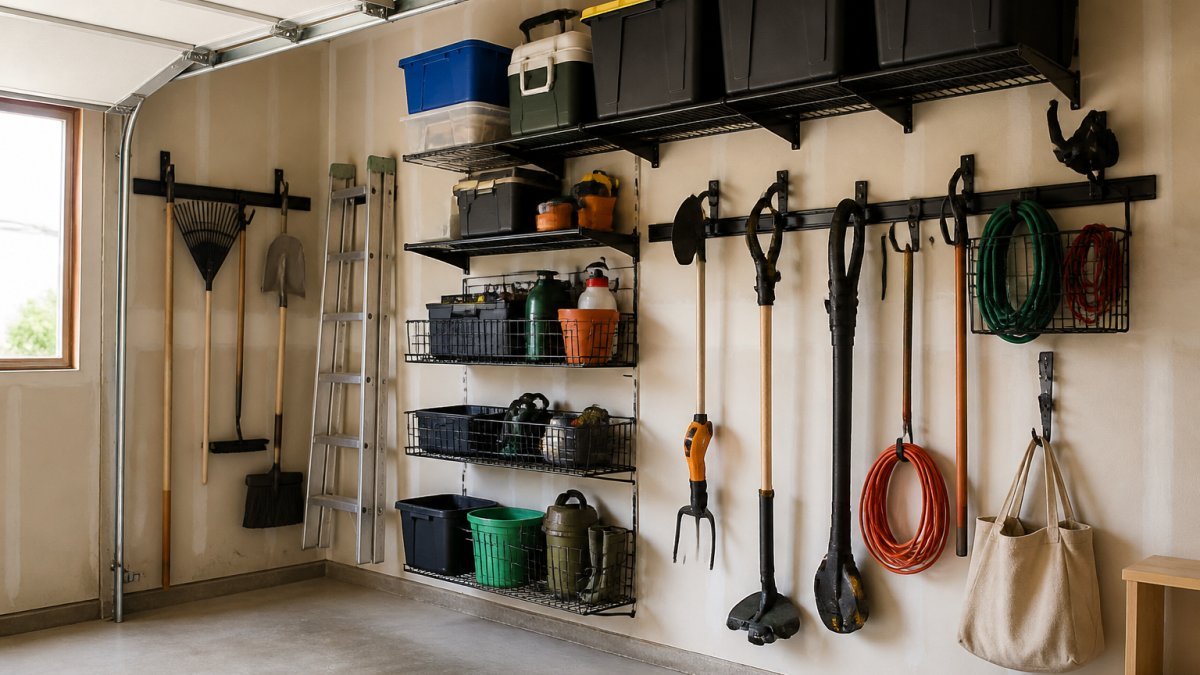
If you have a garage full of mixed items, donation pickup alone will not solve your problem. Charities will reject the broken, stained, and unusable items, leaving you to deal with them yourself. A full-service hauler takes everything and sorts it responsibly.
Homeowners, property managers, and real estate professionals who need a whole space cleared fast, with donation and recycling handled in one trip.
Items That Cannot Be Donated or Recycled
Some items have to go to the landfill or require special disposal, and no amount of sorting changes that. Knowing these upfront prevents surprises on pickup day and keeps you from accidentally breaking local rules.
Charities and recyclers typically reject items for one of three reasons: they pose a safety or contamination risk, they have no resale value, or they are regulated as special waste. That last category is where most homeowners get tripped up.
Items charities almost always reject:
- Mattresses and box springs with stains, tears, or signs of bed bugs
- Broken furniture that cannot be repaired or refinished
- Upholstered items with pet odors, mold, or smoke damage
- Cribs and car seats that do not meet current safety standards or have been recalled
- Used personal care items, underwear, and opened cosmetics
Items that require special disposal, not the regular trash:
- Hazardous household waste, paint, solvents, motor oil, pesticides, pool chemicals, and antifreeze. Most communities run periodic household hazardous waste collection days; check your county’s solid waste authority for dates.
- Electronics, televisions, monitors, and computers are banned from landfills in many states because of lead, mercury, and other heavy metals. Retailers like Best Buy accept many electronics for recycling, and manufacturer take-back programs cover others.
- Mattresses, several states ban mattresses from landfills and require recycling through a designated processor. Even where allowed, many landfills charge a separate bulky-item fee.
- Tires, most states prohibit whole tires in landfills and require a licensed tire recycler.
- Treated wood, pressure-treated lumber contains chemicals that contaminate recycling streams and are restricted at many transfer stations.
- Medical waste and sharps, never place in curbside trash; use a designated medical waste drop-off or mail-back program.
- Refrigerant appliances, refrigerators, freezers, and air conditioners must have refrigerant recovered by a certified technician before disposal.
Local rules vary widely. A mattress that is recyclable in one county may be landfill-only in the next. Before you haul anything yourself, call your county’s solid waste department or check its website for a current list of banned and restricted items.
A responsible hauler knows which items require special handling and routes them accordingly, refrigerant recovery, e-waste processors, hazardous waste days, instead of quietly dropping them in the regular waste stream. If you are doing the haul yourself, plan special-disposal items as a separate trip so they do not end up in the wrong pile.
Frequently Asked Questions
Do junk removal companies actually donate usable items or just dump everything?
It depends on the company. Reputable haulers sort items on site or at their facility, setting aside furniture, appliances, and household goods in good condition for donation partners. Ask any provider how they sort, which charities they work with, and whether they can share a diversion rate. Hoosier Junk Daddy, for example, diverts up to 60% of hauled items through recycling, reuse, or donation, and can explain where your items go.
Is donating furniture better than taking it to a landfill?
In most cases, yes. Furniture in usable condition can be reused by another household, which avoids the energy and materials needed to make new items and keeps bulky pieces out of landfills. Landfills take up space and can produce methane as organic materials break down. If a piece is structurally sound and clean, donation or resale is usually the better path. If it is broken or soiled, recycling or proper disposal is more realistic.
What should I do with items that charities will not accept?
Some items, like mattresses, paint cans, tires, and electronics, are commonly refused by donation centers. These often have separate disposal or recycling channels. Many communities run household hazardous waste events, and some retailers take back e-waste. A full-service junk removal company can sort these items and route them to the right facility, so you are not stuck making multiple trips or storing them indefinitely.
How do I choose a junk removal service that recycles or donates?
Ask three questions: What percentage of items do you divert from landfills? Which donation and recycling partners do you use? Can you provide documentation or a diversion report? A transparent company will answer without hesitation and explain its sorting process. Local operators often have closer relationships with area charities and recycling facilities, which can mean faster, more accountable handling of your items.