Table of Contents
- How Recycling vs Landfill Junk Removal Actually Works
- The ‘Wish-Cycling’ Problem: Why Good Intentions Fill Landfills
- Recycling vs Landfill Junk Removal: Cost and Environmental Trade-Offs
- Junk Removal Donation vs Recycling: Which Route Fits Your Items?
- How to Dispose of an Old Mattress Without a Landfill Trip
- Local Disposal Regulations and Hazardous Waste Rules to Know
- How to Choose a Junk Removal Service That Actually Recycles
- Frequently Asked Questions
Last Updated: September 18, 2026
How Recycling vs Landfill Junk Removal Actually Works
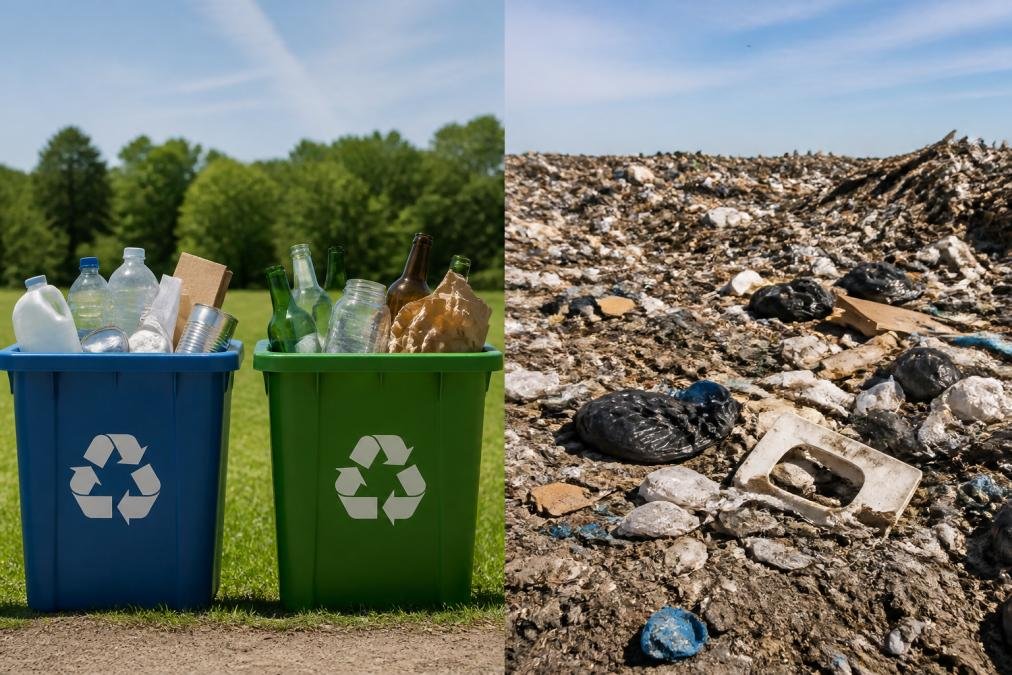
Recycling vs landfill junk removal comes down to one question: does your item get sorted for a second life, or buried in a hole? At Hoosier Junk Daddy, the honest answer is usually “both.”
The Path Your Junk Takes to a Landfill
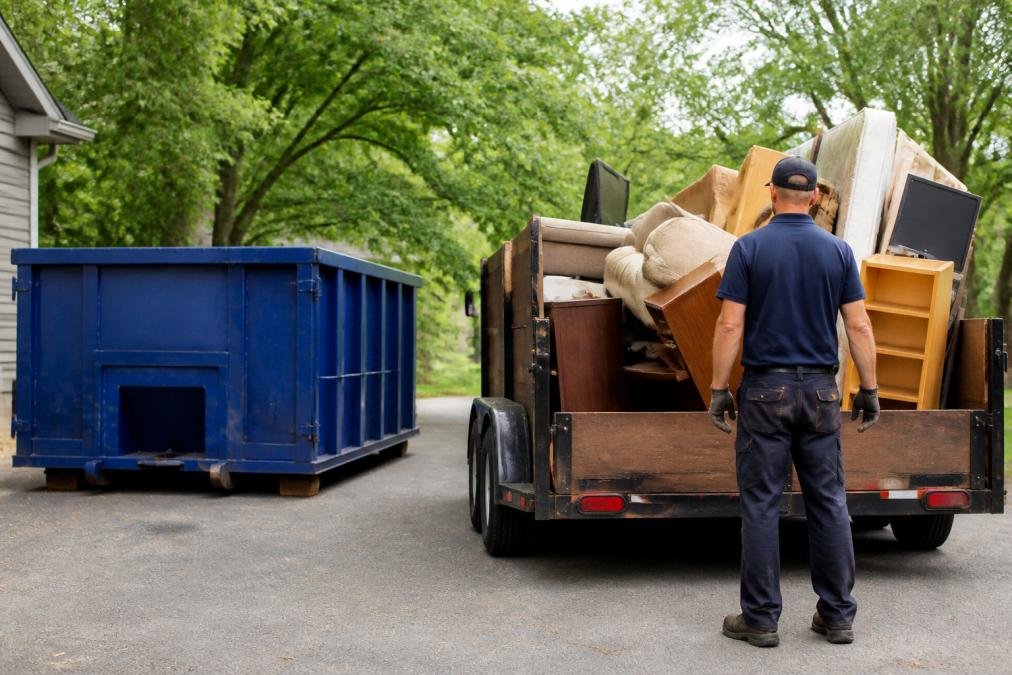
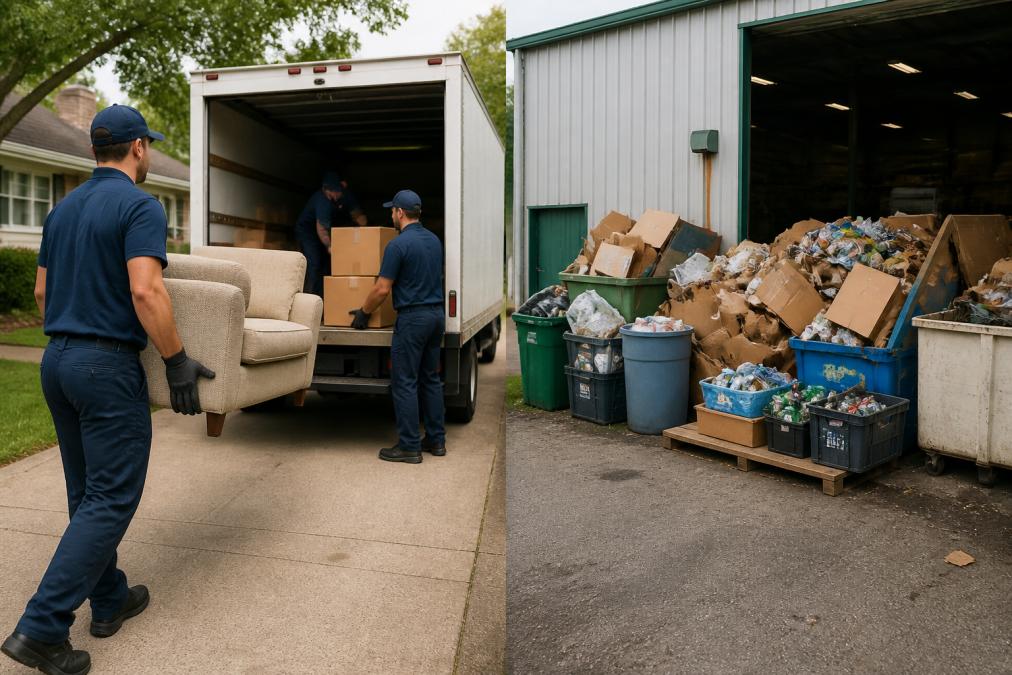
Landfill disposal is the default for anything a hauler can’t sort, sell, or donate. Items are trucked to a transfer station or landfill, weighed, dumped, then crushed and buried in soil.
What Happens at a Material Recovery Facility
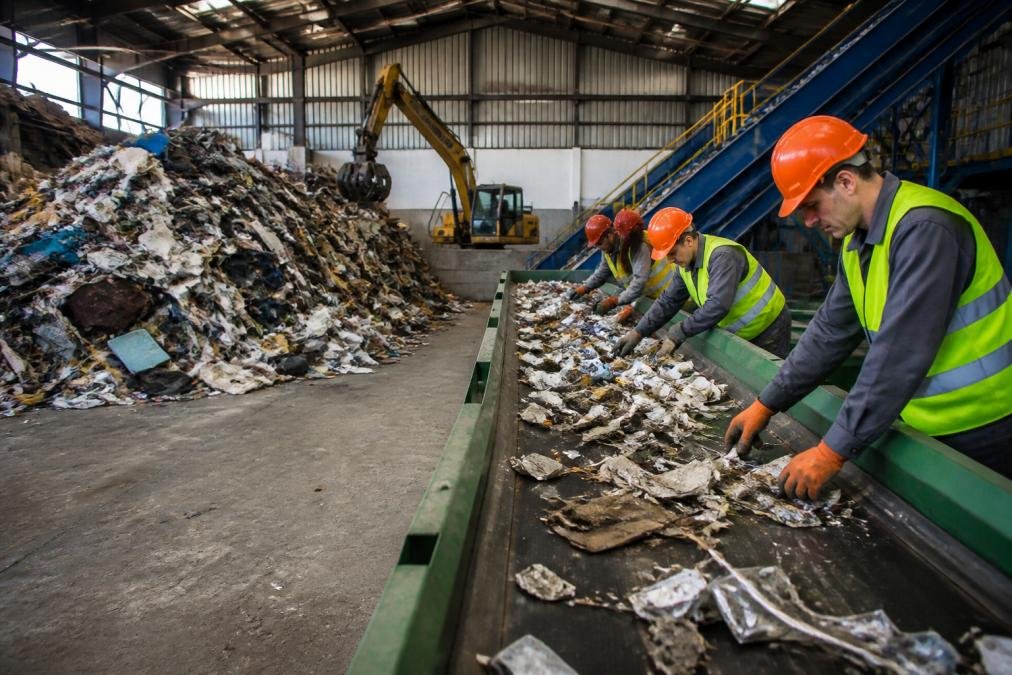
A material recovery facility, or MRF, sorts mixed loads into sellable streams. Conveyor belts, magnets, screens, and optical sorters separate cardboard, metals, plastics, and glass, while workers pull out what machines can’t.
The ‘Wish-Cycling’ Problem: Why Good Intentions Fill Landfills
Wish-cycling is tossing something in the recycling bin because you hope it’s recyclable, not because you know it is. It’s the biggest contaminant source in residential recycling.
| Item | Commonly Recycled? | Why It Often Fails |
|---|---|---|
| Plastic bags | No (curbside) | Tangles sorting equipment |
| Greasy pizza boxes | No | Food residue contaminates paper |
| Styrofoam | Rarely | Few facilities accept it |
| Glass (broken) | Sometimes | Hazard to workers, mixed colors |
| Batteries | Never curbside | Fire risk, needs hazardous waste handling |
Wish-cycling doesn’t just waste your effort. Contaminated loads can get an entire truck rejected at the MRF, which means clean recyclables from your whole neighborhood end up landfilled. When in doubt, throw it out or check your local rules first.
Recycling vs Landfill Junk Removal: Cost and Environmental Trade-Offs
Cost is where the recycling vs landfill decision gets uncomfortable. Landfilling is often cheaper up front, but the full picture includes tipping fees, transportation, and long-term environmental costs absent from your invoice.
Tipping Fees and How They Affect Your Bill
A tipping fee is what a landfill or transfer station charges per ton to accept waste. Haulers pass it to you, so heavier loads and higher-fee facilities push your quote up.
Carbon Footprint and Lifecycle Analysis by Material
Not all materials are equal when you weigh recycling against landfilling. Lifecycle analysis measures total energy and emissions from extraction through disposal, and results vary widely.
Junk Removal Donation vs Recycling: Which Route Fits Your Items?
Donation beats recycling for anything still usable. If furniture, an appliance, or a working tool can serve someone else, donation extends its life and keeps it out of the waste stream.
- Still works and has value? Donate it.
- Broken but mostly metal? Recycle it as scrap.
- Mixed materials, no reuse value? Landfill, unless a specialty recycler takes it.
- Hazardous or electronic? Route to a dedicated handler, never the curb.
Ask your hauler where your specific items go before they load the truck. A good crew will tell you which items are headed to donation, which to recycling, and which to the landfill. If they can’t answer, that’s your signal.
How to Dispose of an Old Mattress Without a Landfill Trip
Knowing how to dispose of an old mattress is one of the most common junk removal questions. Mattresses are bulky, hard to move, and most curbside programs won’t take them, the most visible example of items built from fused, mixed materials that resist standard sorting.
Why Mattresses Are So Hard to Recycle
A typical mattress sandwiches steel coil springs, polyurethane foam, polyester fiber, cotton batting, wood framing, and a woven ticking cover, stapled, glued, and sewn together. A MRF’s magnets, screens, and optical sorters separate loose, single-material streams, not bonded composites; drop a mattress on the line and it wraps around the equipment.
The Same Logic Applies to Appliances and Electronics
Refrigerators, washing machines, and dryers are mostly steel, making them far easier to recycle than mattresses, but they carry complications. Refrigerators and freezers contain refrigerant and compressor oil that must be recovered before shredding, or the load becomes regulated waste; most scrap yards handle this at intake.
Your Realistic Options
- Specialty mattress recycler – Separates steel, foam, and fiber for reuse. Best for mattresses in any condition.
- Retailer take-back – Some sellers haul away your old mattress with a new purchase, often for a fee.
- Appliance and e-waste recyclers – Accept refrigerators, washers, and electronics, and handle refrigerant and hazardous components properly.
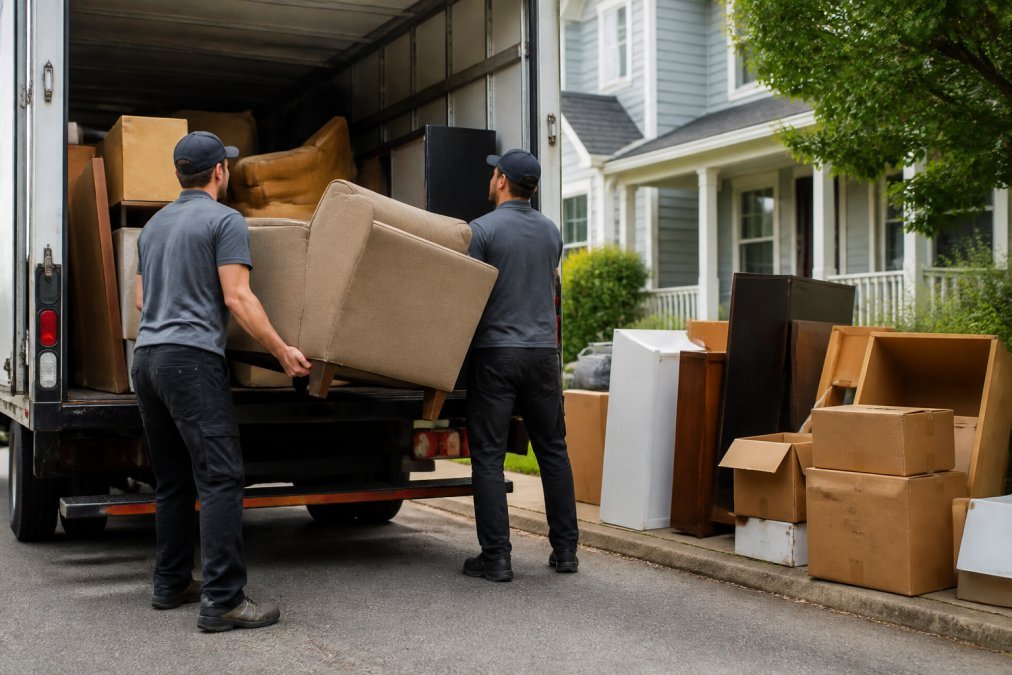
- Full-service junk removal – A crew handles the haul and routes each item to the best available stream.
- Donation – Only if the mattress, appliance, or device is clean, working, and accepted by a local charity.
The mattress shows why recycling vs landfill junk removal isn’t a simple either/or. The right answer depends on your item, its material composition, and what’s available near you. When in doubt, ask the hauler which facility your item is headed to.
Local Disposal Regulations and Hazardous Waste Rules to Know
Disposal rules vary by state and municipality, and ignoring them can mean fines or a rejected load. But the variation sits on a federal framework, and knowing that framework helps you predict what your local rules require.
The Federal Floor
At the federal level, the Environmental Protection Agency regulates municipal solid waste landfills under the MSW landfill rules, covering composite liner systems, leachate collection, groundwater monitoring, and methane capture, the minimum engineering standard a landfill must meet to accept household and commercial waste.
What States and Cities Add On Top
States and municipalities layer their own rules on top of the federal floor, commonly including:
- Bulk item limits – Many cities cap how many large items a household can set out per year, or require advance scheduling for pickup.
- E-waste landfill bans – A number of states prohibit televisions, monitors, and other electronics from entering landfills, and require them to go to a certified recycler.
- Mattress and tire disposal fees – Some states charge an advance disposal fee at the point of sale to fund recycling infrastructure.
- Yard waste bans – Several states prohibit yard trimmings from landfills, routing them instead to composting or mulching facilities.
- Construction and demolition debris rules – C&D waste often faces separate sorting and reporting requirements.
Hazardous Materials That Never Belong in the Trash
A short list of household items is consistently regulated as hazardous or special waste:
- Paint and solvents – Oil-based paints, thinners, and stains.
- Batteries – Lithium-ion, lead-acid, and rechargeable batteries are a leading cause of fires at recycling and waste facilities.
- Electronics – Televisions, monitors, and devices with circuit boards or batteries.
- Fluorescent bulbs – Contain mercury and require dedicated handling.
- Pesticides and herbicides – Regulated as hazardous waste in most jurisdictions.
- Medical sharps – Require a sharps container and a designated drop-off.
Before any big cleanout, check your local disposal regulations for bulk item limits and hazardous waste drop-off sites. A quick call to your city’s waste department or a look at your state environmental agency’s website saves you a rejected load and a possible fine. If you hire a hauler, ask how they handle the regulated categories above, because that answer tells you whether they actually know the rules.
How to Choose a Junk Removal Service That Actually Recycles
Plenty of haulers claim to recycle. Fewer can show you where your stuff actually goes. The recycling vs landfill junk removal decision often comes down to the company you hire, so vet them first.
Ask these questions before you commit:
- What’s your landfill diversion rate? A real number, not a slogan.
- Where do donated items go? They should name specific charities or networks.
- How do you handle hazardous waste? “We take everything” is a red flag.
- Is your estimate free and on-site? Free estimates let you compare without risk.
- Can you prove your recycling claims? Ask for documentation or a facility name.
| Provider Type | Landfill Diversion | Best For | Pricing |
|---|---|---|---|
| Full-service junk removal | High (varies) | Mixed loads, heavy items | Free on-site estimate |
| National bulk pickup | Low to moderate | Standard bulky items | Quote-based |
| Eco-focused haulers | High | Sustainability-minded jobs | Volume-based |
| DIY drop-off | Depends on you | Small, sortable loads | Per-item fees |
Frequently Asked Questions
Is recycling cheaper than landfill disposal for junk removal?
Not always. Landfill tipping fees are often lower per ton than the cost of sorting and processing recyclables, which is why some haulers default to the landfill. However, recycling can offset costs when items have resale or scrap value, such as scrap metal or working appliances. For mixed household junk, the total price usually depends on volume, material type, and local tipping fees rather than a flat recycling discount. Ask your hauler how they price recycling versus landfill runs before you book.
How can I verify that a junk removal company actually recycles instead of dumping everything?
Ask for a written breakdown of where your items go: donation partners, recycling facilities, or a landfill. Reputable companies can name the material recovery facility or transfer station they use and share diversion rates. Hoosier Junk Daddy, for example, diverts up to 60% of hauled items through recycling, reuse, or donation. You can also request a receipt or disposal summary after pickup. If a company cannot explain its sorting process, assume most of your junk is going to a landfill.
What items are prohibited from standard landfills and need special disposal?
Common prohibited items include paint, motor oil, antifreeze, batteries, tires, propane tanks, pesticides, and electronics containing lithium batteries. These fall under household hazardous waste rules and must go to a designated collection event or facility. Mattresses are accepted at most landfills but often carry a separate fee. If your junk includes any of these items, tell your hauler upfront so they can route them correctly instead of mixing them into a general load.
Does junk removal donation vs recycling matter for tax deductions?
Donation can matter if you itemize. The IRS allows a deduction for donated goods in good condition, based on fair market value, when you receive a written receipt from the charity. Recycling generally does not produce a tax benefit because you are not transferring ownership to a qualified nonprofit. If your garage or estate cleanout includes furniture, clothing, or working appliances, ask your hauler to route those items to a donation partner and provide documentation for your records.