Table of Contents
- Why Professional Debris Removal Saves You Time and Energy
- Avoid Physical Strain and Injury Risk
- Reclaim Space and Cut Through the Clutter
- What Professional Junk Removal Services Handle That DIY Can’t
- Construction Debris Removal for Renovations and Job Sites
- Junk Removal and Recycling: What Happens After Pickup
- How to Choose a Junk Removal Company
- Frequently Asked Questions
Last Updated: October 17, 2026
Why Professional Debris Removal Saves You Time and Energy
Professional debris removal is the process of hiring a trained crew to haul away unwanted items, construction waste, and household clutter from your property. The benefits of professional debris removal start with the hours you get back.
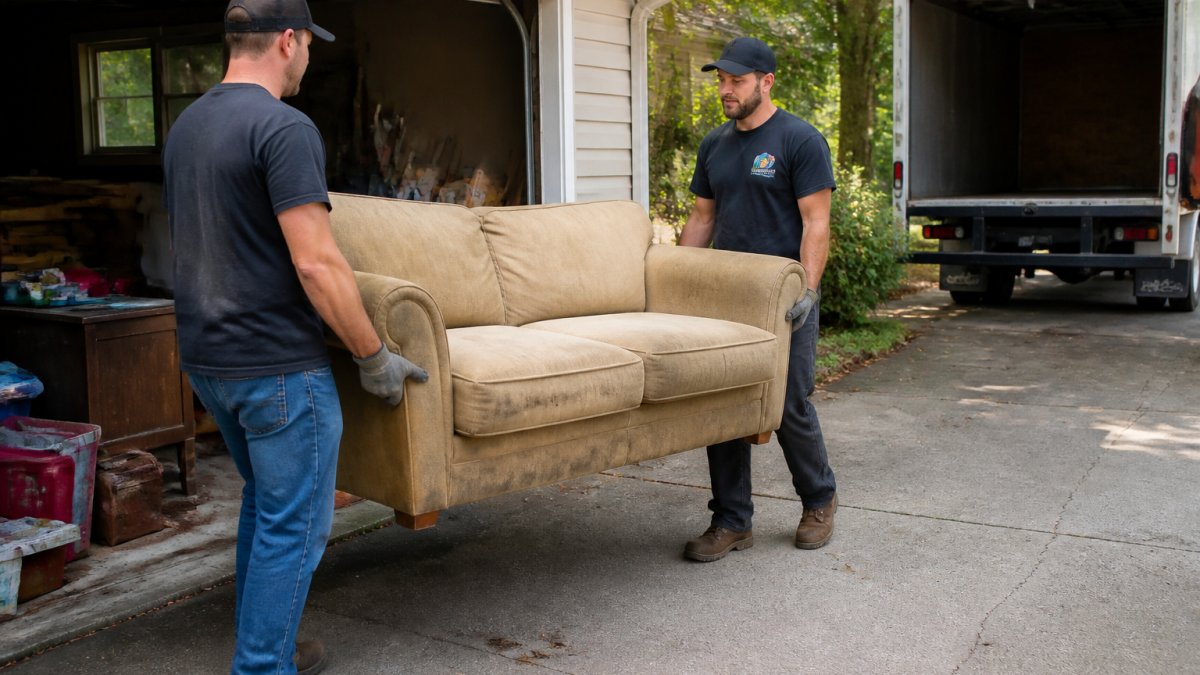
We hear the same story constantly: the pile has been sitting there for two years because nobody had the time or the truck. A crew of two can clear a two-car garage in a few hours.
Schedule the pickup before you start sorting. You will work faster when there is a deadline, and you avoid the trap of reorganizing clutter instead of removing it.
Avoid Physical Strain and Injury Risk
Lifting a sleeper sofa or a cast-iron tub is how people end up at the doctor. Back strain, crushed fingers, and twisted knees are the most common injuries from DIY hauling. The Occupational Safety and Health Administration guidance on safe lifting is written for workers, but the mechanics apply to anyone dragging a refrigerator up basement stairs.
Professional crews bring dollies, straps, and loading ramps. They know how to pivot heavy items through doorways without gouging the frame. That matters when you are moving a piano past a freshly painted wall.
- Safe lifting technique: crews use legs, not backs, and split weight between two people
- Equipment: hand trucks, furniture straps, and floor runners protect both the item and the home
- Insurance: a reputable hauler carries liability coverage, so damage is not your problem
Reclaim Space and Cut Through the Clutter
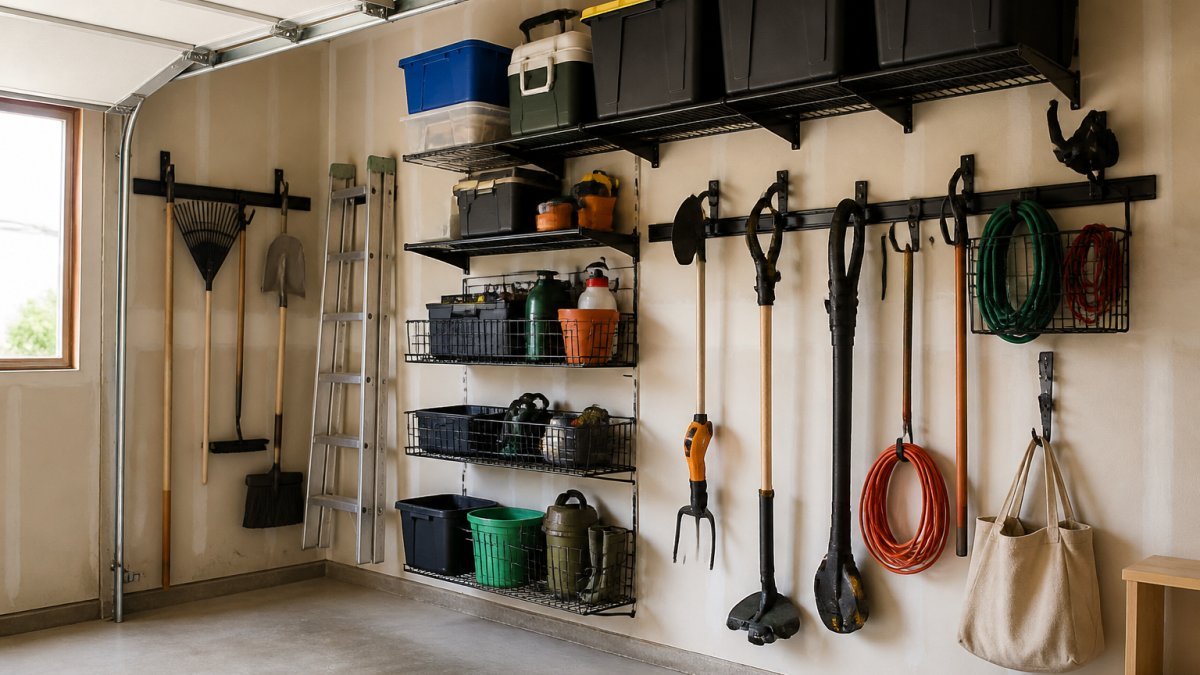
Space is the benefit people feel first. A cleared garage means you can park inside again. A cleared basement means better air circulation and fewer places for pests to nest.
Decluttering also changes how a home feels day to day. One client told us the house felt bigger after a single attic cleanout. It did, because the clutter was pressing on every room below it.
For real estate professionals, the payoff is financial. Property staging moves faster when the garage is empty and the curb appeal is not blocked by a pile of old furniture.
What Professional Junk Removal Services Handle That DIY Can’t
Professional junk removal services handle the items and volumes that a curbside bin cannot. Municipal waste management programs set weight limits and reject bulky items. Many pickup services will not take mattresses, tires, or furniture at all.
Here is what a full-service crew typically takes:
- Furniture, mattresses, and box springs
- Appliances, including refrigerators and water heaters
- Construction debris, drywall, and lumber
- Yard waste, fencing, and old decking
- E-waste, electronics, and office furniture
- Estate cleanout contents and whole-property clear-outs
The other gap is hazardous and restricted material. Paint cans, motor oil, propane tanks, and pool chemicals cannot go in a landfill. The Environmental Protection Agency household hazardous waste guidance explains why these need special handling. Ask your hauler how they handle them before pickup day, because not every company does.
Never mix paint, solvents, or propane tanks into a general debris pile. A crew that does not know they are there can create a real safety hazard, and the load may be rejected at the disposal site.
Construction Debris Removal for Renovations and Job Sites
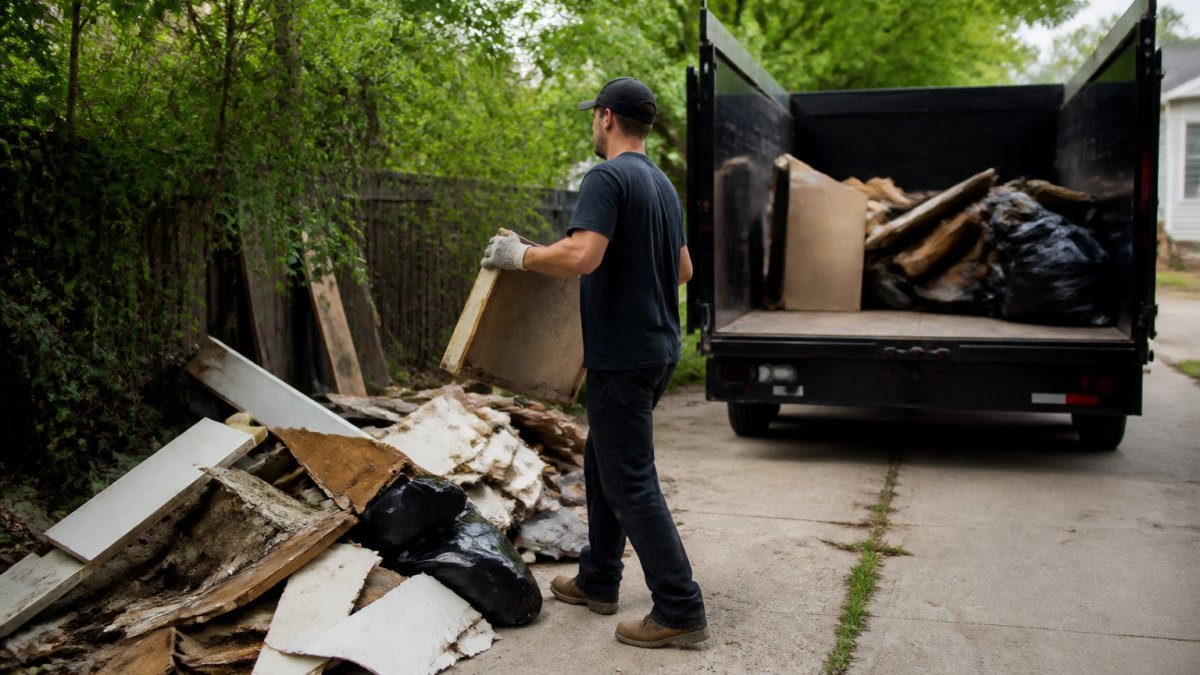
Renovation debris is a different animal. A kitchen remodel produces drywall, tile, cabinets, and packaging in volumes that pile up fast. Post-construction cleanup is the step most homeowners forget to budget for, and it stalls the final walkthrough.
Contractors use debris hauling for three reasons: the site stays safe, the crew stops tripping over waste, and the client sees a finished space instead of a dumpster. Same-day service matters here.
We recommend scheduling removal in phases on larger jobs, one pickup after demolition and another after finishes. It keeps the site workable and avoids one enormous load at the end.
Junk Removal and Recycling: What Happens After Pickup
Junk removal and recycling are not the same promise, and you should ask which one you are getting. Responsible disposal means items are sorted before anything is tipped. The sorting step is where the environmental outcome is actually decided, and it is the step most haulers gloss over.
A typical responsible workflow looks like this:
- Triage at the truck. The crew separates obvious donation candidates (usable furniture, working appliances, boxed housewares) from scrap metal, clean cardboard, and true trash before the load leaves your property.
- Donation drop-off. Usable goods go to local donation partners, thrift chains, furniture banks, and housing nonprofits. Ask which partners your hauler uses; a named partner is verifiable, a vague “we donate” is not.
- Scrap and metal recovery. Appliances, water heaters, fencing, and metal furniture go to a scrap recycler. Metal is one of the highest-value and most consistently recycled streams in a debris load.
- Recycling of clean commodities. Cardboard, clean lumber, and certain plastics are separated when volume justifies it. Contaminated or mixed material usually is not.
- Landfill as the residual. Whatever is left after the first four steps goes to a permitted disposal facility.
Ask two questions before booking: where does the load go, and what percentage gets diverted from landfill? Then ask a third: can you name the donation and recycling partners you use? A straight answer on all three is a good sign. A vague one is not.
How to verify responsible handling
You do not have to take a hauler’s word for it. Practical checks:
- Request the disposal destination in writing. A reputable company can tell you which transfer station, recycling facility, or donation partner receives the load.
- Ask for a diversion figure and how it is measured. Diversion is typically calculated by weight or volume diverted from landfill divided by total load. The method matters, weight-based figures tend to be more conservative and more credible than volume-based ones.
- Look for donation receipts or partner relationships. Some haulers provide a donation receipt for tax-deductible items; others list partner organizations on their website.
- Watch the truck during pickup. If the crew sorts on-site rather than sweeping everything into one bin, that is a visible signal the back-end process is real.
The trade-offs nobody mentions
Responsible disposal is not free, and it is not always possible. Sorting takes labor time, donation drop-offs add drive time, and some materials, composite furniture, heavily soiled textiles, mixed construction debris, have no viable recycling market and will go to landfill no matter who hauls them.
For renovation debris specifically, separation at the source is what makes recycling possible. If drywall, lumber, metal, and packaging are mixed in one pile, the recycling option largely disappears. That is one reason phased pickups during a remodel, one after demolition, one after finishes, can improve diversion as well as site safety.
How to Choose a Junk Removal Company
Choosing a junk removal company comes down to five checks. Run through them before you book anyone.
| What to Check | Why It Matters | What to Ask |
|---|---|---|
| Licensing and insurance | Protects you from liability for damage or injury | “Are you insured, and can you show proof?” |
| Transparent pricing | Prevents surprise fees on arrival | “Is your free on-site estimate the final price?” |
| Disposal practices | Determines real environmental impact | “What percentage do you divert from landfill?” |
| Service scope | Confirms they take your specific items | “Do you handle appliances, e-waste, and hazardous material?” |
| Reviews and tenure | Signals reliability on repeat jobs | “Do you work with property managers regularly?” |
What actually drives the price
Most junk removal quotes are built from a handful of variables. Understanding them lets you compare apples to apples instead of guessing why one quote is double another.
- Volume, not weight, is usually the headline. Many haulers price by how much space your items occupy in the truck, commonly expressed as a fraction of the load (quarter, half, three-quarter, full). A full load costs more than a single-item pickup, but the per-item cost drops sharply as volume rises.
- Item type and weight. Heavy, dense material, concrete, dirt, tile, appliances, costs more to handle and dispose of than bulky-but-light furniture. Some companies surcharge for mattresses, tires, and appliances because of disposal fees and handling time.
- Labor and access. Stairs, long carries, tight doorways, and elevator restrictions add time. A basement or third-floor walk-up is a different job than a curbside pickup, and quotes should reflect it.
- Disposal fees. Transfer stations, landfills, and recycling facilities charge by weight or load. Those fees are passed through, which is why hazardous or restricted material, paint, chemicals, batteries, often carries a separate handling charge or is refused outright.
- Scheduling and urgency. Same-day and weekend service frequently carries a premium. Booking a few days out is one of the simplest ways to lower the bill.
Get the estimate in writing and confirm whether it is binding. A free on-site estimate that turns into a higher number on the driveway is the most common pricing complaint in this industry. Ask specifically: “Is this the final price, and what could change it?”
When professional removal is cheaper than DIY
DIY hauling looks free until you price it out. The real comparison includes:
- Truck rental and fuel. A rental truck, mileage, and fuel for a transfer-station run can rival a small pickup’s removal fee.
- Disposal fees. Transfer stations and landfills charge by weight; bulky items often carry separate fees. You pay these whether you haul it or a pro does.
- Your time. A weekend garage cleanout is a weekend you do not get back. For a single item, DIY may win. For a whole-property cleanout, the math usually flips.
- Risk. One injury or one damaged doorway can erase any savings. Liability coverage on a professional crew shifts that risk off you.
A useful rule of thumb: for one or two light items with easy access, DIY can be cost-competitive. For volume, heavy items, stairs, or anything requiring multiple trips, professional removal is frequently the lower total cost once time, fees, and risk are counted.
Insurance, licensing, and liability
Ask for proof of insurance before the crew arrives, and confirm what the policy covers, damage to your property, injury to workers, or both. The Federal Trade Commission’s guidance on choosing service providers is a useful reminder that verbal promises are hard to enforce.
Local ownership is worth weighing too. A locally owned and operated hauler answers to the same community it serves, and you get a person on the phone instead of a call center.
Frequently Asked Questions
Is junk removal the same as debris removal?
They overlap but aren’t identical. Junk removal typically refers to hauling away household items like furniture, appliances, and bagged clutter. Debris removal usually covers heavier or bulkier material such as construction debris, renovation scraps, yard waste, and cleanout piles. Many professional junk removal services handle both, so ask about the specific items you need gone. Hoosier Junk Daddy, for example, takes everything from single-item pickups to full post-construction cleanup, which means one call covers most projects.
What types of debris can a professional removal service handle?
Most full-service companies take furniture, appliances, mattresses, electronics, yard waste, construction debris, and general household clutter. Hazardous materials like paint cans, chemicals, and certain batteries usually need special handling or a separate drop-off, so mention them when you book. Ask about restricted items upfront. A reputable crew will tell you what it can and cannot take before pickup day, which saves you from a surprise on the truck.
How much does professional debris removal cost?
Pricing depends on volume, item type, access, and disposal fees, so it varies from job to job. Most companies quote based on how much space your debris takes up in the truck. Hoosier Junk Daddy offers free on-site estimates and transparent pricing, so you know the number before work starts. Get a quote for your specific pile rather than relying on a generic range, since a single mattress and a full garage cleanout are very different jobs.
How can I choose a responsible debris removal company?
Ask three questions: where the items go, whether the company is insured, and whether the quote is free and on-site. A responsible hauler should explain its recycling and donation process, show proof of insurance, and put pricing in writing. Hoosier Junk Daddy diverts up to 60% of hauled items from landfills through recycling, reuse, and donation, and it provides free on-site estimates so you can confirm scope and cost before committing.
The pile in your garage is not going to shrink on its own, and every month it sits there is a month you cannot use the space. Hoosier Junk Daddy handles the lifting, the loading, and the responsible disposal, with free on-site estimates and recycling or donation for up to 60% of what we haul. Book online or call, and reclaim the space you already own.