Table of Contents
- What Counts as Construction and Demolition Debris
- How to Sort Construction Debris Before Disposal
- Hazardous Construction Material Disposal: What Needs Special Handling
- Construction Waste Recycling Centers and Donation Pathways
- The Cost of Construction Debris Removal: DIY vs. Professional Hauling
- Roll-Off Dumpster Rental and Local Disposal Rules
- Conclusion
- Frequently Asked Questions
Last Updated: September 27, 2026
What Counts as Construction and Demolition Debris
Construction and demolition debris is any waste produced during the building, renovation, or teardown of a structure. This includes wood, drywall, concrete, metal, roofing, and packaging materials. Knowing what you are dealing with is the first step to dispose of construction debris safely.
Common Materials You’ll Encounter on a Job Site
- Wood: framing lumber, plywood, pallets, and trim
- Drywall and plaster: often the heaviest part of a remodel
- Concrete, brick, and block: also called clean fill or inert materials
- Metal: rebar, ductwork, pipes, and old fixtures
- Roofing: shingles, felt paper, and flashing
- Cardboard and plastic wrap: packaging from new materials
Most of this is bulky but manageable. Some of it is not.
What Can’t Go in a Regular Trash Bin
Regular trash pickup is built for household waste, not job site volume. Many items are banned from curbside bins under local solid waste regulations. These include:
- Concrete, dirt, and rock
- Large amounts of lumber or drywall
- Paint, solvents, and other chemicals
- Asbestos-containing materials
Never mix concrete or drywall into a standard trash can. The weight can break the bin or the truck’s lift arm, and many haulers will refuse the load and leave it on your curb.
How to Sort Construction Debris Before Disposal
Sorting is where most DIY renovators lose time and money. A clean sort lets you recycle more, pay less in disposal fees, and keep hazardous items out of the general waste stream. The reason is simple: disposal is priced by weight and volume, and mixed loads are the most expensive thing you can haul. A separated load of clean concrete or scrap metal can often be dropped at a specialized facility for less than the cost of tipping a mixed roll-off, and in some cases the metal carries scrap value that offsets part of your haul.
Step-by-Step Sorting Guide for DIY Renovators
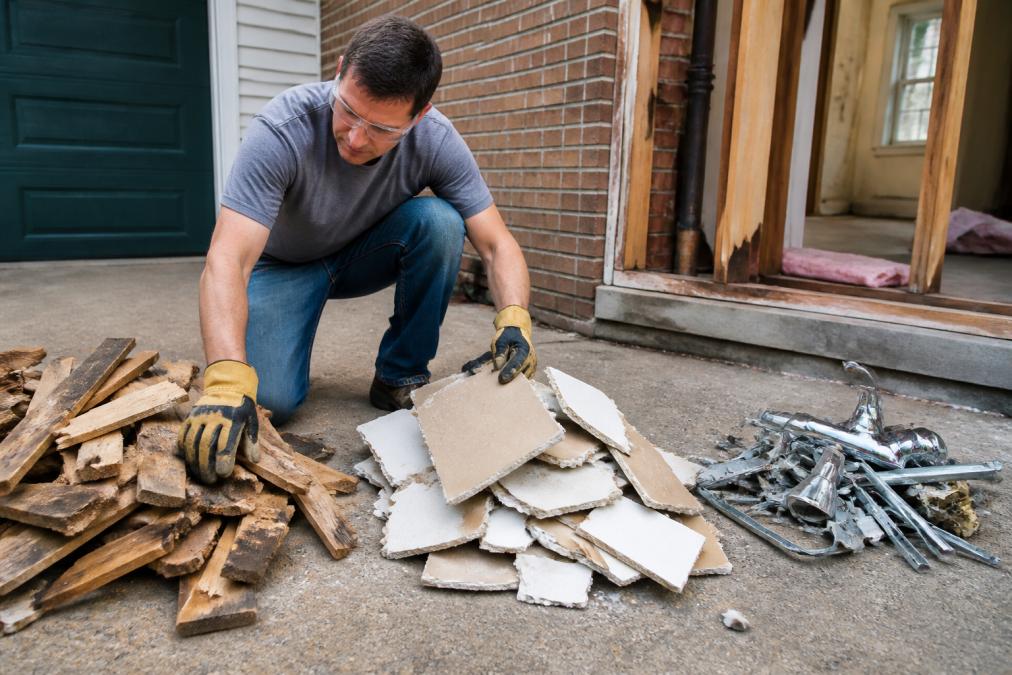
- Set up zones first. Mark separate areas for wood, metal, concrete, drywall, and trash. Use stakes, cones, or chalk lines so helpers can’t guess. Zones should be downhill from the house and away from storm drains.
- Pull out hazardous items before anything else. Set aside paint, solvents, treated wood, and anything you suspect contains asbestos. Once these are mixed into a pile, the whole pile may be treated as contaminated.
- Separate clean fill. Keep concrete, brick, block, and dirt in their own pile. Clean fill is the easiest material to divert from a landfill because it can be crushed into road base or structural fill.
- Group metals together. Rebar, copper pipe, aluminum, and steel bring the best scrap value. Keep ferrous and non-ferrous metals apart if your scrap yard pays different rates.
- Stack reusable materials. Cabinets, doors, windows, and fixtures can be donated. Keep them dry and undamaged so a reuse store will accept them.
- Break down bulky items. Cut lumber to uniform lengths and flatten cardboard. Uniform stacks load tighter, which means fewer trips and lower fuel cost.
- Bag small trash. Loose screws, packaging, and caulk tubes slow down hauling and can puncture bags.
- Label each pile. A strip of masking tape with “METAL” or “CLEAN FILL” keeps helpers from mixing categories when you’re not watching.
A good sort takes an extra hour. It can cut your disposal costs and boost your landfill diversion rate, because most facilities charge less for a single-stream load than for mixed debris.
Why Contamination Kills Your Recycling Rate
Recycling facilities reject loads that are visibly mixed. A single bag of trash in a clean-wood pile can downgrade the whole load to landfill. The same goes for drywall: gypsum is recyclable, but only when it is separated from paper, screws, and insulation. If you are unsure whether a pile is clean enough, call the facility before you load. Ask two questions: what materials do you accept, and how clean does the load need to be?
Photograph each pile before you haul it. If a hauler questions your load or a recycling facility asks for proof, the photos save you an argument. They also help you estimate volume for your next project.
Never mix treated lumber, painted wood, or pressure-treated scraps into a clean-wood pile. Treated wood contains preservatives that can contaminate mulch and compost, and most facilities will reject the entire load.
Sorting by Project Type
A bathroom remodel produces mostly drywall, tile, and fixtures. A kitchen tear-out adds cabinets, countertops, and appliances. A deck removal is almost all treated lumber and concrete footings. Knowing your project type tells you which zones to set up first and which facility to call. For a deck, for example, you may need a separate pile for treated wood because it cannot go into the same recycling stream as clean lumber.
Hazardous Construction Material Disposal: What Needs Special Handling
Hazardous construction material disposal follows different rules than general debris. These items cannot go to a landfill or a standard recycling facility. They need a permitted handler.
Identifying Asbestos, Lead Paint, and Other Dangerous Materials
Older buildings are the main risk. Homes built before the 1980s often contain asbestos in insulation, floor tile, and pipe wrap. Lead-based paint is common in buildings from the same era.
Watch for these warning signs:
- Crumbling insulation around pipes or boilers
- Old floor tiles that crack in a pattern
- Chipped paint on window frames and trim
- Frayed wiring or old light fixtures
Never dry-sweep or power-wash suspect material. Both spread fibers and dust into the air, where they can be inhaled by you, your family, or your crew.
Construction Waste Recycling Centers and Donation Pathways
Construction waste recycling centers accept separated materials and turn them into new products. Clean wood becomes mulch or fuel. Concrete gets crushed into road base. Scrap metal goes to a mill. Drywall can be ground and used as a soil amendment in some markets, though not all facilities accept it. Asphalt shingles are increasingly recycled into hot-mix asphalt, but only at facilities equipped for it.
What Each Facility Typically Accepts
- Clean wood: Untreated lumber, pallets, and tree debris. No paint, stain, or pressure-treated wood.
- Concrete and asphalt: Clean fill only. Rebar must be removed or the load may be rejected.
- Metals: Ferrous and non-ferrous. Copper, brass, and aluminum pay the most.
- Cardboard: Flattened and dry. Wet cardboard is rejected.
- Drywall: Accepted at some facilities only. Gypsum must be separated from paper and fasteners.
- Shingles: Accepted at a limited number of asphalt recyclers.
If a facility rejects your load, you pay the tipping fee and still have to haul it somewhere else. That is why a five-minute phone call before you load is worth more than an hour of guessing.
Where to Donate Reusable Building Materials
Reusable building materials keep working when they leave your site. Many communities have a reuse store or a Habitat for Humanity ReStore that accepts:
- Doors, windows, and cabinets
- Appliances and fixtures
- Lumber and trim in good shape
- Tile, flooring, and hardware
The Donation vs. Recycling Decision
Not every reusable item is worth donating. A solid wood door in good condition is worth the trip. A hollow-core door with a crack is not. Use this rule of thumb: if you would install it in your own home, donate it. If you would not, recycle it or landfill it. That keeps donation streams clean and keeps reuse stores open for the next renovator.
Sorting for recycling and donation is not just an environmental gesture. It is the cheapest way to move material off your site, because clean streams cost less to tip and metals can offset part of your haul. The extra hour you spend separating wood, metal, and concrete usually pays for itself in disposal fees alone.
Keep a running list of what you donated, where, and when. If you itemize deductions, that list plus receipts is the difference between a clean tax record and a disallowed claim.
The Cost of Construction Debris Removal: DIY vs. Professional Hauling
The cost of construction debris removal depends on volume, weight, and how far you have to haul it. DIY saves labor costs but adds rental fees, fuel, and your own time.
| Factor | DIY Hauling | Professional Removal |
|---|---|---|
| Upfront cost | Truck rental, dump fees | One quoted price |
| Your time | Several hours per load | None |
| Sorting | You do it all | Often handled for you |
| Risk | Injury, fines, damage | Covered by the hauler |
| Best for | Small, light loads | Bulky or mixed debris |
Roll-Off Dumpster Rental and Local Disposal Rules
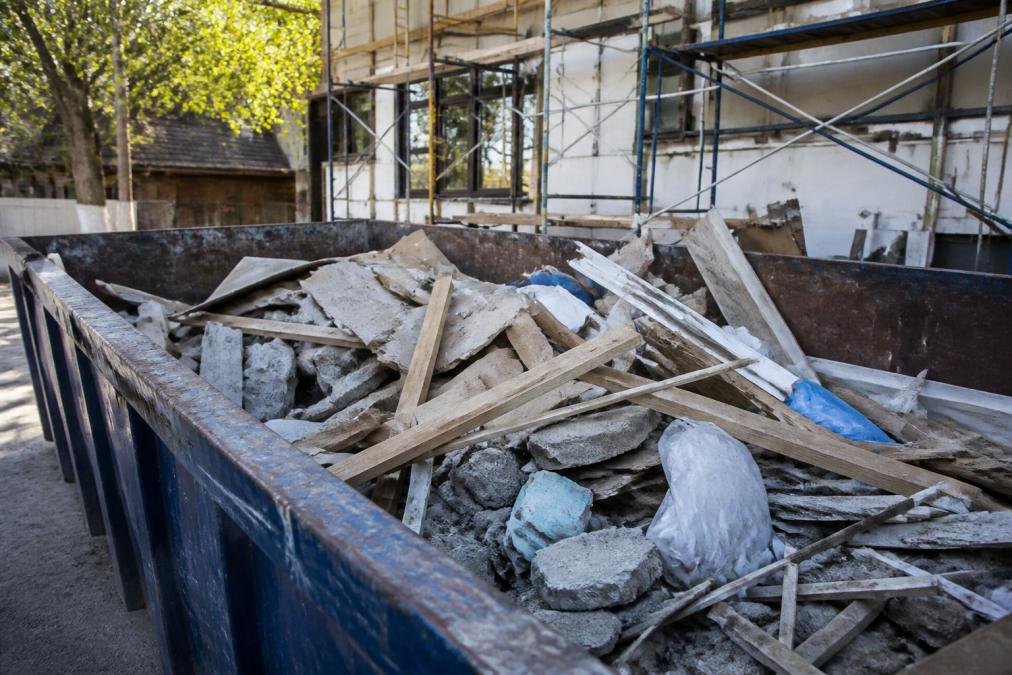
A roll-off dumpster is a large open-top container dropped at your site and hauled away when full. It is the standard option for renovation waste and construction site cleanup.
Keep these points in mind:
- Confirm what the hauler will and will not accept
- Ask where the debris goes, landfill or recycling facility
- Check weight limits to avoid overage charges
- Keep hazardous waste out of the container
Conclusion
Sorting and hauling construction debris is a lot of work, and one wrong move with hazardous material can cost you far more than a dumpster. Hoosier Junk Daddy handles the heavy lifting for you, with free on-site estimates, same-day service when possible, and eco-friendly disposal that diverts up to 60% of hauled items from landfills. Get started with Hoosier Junk Daddy and clear your site the safe, responsible way.
Frequently Asked Questions
Can construction debris be put in regular trash bins?
Most municipal solid waste programs will not accept construction debris in standard curbside bins. Heavy materials like concrete, tile, and drywall can damage collection equipment, and many haulers have weight limits per bin. Small amounts of untreated wood or cardboard may be accepted in some areas, but bulky renovation waste typically requires a roll-off dumpster, a bulk item collection appointment, or a trip to a permitted disposal facility. Check your local solid waste regulations before bagging anything from a job site.
What materials are considered hazardous construction debris?
Hazardous construction material disposal applies to items like asbestos-containing insulation, lead-based paint chips, solvent-based adhesives, fluorescent bulbs, and old thermostats containing mercury. These cannot go in a standard dumpster. In many states, asbestos abatement must be performed by a licensed contractor before the material is disturbed. For smaller quantities of paint, sealants, or chemicals, look for a household hazardous waste collection event or a permitted facility that accepts them. Never mix hazardous items with general debris.
Is it better to rent a dumpster or hire a junk removal service?
It depends on the size and timeline of your project. A roll-off dumpster works well for large, long-term renovations where you need a container on site for weeks. A junk removal service makes more sense for smaller jobs, tight deadlines, or when you want the debris sorted and hauled in one visit. Many services also divert reusable materials to donation or recycling, which a standard dumpster rental does not. Compare the cost of construction debris removal for both options against your project scope.
How do I find construction waste recycling centers near me?
Start with your state or county solid waste department, which maintains lists of permitted construction waste recycling centers. Many facilities accept clean fill, concrete, asphalt, untreated wood, and metals for material recovery. Some also take drywall and cardboard. Call ahead to confirm accepted materials, hours, and any disposal fees. If you hire a hauling service, ask whether they sort debris for recycling or donation, since responsible diversion can keep a significant share of your project waste out of the landfill.