Table of Contents
- Step 1: Identify and Classify Your Hazardous Waste
- Common Hazardous Waste Examples You Probably Have Right Now
- Step 2: Choose Approved, Compatible Containers
- Hazardous Waste Labeling: What Every Container Needs
- Hazardous Waste Storage Requirements for Homes and Job Sites
- Step 3: Inspect, Segregate, and Prevent Spills
- Hazardous Waste Spill Response and Emergency Escalation
- Step 4: Dispose of Hazardous Waste the Right Way
- Frequently Asked Questions
Last Updated: October 20, 2026
Step 1: Identify and Classify Your Hazardous Waste
Handling hazardous waste starts with knowing what you actually have. A hazardous waste is any material that is dangerous to people, animals, or the environment because it is toxic, flammable, corrosive, or reactive.
Skip this step and everything after it falls apart. You cannot pick the right container, the right label, or the right disposal path for a chemical you haven’t identified.
Start by reading every label. Then group your items into one of three buckets:
- Household hazardous waste: paint, cleaners, batteries, and similar items from a home
- Business hazardous waste: the same kinds of materials, but generated by a company, landlord, or contractor
- Unknowns: anything with a faded or missing label, which needs special handling
Household vs. Business: Which Rules Apply to You
The rules that govern how to handle hazardous waste depend entirely on who generated it. Households usually fall under a local collection program with no federal paperwork.
Here is the decision path we use:
| Your situation | Rules that apply | What to do |
|---|---|---|
| You live in a house and generate waste at home | Local household program | Drop off at a collection event |
| You rent out property or run a business | Federal and state generator rules | Track quantities and use a transporter |
| You are a contractor clearing a job site | Business generator rules | Segregate and document everything |
| You can’t identify the material | Treat as hazardous | Keep it separate and ask a professional |
The line most people miss: a landlord cleaning out a rental unit is generating business waste, not household waste. If you’re unsure which side you’re on, verify with your state environmental agency before you move anything.
EPA household hazardous waste guidance
Common Hazardous Waste Examples You Probably Have Right Now
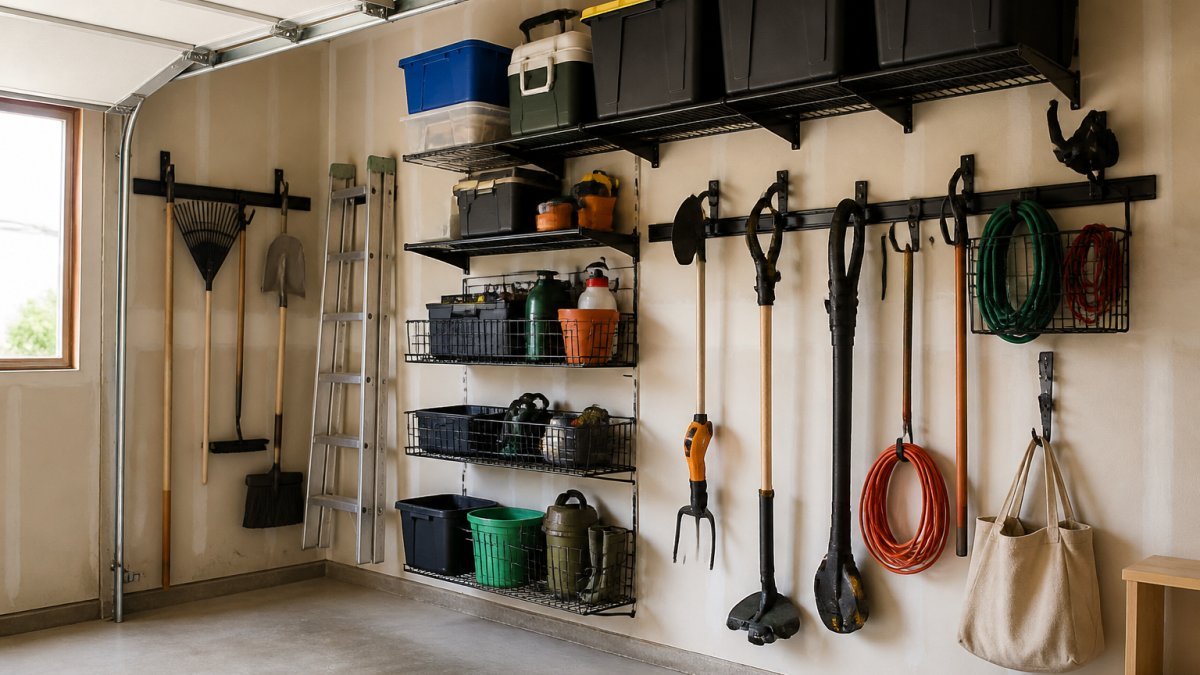
Most garages and basements hold at least a few hazardous items, and people rarely realize it. Here are some hazardous waste examples often found on cleanout jobs:
- Oil-based paint, stains, and varnish
- Paint thinner and solvents
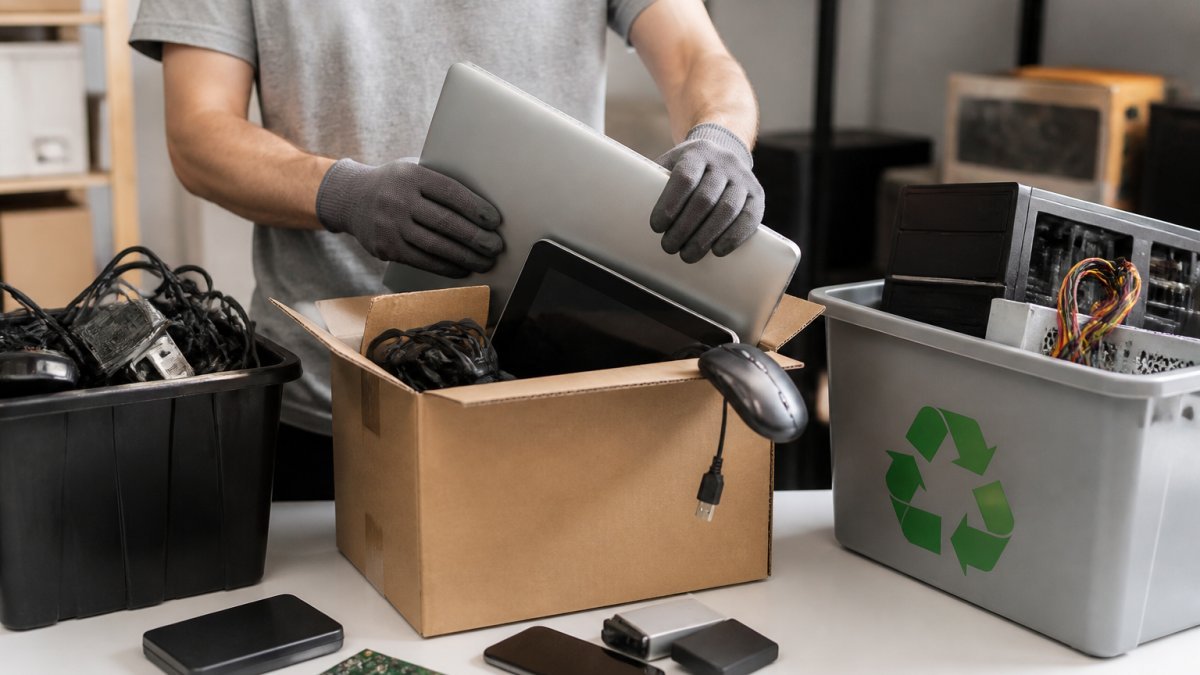
- Lithium batteries and old electronics
Group these by type as you sort. Never mix a solvent with a water-based product, and never pour one into another container to “save space.” That single shortcut is how small cleanups turn into dangerous ones.
Step 2: Choose Approved, Compatible Containers
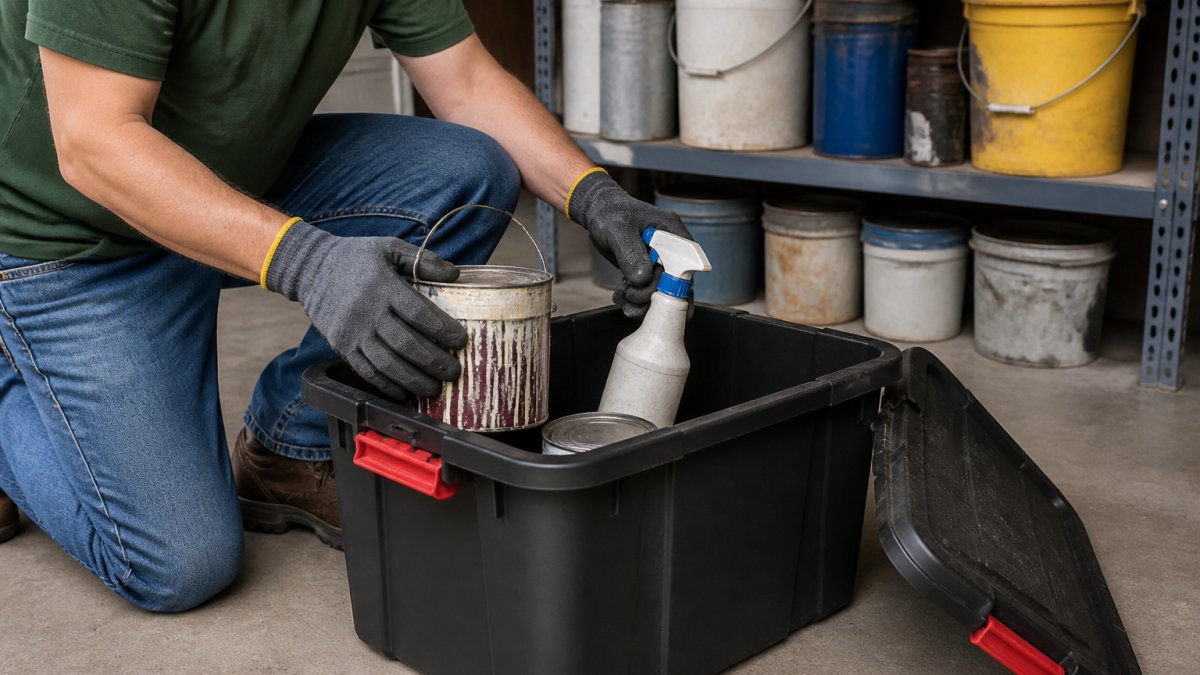
An approved container is one that holds the material safely without reacting to it. A compatible container won’t leak, corrode, or fail when it meets the chemical inside.
Use these rules when you pick a container:
- Keep the material in its original container whenever possible
- Use containers with a secure closure and a screw-top cap
- Choose leak-proof containers rated for the material
Hazardous Waste Labeling: What Every Container Needs
Every container needs a waste label that states what is inside. Clear labeling is the single easiest way to prevent a spill, a mix-up, or a bad reaction. If a container has no label, treat it as unknown and keep it away from everything else.
A complete label includes:
- The chemical name, written plainly
- The date you started accumulating it
- The hazard, such as flammable or corrosive
Write the label before the container leaves your hand. Tape over it if the material could smudge the ink.
Never reuse a container without removing the old label first. A bleach bottle holding a different chemical is a poisoning risk for anyone who finds it later, including the crew that hauls it away.
Hazardous Waste Storage Requirements for Homes and Job Sites
Storage requirements come down to three things: a safe place, a secure container, and a regular check.
On a job site, set aside a marked accumulation area with a hard floor and good ventilation. Keep incompatible materials apart, and post the area so workers know what’s there.
For homes, a locked cabinet or a high shelf in a detached garage works well.
EPA hazardous waste generator requirements
Step 3: Inspect, Segregate, and Prevent Spills
Inspection and segregation are what keep a storage area from becoming an incident. Check containers on a regular schedule, and keep incompatible materials physically separated at all times.
During each inspection, look for:
- Leaks, stains, or corrosion on the container
- Loose or damaged lids
- Labels that have faded or fallen off
Segregate by hazard class, not by convenience. Flammables stay away from oxidizers. Acids stay away from bases. Keep a spill kit within reach, stocked with absorbent material, gloves, and a sealable bag for cleanup.
Hazardous Waste Spill Response and Emergency Escalation
Spill response follows a simple order: protect people first, then contain, then clean up. The difference between a minor cleanup and a reportable incident usually comes down to three questions: how much spilled, what spilled, and where it went. Answer those before you touch anything.
Decide first: can you handle it, or do you escalate?
Use this quick screen before you reach for a spill kit:
- Handle it yourself only if the material is known, the spill is small (a typical rule of thumb is under a gallon of a low-hazard liquid), no one was exposed, and nothing reached a drain, soil, or surface water.
- Escalate if the material is unknown, the spill is large, anyone was exposed, the spill reached a drain or the ground, or there is fire, fumes, or a reaction.
When in doubt, escalate. A trained responder would rather arrive at a small spill than a small spill that became a big one.
Immediate steps for a spill you can handle
- Clear the area and keep people back. Move anyone who is not needed out of the space.
- Ventilate by opening windows or doors if it is safe to do so.
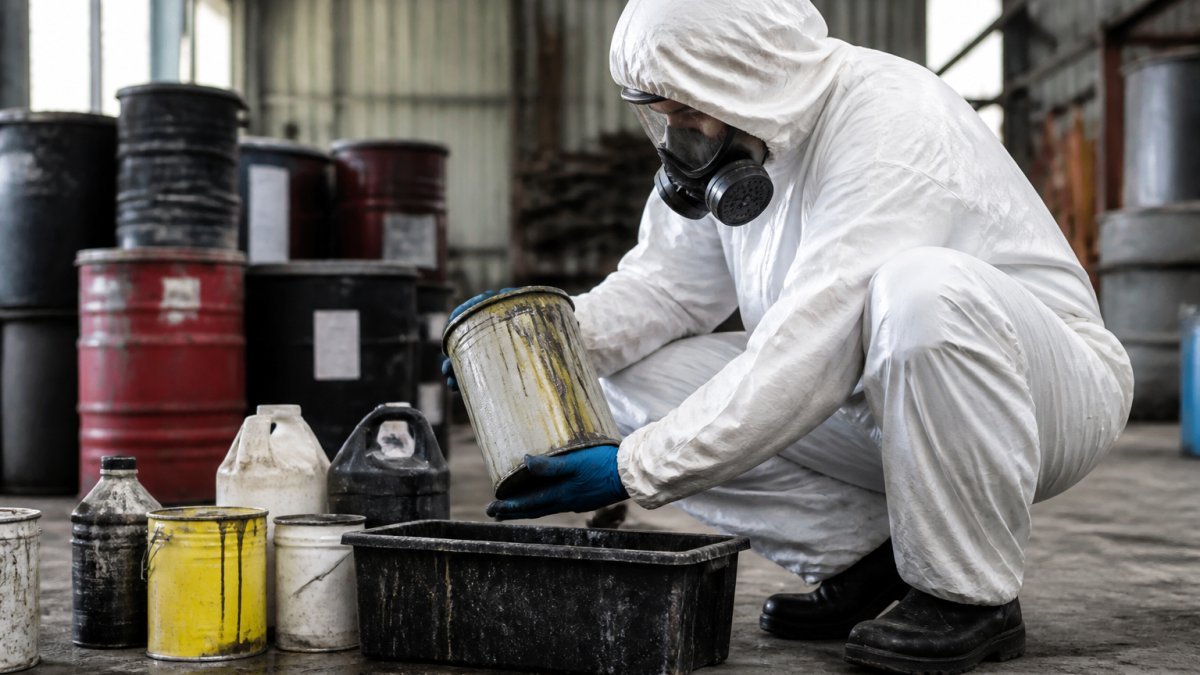
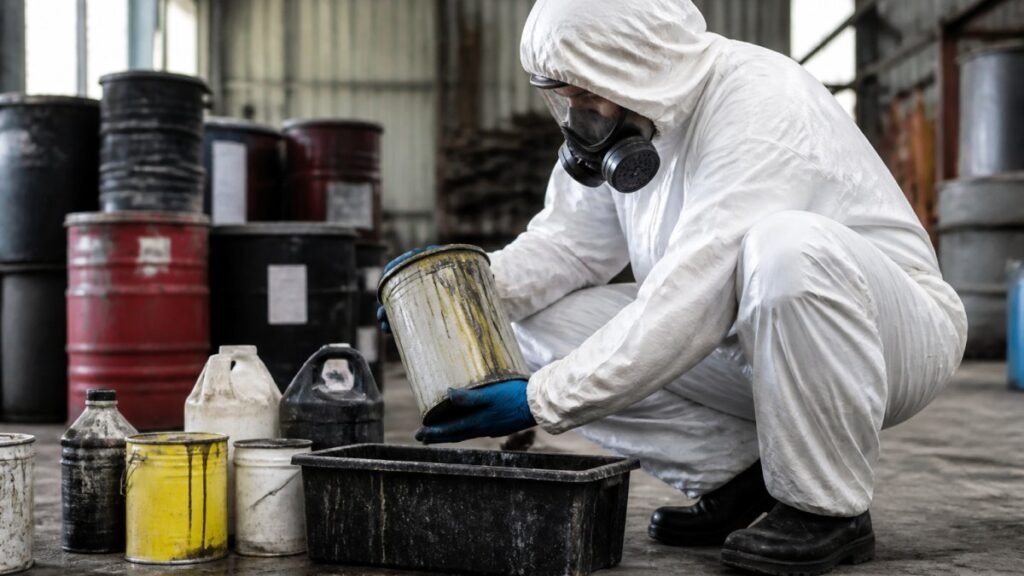
- Put on personal protective equipment: nitrile or chemical-resistant gloves, eye protection, and a respirator if the label calls for one.
- Contain the spill with absorbent material, working from the outside edge inward so you don’t spread it.
- Clean up and seal the waste in a labeled container that matches the material.
- Report the spill internally if you are at a business, and document what happened.
Exposure response
If someone gets material on their skin, flush with water for at least 15 minutes and remove contaminated clothing. For eye exposure, flush at an eyewash station or with clean water for 15 minutes and seek medical attention. If material is inhaled, move the person to fresh air. For ingestion, call Poison Control at 1-800-222-1222 and follow their instructions. Keep the product label or Safety Data Sheet with the person so responders know what they are dealing with.
When to call trained responders
Call 911 and your state environmental agency if any of the following apply:
- The spill is large or growing
- The material is unknown or highly toxic
- Anyone was exposed or is showing symptoms
For business generators, a spill may also trigger reporting obligations under the Resource Conservation and Recovery Act (RCRA) and state rules. Keep a written record of the incident, the material, the quantity, and the response, because regulators can ask for it.
Never wash a spill down a drain or hose it into the street. Storm drains often lead directly to waterways, and a drain discharge can turn a small spill into a reportable release.
Keep a spill kit next to your storage area, not in a closet across the building. Stock it with absorbent pads, a broom and dustpan, chemical-resistant gloves, eye protection, a sealable bag or drum, and a copy of the Safety Data Sheets for the materials you store.
Step 4: Dispose of Hazardous Waste the Right Way
Disposal is where the whole process either works or falls apart. Never pour hazardous waste down a drain, into a storm sewer, or into the trash. Use a collection program for household waste, and a permitted transporter and disposal facility for business waste.
Household waste: where it actually goes
Most households dispose of hazardous waste through one of three routes:
- Municipal or county collection events, often held a few times a year. Check your city or county public works or solid waste department for dates and accepted materials.
- Permanent household hazardous waste facilities, which many larger municipalities operate year-round.
- Retail take-back programs, common for batteries, paint, and some electronics.
Call ahead or check the program’s accepted-items list. Many collection sites will not take unknown materials, compressed gas cylinders, or explosives, and some charge a fee for certain items such as tires or large quantities of paint.
Business waste: the packaging and transport checklist
For business generators, the handoff to a transporter is where documentation matters most. Work through this checklist before the truck arrives:
- Confirm your generator status and accumulation limits under RCRA and your state rules
- Package each container so it is compatible, closed, and leak-free
- Label every container with the chemical name, hazard, and accumulation start date
A common pattern is that businesses get tripped up not by the waste itself but by missing paperwork or a container that was not closed properly. Inspect every container before it leaves your site.
What drives disposal costs
Disposal costs vary widely by material, quantity, and location, so treat any quote as specific to your situation. The main factors are:
- Hazard class and handling difficulty, flammable, corrosive, and reactive materials usually cost more to handle than non-hazardous waste.
- Quantity and packaging, small quantities in approved containers are often cheaper per unit than bulk liquids or oversized items.
- Transportation distance, farther facilities mean higher transport costs.
Ask for a written quote that itemizes transport, disposal, and any testing fees, and confirm what happens if a container is rejected at the facility.
Working with a hauler
For homeowners, a local collection program or a full-service hauler handles the drop-off. For businesses, keep your records in order, because regulators can ask to see them.
This is where Hoosier Junk Daddy fits in. We handle full-service removal for homes and job sites, including the heavy lifting and cleanup afterward. We sort what we haul and divert up to 60% of items from landfills through recycling, reuse, and donation.
EPA hazardous waste manifest and transporter requirements
Frequently Asked Questions
What are 5 examples of hazardous waste?
Five common examples are oil-based paint and paint thinner, automotive fluids such as motor oil and antifreeze, pool chemicals and bleach, lithium batteries and old electronics, and pesticides or herbicides. In a garage cleanout you will often find several of these at once. Each one needs to stay in its original or clearly labeled container and go to a household hazardous waste collection program rather than the regular trash.
Can hazardous waste be put in the regular trash?
No. Items like paint cans, batteries, aerosol cans, and chemical cleaners should never go in curbside trash or recycling bins. They can injure collection workers, damage trucks, and cause fires in landfills. Most communities run household hazardous waste drop-off days or permanent collection sites. For larger volumes, a licensed hauler can collect and transport the material to an approved disposal facility.
How should hazardous waste be stored before disposal?
Keep containers closed with a secure screw-top cap, store them upright in a cool, dry area away from heat sources and children, and never mix different chemicals in one container. Set liquids on a spill tray or inside a secondary bin. Check containers monthly for leaks, rust, or bulging. If you are a business, hazardous waste storage requirements may include weekly inspections, secondary containment, and documented accumulation records, so confirm the rules that apply to your generator status.
What should you do if hazardous waste spills?
Get people away from the area, ventilate the space, and put on gloves and eye protection before touching anything. Contain small spills with absorbent material like kitty litter or sand, then scoop it into a labeled container. Never hose a chemical spill into a drain. For large spills, unknown chemicals, or any exposure or breathing difficulty, leave the area and call 911 or poison control, then report the spill to your state environmental agency.
Handling hazardous waste safely comes down to identifying it, containing it, and disposing of it through the right channel. That’s a lot to manage on your own, and one wrong step can create a real hazard. Hoosier Junk Daddy makes it simple with full-service removal, free on-site estimates, eco-friendly disposal that diverts up to 60% of items from landfills, and same-day service when available. Get started with Hoosier Junk Daddy and clear out your hazardous items the safe, responsible way.