Table of Contents
- Quick Comparison: Top Junk Removal Options for Homeowners
- Hoosier Junk Daddy: Local Full-Service Hauling
- LoadUp: Flat-Rate Pricing and Curbside Pickup
- College HUNKS Hauling Junk & Moving: Combined Services
- Dropcurb: Budget-Friendly Curbside Pickup
- Full-Service Junk Removal vs Dumpster Rental
- How to Estimate Junk Removal Costs
- What to Look For in a Junk Removal Company
- Frequently Asked Questions
Last Updated: October 2, 2026
Quick Comparison: Top Junk Removal Options for Homeowners
Homeowners searching for a Junk King alternative usually want the same thing: clear pricing, fast scheduling, and proof that their stuff won’t end up in a landfill, which is why so many compare a junk king alternative before booking. The good news is that several full-service haulers now compete directly on those points, and local operators often beat national franchises on flexibility.
Here’s the short version before the details:
| Provider | Pricing Model | Best For | Standout Feature |
|---|---|---|---|
| Hoosier Junk Daddy | Free on-site estimate | Full-service residential and commercial cleanouts | Diverts up to 60% of items from landfills |
| LoadUp | Flat-rate per item | Upfront pricing without haggling | Curbside pickup discounts |
| College HUNKS | Volume-based | Moves that also need junk hauled | Combined moving and hauling crews |
| Dropcurb | Flat-rate | Budget-conscious curbside haulers | Same-day curbside pickup |
Hoosier Junk Daddy: Local Full-Service Hauling
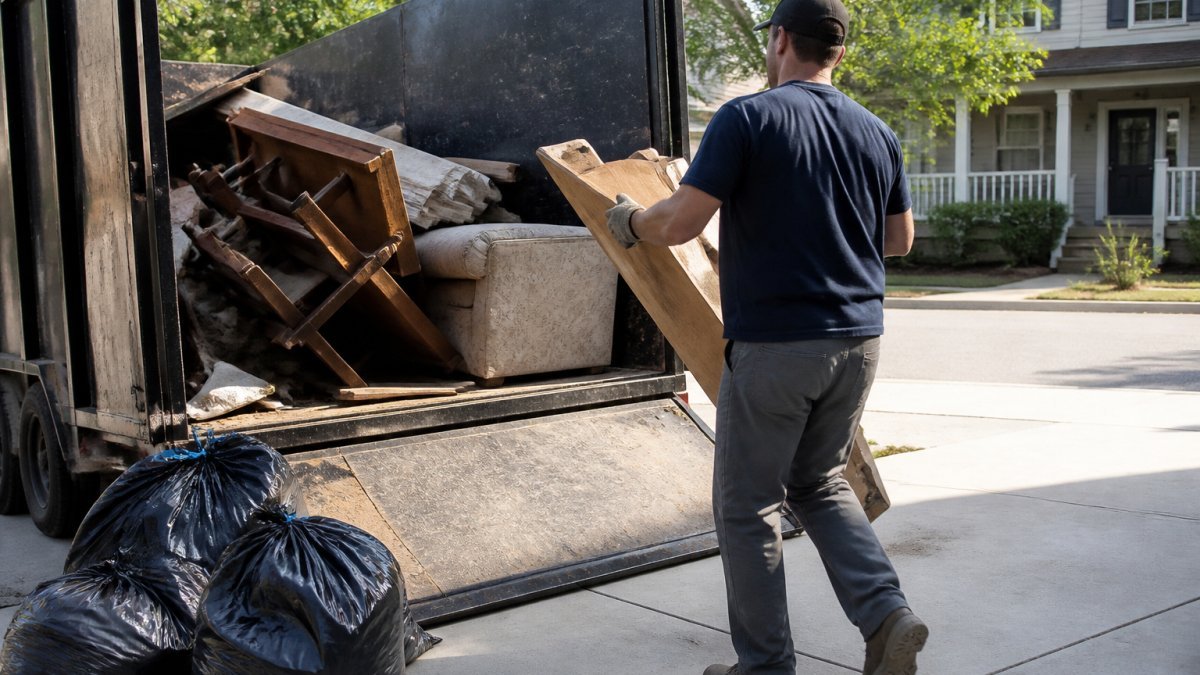
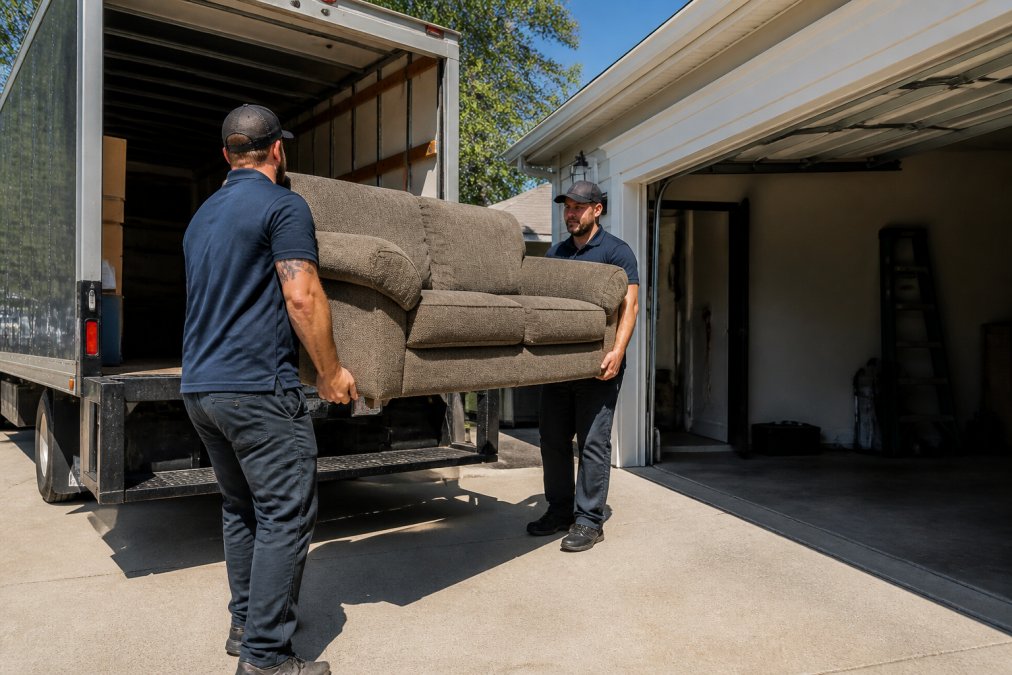
Hoosier Junk Daddy is a locally owned junk removal company serving homeowners, property managers, and contractors with full-service hauling, including the cleanup afterward. Crews handle the heavy lifting, and the company sorts items for recycling, donation, or landfill transport.
What Sets It Apart
Transparent pricing starts with a free on-site estimate, so you know the number before anyone touches your junk. The company reports diverting up to 60% of hauled items from landfills through recycling and donation, which matters if you’re clearing a garage full of items that still have life left.
Ideal For
Estate cleanouts, garage and basement decluttering, appliance disposal, and construction debris removal. Property managers juggling tenant turnovers also fit well here, since one crew can handle recurring cleanouts without supervision.
LoadUp: Flat-Rate Pricing and Curbside Pickup
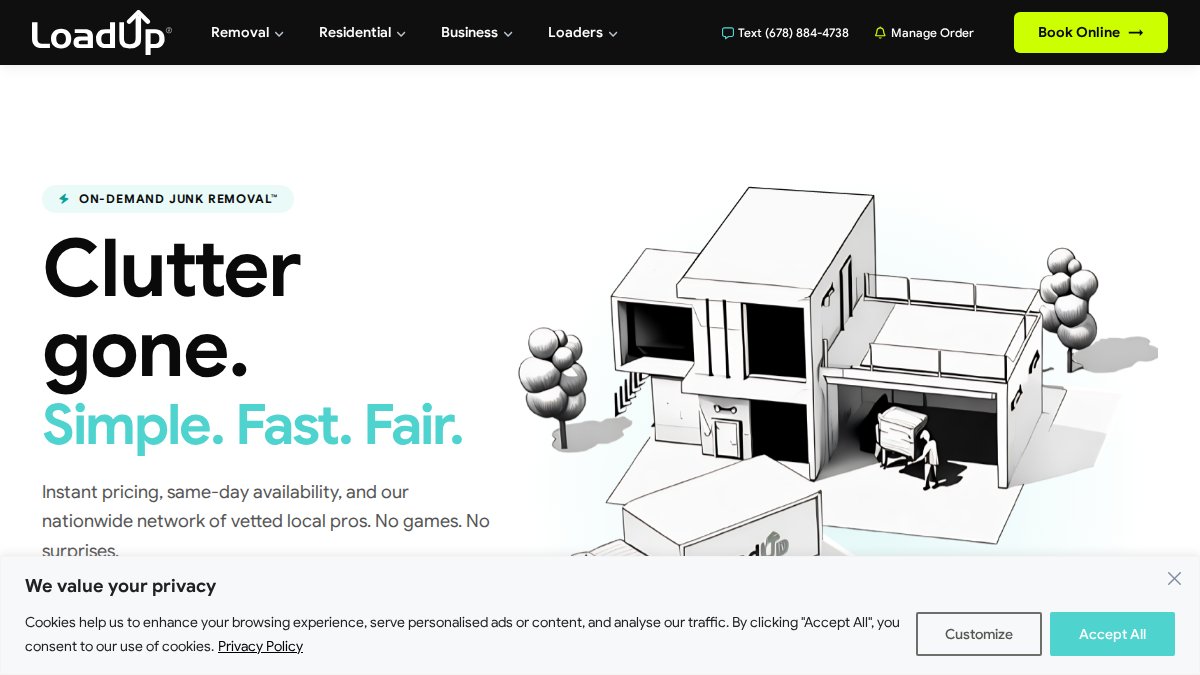
LoadUp built its model around upfront, guaranteed flat-rate pricing per item, which removes the on-site estimate negotiation entirely. You get a number before booking, and a nationwide network of insured local professionals handles the pickup.
What Sets It Apart
The curbside pickup option is the real differentiator. If you’re willing to move items to the curb yourself, the rate drops because the crew skips the labor-intensive removal step. Real-time GPS tracking keeps you informed about arrival windows.
Ideal For
Homeowners who know exactly what they’re getting rid of and want a fixed price without an in-person visit. The trade-off is that pricing is item-specific rather than volume-based, so a garage full of mixed clutter can be harder to quote than a single couch.
College HUNKS Hauling Junk & Moving: Combined Services
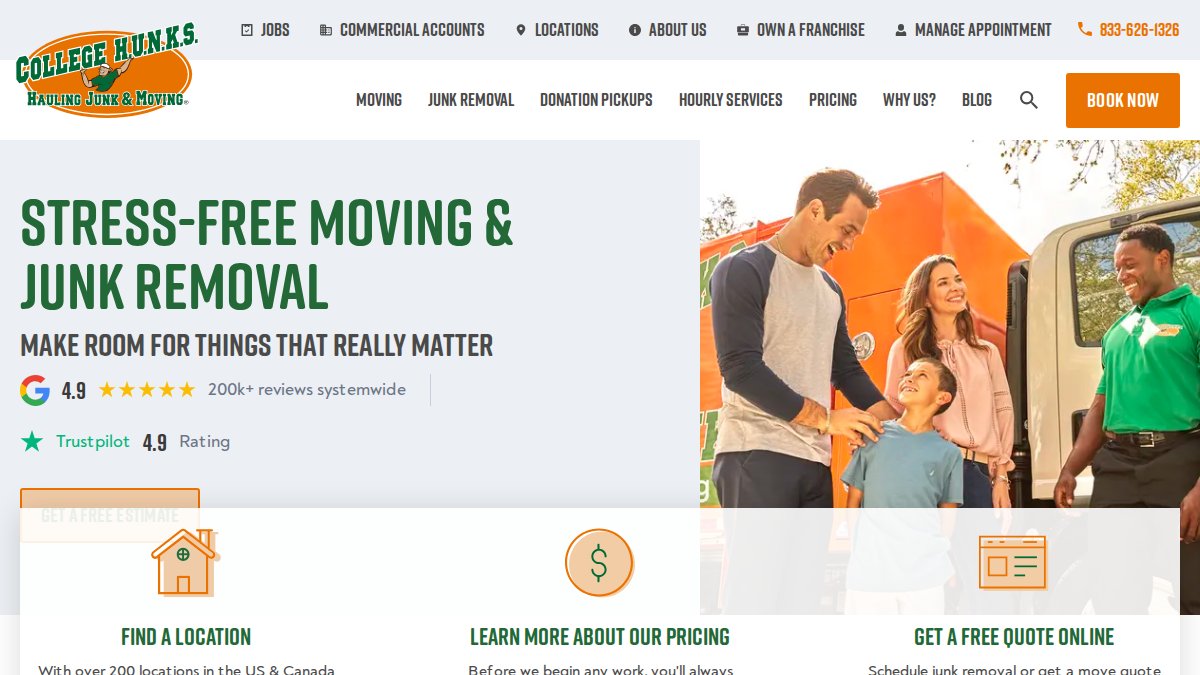
College HUNKS runs junk removal and professional moving under one roof, with uniformed, background-checked crews. The company also handles light demolition and home staging assistance.
What Sets It Apart
One visit can cover both hauling and relocation labor, which saves coordination time during a move. Eco-friendly disposal through donation and recycling is part of the standard process.
Ideal For
Homeowners mid-move who need furniture relocated and unwanted items hauled in the same appointment. Expect volume-based pricing, and note that combined services often cost more than a single-service hauler would charge for the junk alone.
Dropcurb: Budget-Friendly Curbside Pickup
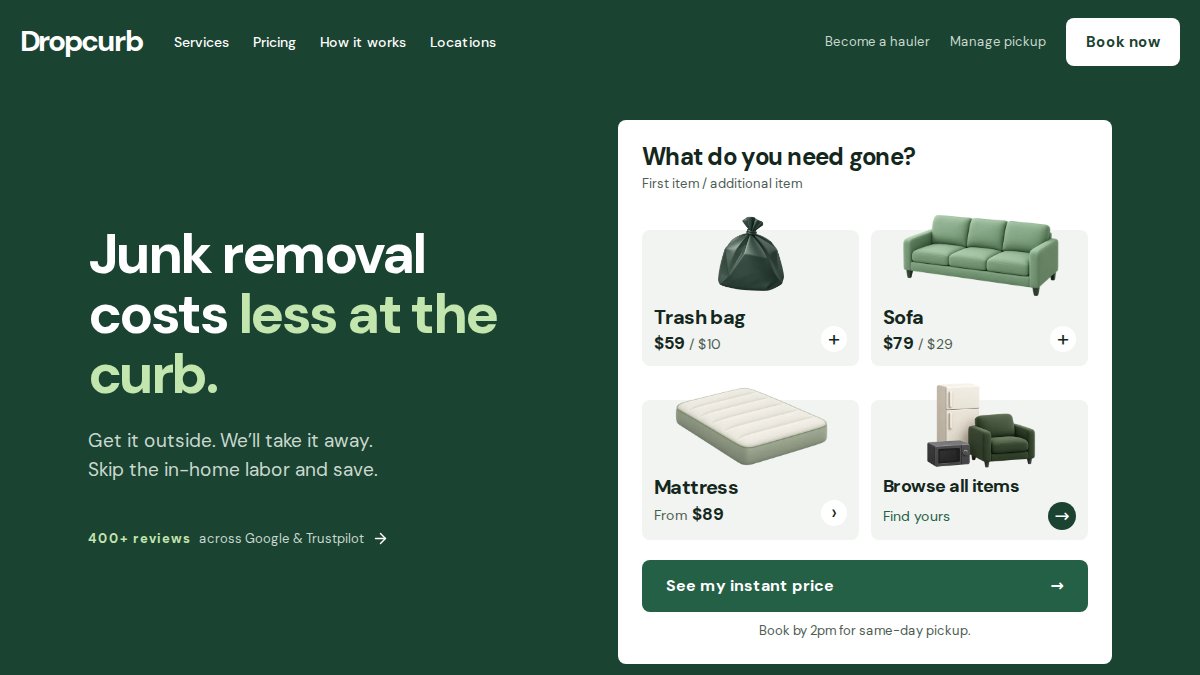
Dropcurb focuses on efficiency: you move items to the curb, and the company handles the rest at a lower rate. Pricing is flat-rate with the exact amount confirmed before service begins.
What Sets It Apart
Same-day availability and a simplified booking process make this one of the faster options for small loads. The curbside requirement is what keeps costs down.
Ideal For
Budget-conscious homeowners with a manageable pile of items and the ability to carry them outside. If you can’t lift a sleeper sofa alone, this model won’t work for you.
Full-Service Junk Removal vs Dumpster Rental
Full-service junk removal means a crew arrives, loads everything, and hauls it away, while a dumpster rental drops a container in your driveway for you to fill yourself. The right choice depends on your labor capacity and timeline, not just the price tag.
When Full-Service Wins
Choose full-service hauling when you can’t or don’t want to lift heavy items, when the job needs to finish in a single visit, or when you want disposal handled responsibly. Estate cleanouts and same-day real estate closings fit this category. You also avoid permit issues that some areas require for containers parked on public streets.
When a Dumpster Rental Makes Sense
A rental works when you’re generating debris over several days or weeks, such as a renovation, and you have the space and muscle to load it yourself. Contractors doing phased demolition often prefer this route.
How to Estimate Junk Removal Costs
Most junk removal pricing comes down to four inputs: volume, weight, labor, and disposal. But the number on your quote is rarely just those four. The gap between a lowball estimate and the final invoice is almost always hidden fees, and knowing them in advance is the single best way to compare providers fairly.
The Four Base Inputs
- Load size: Pricing is usually based on how much space your items occupy in the truck, measured in fractions of a full load, typically 1/8, 1/4, 1/2, and full. A single mattress is roughly 1/8 of a load; a full garage cleanout is often a full load or more.
- Weight and material type: Concrete, dirt, and roofing shingles are heavy and frequently carry per-ton surcharges once you cross a weight threshold. Mattresses, tires, and appliances with refrigerant (refrigerators, AC units) often carry flat per-item fees because of state disposal rules.
- Labor complexity: Stairs, tight basements, long carry distances, and disassembly add time, and time is labor cost. A third-floor walk-up with no elevator can add meaningful labor to an otherwise small load.
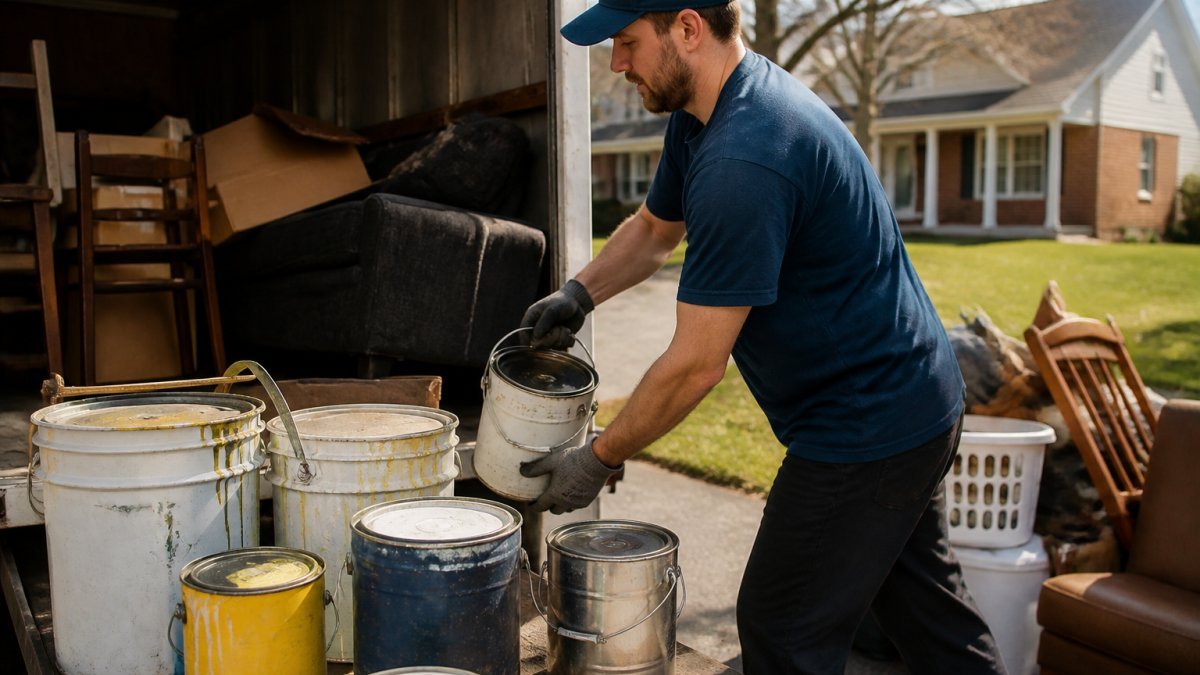
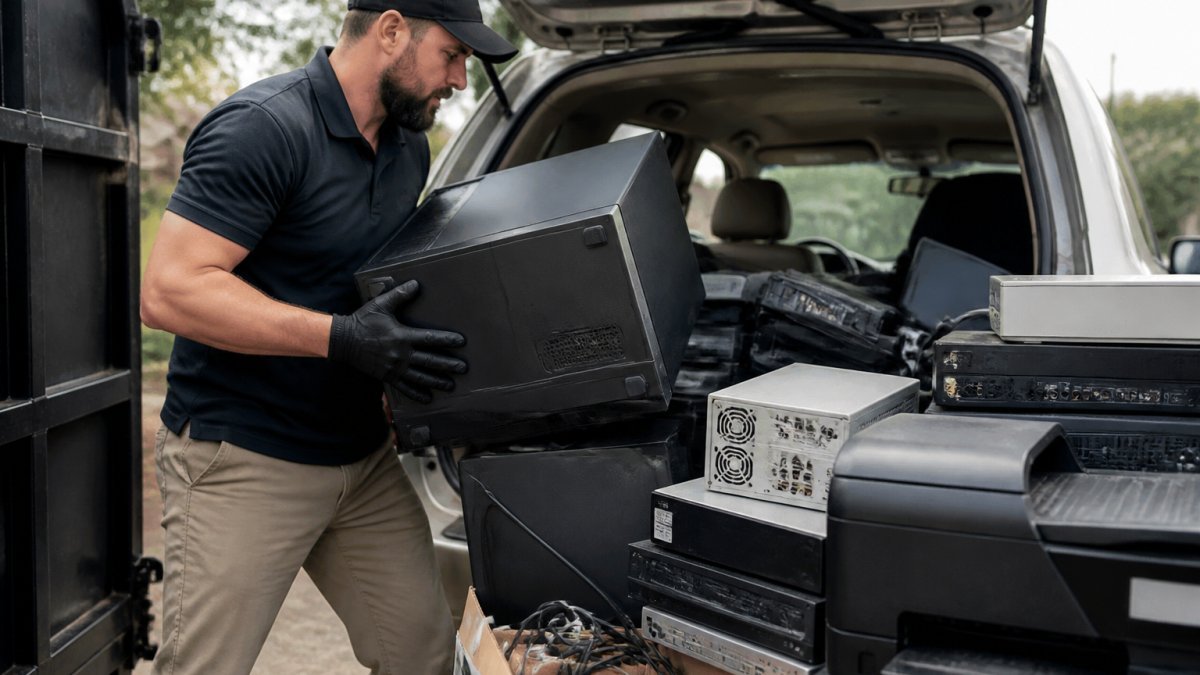
- Disposal fees: Items that can’t be recycled or donated cost more to process. Electronics, paint, and chemicals may be refused entirely or routed to a household hazardous waste facility.
Hidden Fees That Cause Sticker Shock
This is where most homeowners get surprised. Ask every provider, in writing, whether these surcharges apply:
| Surcharge | Typical Trigger | How to Avoid It |
|---|---|---|
| Heavy material fee | Concrete, dirt, shingles, brick | Ask for a per-ton rate upfront |
| Stairs / long carry | More than one flight, over ~75 feet from truck | Move items to the garage or curb if you can |
| Specialty item fee | Mattresses, tires, TVs, refrigerators | Confirm per-item pricing before booking |
| Fuel or trip charge | Outside a service radius | Confirm your ZIP is inside the free zone |
| After-hours / weekend | Evening or Sunday appointments | Book weekday morning slots |
| Cancellation fee | Same-day cancellations | Confirm the window in writing |
Ask whether the quote is all-inclusive and binding. A legitimate quote covers labor, transportation, and disposal. If a provider quotes low and adds fees later, that’s a sign to walk away, and a sign the original number was never real.
Why Prices Vary by Region
National averages are close to useless for a single homeowner because disposal costs are local. Tipping fees at landfills and transfer stations vary widely by state and metro area, and labor rates track local cost of living. A load that costs one price in a rural area can cost noticeably more in a dense coastal metro, even for the same items.
How to Read a Quote
- Get the load fraction in writing. “About half a truck” is not a number. Ask for the fraction and the corresponding price.
- Ask for the all-in total. Labor, transport, disposal, and any surcharges should be one number.
- Confirm what happens if the load is bigger than expected. A good provider re-quotes on-site before loading, not after.
- Check the payment terms. Deposits, card fees, and cash discounts vary by operator.
Questions to Ask Before You Book
- Is the estimate binding, and does it include disposal fees?
- What items do you refuse to take?
- How do you handle hazardous materials like paint, electronics, or chemicals?
- Can you provide proof of where my items end up?
- What’s your cancellation policy if my plans change?
- Are there any surcharges not included in this quote?
A quote is only comparable to another quote when both are all-inclusive and binding. If one provider won’t put the number in writing, that’s your answer.
What to Look For in a Junk Removal Company
Verification separates a professional operation from a guy with a truck. Two checks matter most: insurance and disposal practices. Both are things you can verify before the crew arrives, and both protect you after they leave.
Licensing, Insurance, and Liability
Ask for a certificate of insurance before the crew arrives, not a verbal assurance. What you want to see:
- General liability coverage. This covers damage to your property, a scuffed wall, a broken doorframe, a cracked driveway. Ask for the coverage limit and confirm it’s current.
- Workers’ compensation coverage. If a worker is injured on your property and the operator carries no workers’ comp, you can be exposed to a claim. This is the coverage homeowners most often forget to ask about.
- Commercial auto coverage. The truck itself should be insured for commercial hauling, not just personal use.
Never let an uninsured crew onto your property. If a worker is hurt or your home is damaged, an uninsured operator leaves you holding the bill, and your homeowner’s policy may not cover it.
Eco-Friendly Disposal and Landfill Diversion
Landfill diversion means routing usable items to donation centers and recyclable materials to processing facilities instead of the dump. The EPA’s guidance on reducing waste explains why this matters: landfill space is finite, and reusable goods retain value when they stay in circulation.
Donation vs. Disposal: How the Workflow Actually Runs
“We recycle everything” is a slogan, not a process. Here’s what a real diversion workflow looks like, so you can ask the right questions:
- Sort at the truck. Usable furniture, clothing, and housewares get separated from true trash before anything is compacted.
- Route to donation partners. Good-condition items go to local charities, thrift partners, or shelters. Ask which organizations your provider works with.
- Recycle by material stream. Metal, cardboard, e-waste, and appliances go to separate recyclers. Appliances with refrigerant require certified handling.
- Landfill only what’s left. The remainder goes to a transfer station or landfill.
Other Checks Worth Making
- Service area and scheduling. Confirm your ZIP code is inside the free service radius and ask how far out same-day slots book.
- Reviews with specifics. Look for reviews that mention the final price matching the quote, not just “friendly crew.”
- Payment and cancellation terms. Get the cancellation window and any deposit terms in writing before you book.
Ask for the COI and the diversion percentage. A provider who can produce both on the spot is almost always the one you want.
Frequently Asked Questions
Is a local junk removal company cheaper than a national franchise?
Local companies often have lower overhead because they do not pay franchise fees or fund national ad campaigns. That can translate to more competitive pricing, especially for volume-based jobs like garage cleanouts. However, pricing depends on load size, item type, and travel distance. Always request a free on-site estimate so you can compare the total cost, including any disposal fees, before you commit.
How do I estimate junk removal costs before booking?
Start by estimating the volume of your junk in cubic yards. A standard pickup truck bed holds about 2 to 3 cubic yards, while a full garage cleanout can run 10 or more. Most providers price by volume, weight, or item count. Ask whether the quote includes labor, disposal fees, and any surcharges for heavy items like concrete or appliances. Hoosier Junk Daddy offers free on-site estimates, so you get an exact number before work begins.
What should I look for in a junk removal company?
Check for proof of insurance and licensing, transparent pricing with no hidden fees, and a clear plan for recycling or donation. Ask where items end up: a responsible hauler will divert as much as possible from landfills. Hoosier Junk Daddy, for example, recycles, reuses, or donates up to 60% of hauled items. Also confirm same-day or next-day availability if you are on a tight deadline, and read recent customer reviews for reliability.
Can junk removal companies handle hazardous items like paint or electronics?
Most full-service haulers accept common household items but have restrictions on hazardous waste such as paint, solvents, and certain electronics. These materials require special handling under state and federal rules. Ask the company upfront what they can and cannot take. If they cannot accept an item, they can often point you to a local household hazardous waste drop-off site. Knowing the restrictions before pickup day saves you time and avoids surprise fees.
Is same-day junk removal realistic for a home closing?
Same-day service is possible but not guaranteed, especially during peak moving seasons. When you call, state your deadline clearly. Hoosier Junk Daddy offers same-day service when possible and can often schedule urgent cleanouts for real estate closings if you book early in the day.
The hardest part of choosing a Junk King alternative isn’t finding options. It’s finding one that shows up on time, quotes honestly, and proves where your stuff ends up. Hoosier Junk Daddy handles all three with free on-site estimates, same-day service when available, and a documented commitment to diverting up to 60% of hauled items through recycling and donation. Get started with Hoosier Junk Daddy and clear your space without the guesswork.