Table of Contents
- Start With Legal Authority and a Property Walkthrough
- Your Estate Cleanout Checklist: Sort, Document, and Distribute
- How Long Does an Estate Cleanout Take?
- Hiring Professional Junk Removal for Estates
- Handle Hazardous Waste, E-Waste, and Digital Accounts
- Tax Rules and Family Conflict: Two Things Most Guides Skip
- Managing Grief and the Emotional Labor of Letting Go
- Frequently Asked Questions
Last Updated: September 21, 2026
Start With Legal Authority and a Property Walkthrough
An estate cleanout is the systematic process of sorting, distributing, and removing the contents of a home after someone has died or moved into care. Preparing for estate cleanout starts with two things: confirming who has legal authority to act, and documenting the property before a single item leaves.
IRS guidance on estate administration and the executor’s responsibilities
Confirm Your Role as Executor or Beneficiary
The executor named in a will, or the successor trustee of a trust, holds legal authority to enter the property and manage its contents. A beneficiary does not automatically have that authority. If probate has not opened, family members who remove items before an executor is appointed can create real problems.
Document the Home Before Anything Leaves It
Documentation protects everyone. Before removing a single item, walk the property and record what is there.
- Photograph every room, closet, drawer, and outbuilding
- Video the walkthrough as a backup, narrating what you see
- Note high-value items: jewelry, firearms, art, tools, electronics, and cash
- Check the safe deposit box, filing cabinets, and desks for wills, deeds, and trusts
- Log the condition of the home itself for insurance and resale purposes
Your Estate Cleanout Checklist: Sort, Document, and Distribute
A workable estate cleanout checklist has four phases: document, sort, distribute, and remove. The order matters. Sort before you document and you lose the record. Distribute before you sort and you lose the chance to be fair.

The Four-Pile Sorting Strategy: Keep, Donate, Sell, Discard
The four-pile method keeps a large job manageable. Set up four zones and force every item into one.
- Keep: items named in the will, heirlooms with clear sentimental value, and anything a beneficiary has requested in writing
- Donate: usable clothing, furniture, housewares, and books in good condition
- Sell: items with real resale value, including tools, collectibles, and quality furniture
- Discard: broken, stained, expired, or unsalvageable items
Locate Wills, Deeds, Trusts, and Safe Deposit Box Records
Pull legal and financial documents before anything else leaves the home. Search the home office, filing cabinet, fireproof box, and safe deposit box for:
- The original will and any codicils
- Deeds to the home and any other real property
- Trust documents and the trust’s schedule of assets
- Life insurance policies and annuity contracts
- Bank and brokerage statements
- Vehicle titles
Removing documents or valuables from the home before the executor is formally appointed can be treated as interference with the estate. When in doubt, photograph the item where it sits and leave it in place.
How Long Does an Estate Cleanout Take?
- Legal clearance (1 day to several weeks): If probate has not opened, nothing else can start. Court appointment of an executor can take weeks depending on the county and whether the will is contested.
- Documentation walkthrough (2 to 4 hours): Photograph and video every room in a single session.
- Sorting (the long pole): A one-bedroom apartment sorts in two to three days; a home occupied for forty years with a garage, attic, basement, and outbuildings can take two to four weeks part-time. Rule of thumb: one room per day fully packed, half a day lightly packed.
- Distribution and disputes (variable): Specific bequests are fast; family disagreement adds weeks. Written distribution plans signed before sorting begins cut this phase dramatically.
- Removal and disposal (1 to 3 days): Once piles are set, a hauler clears the discard and donation loads in a single visit for most homes.
- Hazardous and e-waste drop-off (1 to 2 days): These require separate trips to designated facilities.
Three variables move the timeline most:
- Volume of paper. Financial records, tax returns, and correspondence can consume days; shredding alone can take a full day for a home office.
- Decision authority. If one person has clear legal authority and the family defers to them, decisions happen fast. If every item requires a group vote, the job stalls.
- Deadline pressure. A real estate closing date forces pace. Without one, cleanouts routinely stretch for months.
A common pattern is families who spend three weekends sorting and then discover the closing is in ten days. Reverse the order: set the removal date first, then sort toward it.
For homes with significant contents, consider a hybrid schedule: let a professional crew clear the discard and bulk donation loads early to open floor space, while the family handles keepsakes and disputed items on their own timeline.
Hiring Professional Junk Removal for Estates
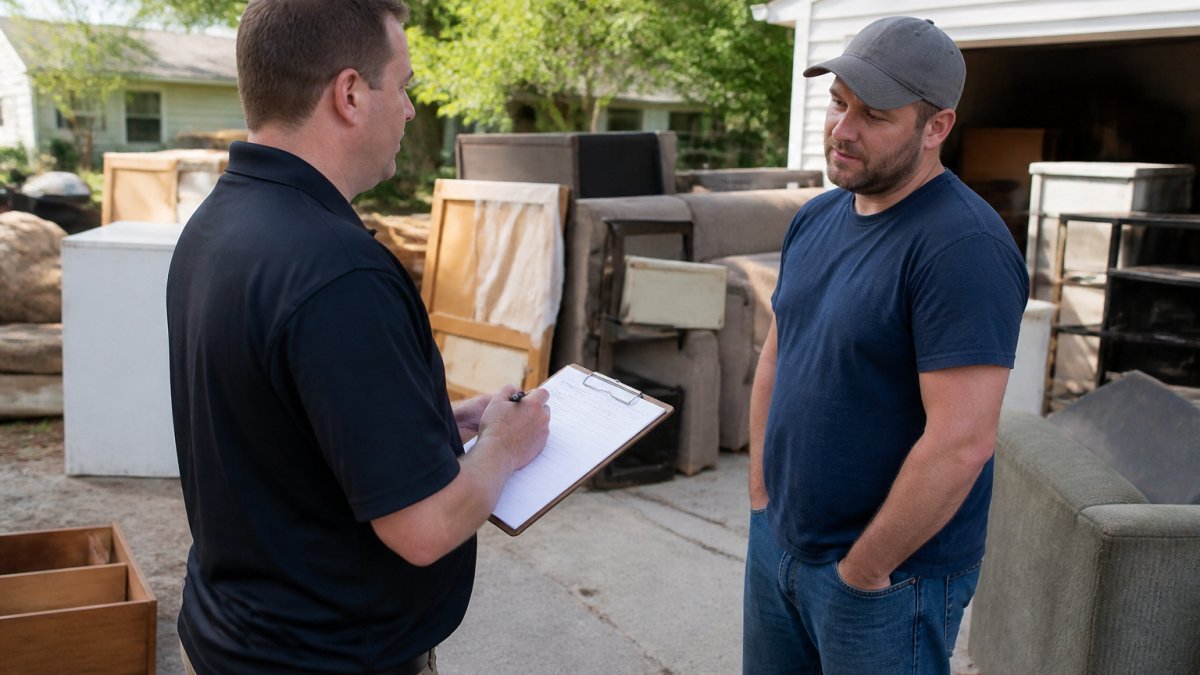
Hiring professional junk removal for estates turns a stalled cleanout into a finished one. A good crew handles the heavy lifting, loading, and disposal, and gives you a documented record of what was removed, real relief for families managing grief and logistics at once.
What to Ask Before You Book a Hauler
Ask these questions before you sign anything:
- Do you provide a written, on-site estimate before work begins?
- What happens to items that can be donated or recycled, and can you document it?
- How do you handle appliances, mattresses, and e-waste?
- Are you insured, and who is on the crew?
- Can you work around a real estate closing deadline?
A hauler who cannot answer these clearly will cut corners.
Handle Hazardous Waste, E-Waste, and Digital Accounts
Three categories of estate contents need handling a standard dumpster cannot provide: household hazardous waste, electronics, and digital accounts. Most guides skip the third, and that omission creates real problems for executors.
Household Hazardous Waste
These items are regulated as household hazardous waste and cannot legally go in a standard dumpster in most jurisdictions:
- Latex and oil-based paint, stains, and varnish
- Solvents, paint thinner, and adhesives
- Pesticides, herbicides, and fertilizer
- Motor oil, antifreeze, and automotive fluids
- Propane tanks and other pressurized cylinders
- Lithium-ion and lead-acid batteries
- Fluorescent tubes and compact bulbs
- Pool chemicals and cleaning agents
EPA guidance on household hazardous waste disposal
Electronics and Data-Bearing Devices
Old computers, laptops, tablets, phones, external drives, routers, printers, and smart-home devices all hold data. Before any leave the house, decide whether the data matters.
- Wipe or remove drives. A factory reset is not always sufficient. For computers, physically removing the drive is the safest option if you do not have the tools to wipe it properly.
- Check for cloud sync. A phone that appears wiped may still have photos and messages syncing to a cloud account you have not yet closed.
- Recycle through a certified e-waste handler. Many retailers accept small electronics for recycling at no charge. EPA guidance on electronics recycling
Digital Accounts: The Gap Most Guides Miss
- Email first. The email account is the master key. Password reset links for nearly every other account route through it. If you can access the email, you can usually close or transfer everything else.
- Cloud photo and file storage. Photos are often the single most valuable digital asset to a family. Check for a legacy contact or inactive account manager setting, which some major providers offer so a designated person can access the account after death.
- Financial and brokerage accounts. These require formal documentation, typically a death certificate and proof of executor authority. Do not attempt to log in and transact; contact the institution’s estate services department.
- Social media. Most platforms have a memorialization process that preserves the profile, and a separate process for deletion. Choose deliberately rather than letting the account sit dormant.
- Subscriptions and recurring charges. These drain the estate quietly. Cancel them, but first confirm none are tied to a service the estate still needs, such as storage or utilities.
- Cryptocurrency. Without the private keys or seed phrase, the asset is effectively lost. Search for hardware wallets, written seed phrases, and password manager entries before assuming nothing exists.
Do not close accounts before you have downloaded or exported anything the family wants to keep. Once an account is deleted, photos, messages, and purchase history are usually gone permanently.
A password manager is the fastest path through all of this. If the deceased used one, the master password or emergency access contact may be documented with the will or in a safe deposit box. If not, expect death certificates and court documentation for each provider individually, which is why a digital asset inventory is one of the most valuable things anyone can leave behind.
Tax Rules and Family Conflict: Two Things Most Guides Skip
Two issues derail more estate cleanouts than clutter: taxes and family disagreement. Handle both early and the physical work gets easier.
| Problem | Fix | Why It Matters |
|---|---|---|
| Items removed before probate | Wait for executor appointment | Prevents legal disputes |
| No inventory record | Photograph everything first | Protects against missing-item claims |
| Family disagreement over heirlooms | Written distribution plan | Avoids litigation costs |
| Hazardous items in dumpster | Use designated drop-off | Avoids fines and liability |
Managing Grief and the Emotional Labor of Letting Go
The emotional labor of an estate cleanout is real work and does not follow a schedule. Sorting a parent’s belongings while grieving is one of the harder things most people do. Give yourself permission to go slower than the logistics demand.
If a closing deadline is forcing the pace, split the job. Let a removal crew clear the discard and donation piles while the family handles the keepsakes. You get the deadline met without rushing the decisions that matter.
Frequently Asked Questions
How long does an estate cleanout take?
A single-family home typically takes one to three weeks of active sorting, with larger or heavily cluttered properties running longer. The biggest variables are how much inventory documentation is needed for probate, how quickly family members can be reached, and whether you hire professional junk removal for estates to handle hauling. Booking a hauler early often shaves days off the back end.
What should I remove first when decluttering an estate?
Start with obvious trash, expired food, and broken furniture. Clearing those first opens floor space and makes the rest of the home easier to assess. Next, pull out documents like wills, deeds, and financial records so they stay safe. Leave heirlooms and items with sentimental value for last, when you have more room and more energy to decide carefully.
How do you handle sentimental items during an estate cleanout?
Set a hard limit before you start, such as one box per family member, and photograph anything you decide not to keep. Give yourself permission to keep a small number of high-meaning items rather than everything. If siblings disagree, rotate the first pick rather than arguing item by item. A neutral third party or the executor’s final call can settle ties.
When should you hire professional junk removal services for an estate?
Hire a hauler once you have finished sorting and know what is leaving the home. That is usually after the keep and donate piles are set aside. Professional removal makes sense when the volume is large, when heavy items like appliances or furniture are involved, or when a real estate closing is close. Ask for a free on-site estimate and confirm how the company handles recycling and donations.
How do you organize items for donation versus disposal?
Donate anything usable: clothing, furniture in good condition, working appliances, and household goods. Discard items that are broken, stained, or unsafe. Keep a written list of donated items with estimated resale value, since charitable tax deduction rules require documentation. For items with real resale value, consider consignment or an estate sale before sending them to a landfill.
What paperwork do I need before an estate cleanout starts?
You need legal authority to act, which usually means a will naming you as executor or a court-issued letter of administration. Gather deeds, trusts, insurance policies, and account statements before items leave the property. If probate is open, keep an inventory of everything removed, with photos and dates, so you can document the estate’s assets accurately.
Can junk removal companies handle paint, electronics, and other hazardous items?
It depends on the hauler. Many junk removal companies accept e-waste, appliances, and some household chemicals, but paint, pesticides, and other hazardous waste often require a separate drop-off at a local collection site. Ask upfront what the company can and cannot take so you are not left with a pile of banned items on pickup day.
An estate cleanout is never just a junk removal job. It is a legal process, a family negotiation, and a goodbye, all at once. When the sorting is done and the house needs to be empty, Hoosier Junk Daddy handles the heavy lifting with free on-site estimates, same-day service when possible, and disposal that recycles, reuses, or donates up to 60% of what we haul. Get a quote now and reclaim the space without adding to the stress.