Table of Contents
- Hiring Junk Removal for Closing: Why Timing Matters
- Junk Removal Before Closing: What to Clear and When to Book
- Junk Removal Costs When Selling a Home: What Drives the Price
- Seller Left Junk at Closing: Who Pays and How to Handle It
- Final Walkthrough Checklist: What Buyers and Agents Look For
- How to Choose a Junk Removal Company Before Closing
- Frequently Asked Questions
Last Updated: October 13, 2026
Hiring Junk Removal for Closing: Why Timing Matters
Hiring junk removal for closing is the step that keeps a real estate deal from stalling at the finish line. The biggest risk in a home sale is not price or paperwork. It is a house that still holds years of accumulated stuff when the final walkthrough happens.
Most sellers underestimate how long a full cleanout takes. A packed two-car garage, a basement full of boxes, and a shed of rusted tools can take a crew most of a day, and that is before anyone sorts what can be donated. Book too late and you are paying for an emergency haul while your buyer’s agent is standing in the driveway.
The good news: the timeline is predictable, and a little planning removes almost all of the stress.
The single most important scheduling rule is to have the home completely empty at least two to three days before closing. That buffer absorbs weather delays, missed items, and any last-minute negotiation about what stays.
Junk Removal Before Closing: What to Clear and When to Book
Book your junk removal appointment as soon as you accept an offer, ideally two to three weeks before closing day. That gives you a firm date, time to sort what you want to keep, and room to reschedule if something slips.
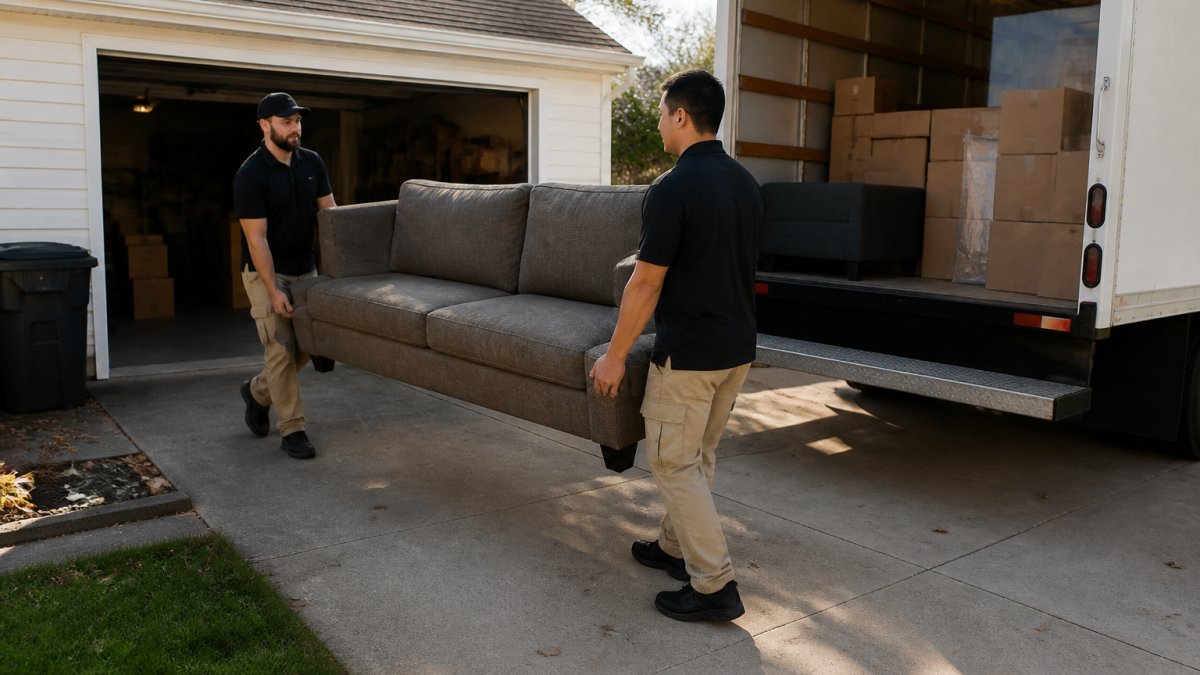
The order of operations matters more than most sellers expect. Start with the rooms that hold the most volume, because those are the ones that eat the schedule.
Rooms and spaces buyers expect to be empty
Buyers and their agents expect the following spaces cleared completely, with nothing left behind:
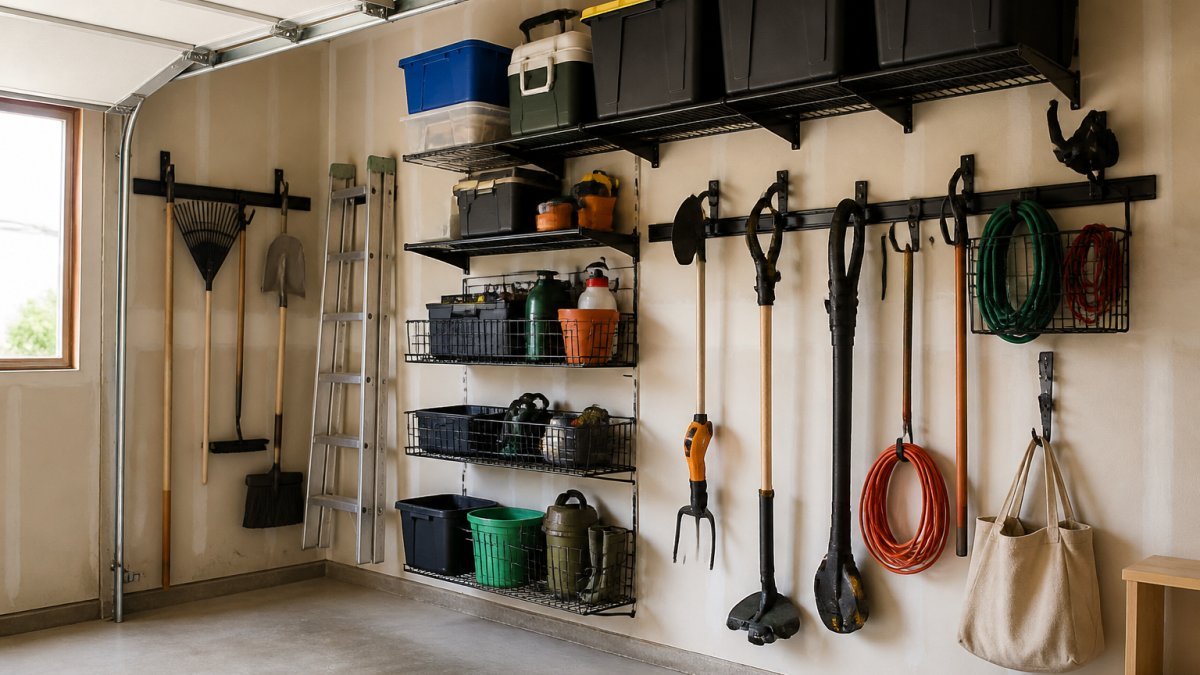
- Garages, including shelving, paint cans, and old tires
- Basements and crawl space access areas
- Attics and any storage above the garage
- Sheds and outbuildings on the property
- Closets, including the awkward one above the stairs
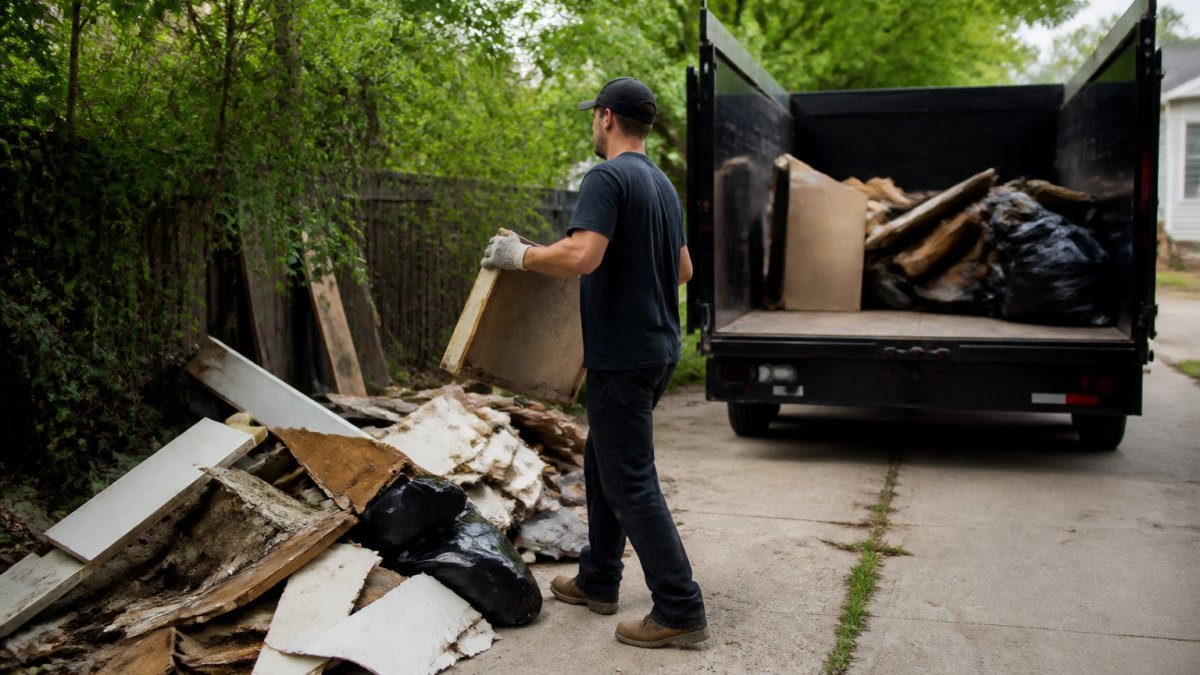
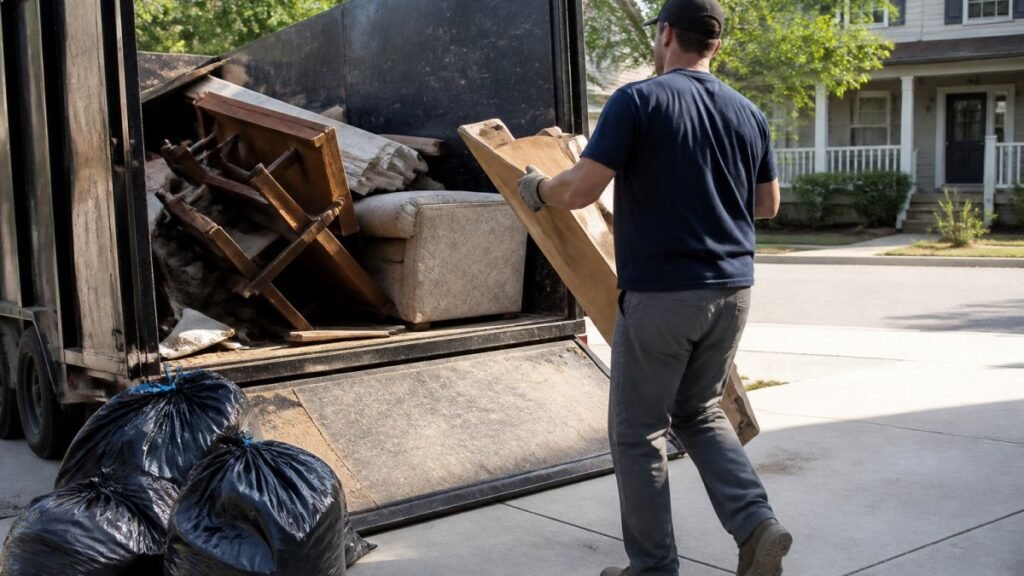
- Exterior areas: scrap wood, broken furniture, and yard debris
A common mistake is treating the garage as a “later” project. It is almost always the largest single job on the property, and it is the first thing a buyer sees when they pull up.
Walk the property with a notepad and mark each space as “keep,” “donate,” or “haul.” We find that sellers who do this one walk-through before booking end up with a smaller, cheaper load because they stop paying to move things they never wanted.
Junk Removal Costs When Selling a Home: What Drives the Price
Junk removal costs when selling a home depend on volume, weight, access, and how much of the load can be donated or recycled rather than landfilled. There is no single flat rate, because a single mattress and a full basement are not the same job.
Four factors move the number most:
- Volume: how much space the items take up in the truck
- Weight and material: concrete, dirt, and appliances are heavier and cost more to handle
- Access: stairs, tight hallways, and long carries add labor time
- Disposal route: items that can be donated or recycled often cost less to process than landfill-only loads
Because pricing varies this much by job, Hoosier Junk Daddy offers free on-site estimates so you know the number before we start, not after. You can check current rates on our pricing page or request a quote for your specific property.
For a seller on a deadline, the estimate visit is also useful for a second reason: it confirms what the crew can and cannot take, so nothing gets left behind on closing day.
Seller Left Junk at Closing: Who Pays and How to Handle It
If the seller leaves junk at closing, the sales contract usually decides who pays. Most standard purchase agreements require the property to be delivered in substantially the same condition as the final walkthrough, and personal property left behind can trigger a holdback or a credit to the buyer.
Handle it in this order:
- Check the purchase agreement for the condition and possession clauses
- Document everything with dated photos before anyone touches it
- Contact your agent immediately to negotiate a resolution
- If removal is agreed, schedule it fast and keep the receipt
The cheapest outcome is always the one where the junk never makes it to closing day. Once a buyer has to arrange removal themselves, they typically want to be compensated for their time and the haul, and that credit comes out of the seller’s proceeds.
Do not assume “the buyer can just deal with it.” Leaving a garage full of items after the walkthrough can delay funding or force a last-minute credit at the closing table, and the seller pays either way.
Final Walkthrough Checklist: What Buyers and Agents Look For
A final walkthrough checklist exists to confirm the home is in the agreed condition, empty of personal property, and ready for keys. Buyers walk through with their agent shortly before closing, usually within 24 hours.
| Check | What Buyers Look For | Why It Matters |
|---|---|---|
| Garage and shed | Completely empty, swept floor | Largest source of disputes |
| Basement and attic | No boxes, no stored items | Signals hidden damage risk |
| Appliances | Included items still in place | Contract specifies what stays |
| Exterior | No debris, scrap, or old furniture | Curb appeal and safety |
| Repairs | Agreed fixes completed | Ties directly to closing funds |
Walk the property yourself the day before, using the same list. If something is still there, that is your last realistic window to remove it without a negotiation.
How to Choose a Junk Removal Company Before Closing
Choose a junk removal company that gives you a written on-site estimate, a confirmed arrival window, and a clear answer about where your items go. On a closing deadline, reliability matters more than the lowest advertised number.
Federal Trade Commission guidance on consumer contracts and estimates is a useful reference for understanding what a written estimate should include before you commit.
Look for these signals:
- Free on-site estimates rather than phone-only guesses
- Transparent pricing explained before the truck is loaded
- A stated disposal policy covering donation and recycling
- Same-day or next-day availability when your timeline is tight
- Full-service removal, including cleanup after the load is out
Questions to ask before you book
- How soon can you get here, and what is your arrival window?
- Is the estimate free, and is the final price locked in before you start?
- What happens to items that can be donated or recycled?
- Do you handle appliances, electronics, and paint cans?
- Will you sweep and clean the space after removal?
Hoosier Junk Daddy is locally owned and operated, which matters when a closing date is fixed. We recycle, reuse, or donate up to 60% of what we haul, offer free on-site estimates, and provide same-day service when possible, with full cleanup after the load is gone.
A closing deadline does not leave room for a haul that shows up late or a garage that is still full on walkthrough day. Hoosier Junk Daddy handles the heavy lifting, sorts for donation and recycling, and cleans up after removal so the property is genuinely empty when the buyer arrives. With transparent pricing, free on-site estimates, and eco-friendly disposal that keeps up to 60% of items out of landfills, we make the final step of your sale the easiest one. Get started with Hoosier Junk Daddy and close on a truly empty home.
Frequently Asked Questions
When should I hire a junk removal company before closing?
Book junk removal at least 7 to 10 days before the final walkthrough. That buffer covers a rescheduled appointment, a second load for a packed garage or attic, and time to clean after the crew leaves. If your closing date is tight, ask whether same-day service is available, since many companies keep openings for urgent jobs. Clearing early also gives your real estate agent time to walk the property and flag anything you missed.
Who pays for junk removal when a seller leaves items behind?
It depends on the purchase contract. Many agreements require the seller to deliver the home empty and in broom-clean condition, which makes the seller responsible for removal costs. If the contract does not address personal property, the buyer may have to handle it and then negotiate reimbursement or a credit at closing. Talk with your agent before closing day so the responsibility is clear in writing rather than argued over later.
How much does junk removal cost when selling a home?
Junk removal costs when selling a home depend on how much you are hauling, what the items are, and how hard they are to reach. A single appliance or a few boxes costs far less than a full basement or garage cleanout. Heavy items like concrete, appliances, and electronics carry different handling and disposal fees. Hoosier Junk Daddy provides free on-site estimates, so you get a number based on your actual load instead of a phone guess.
What should I ask a junk removal company before booking?
Ask for a free on-site estimate, confirm the price includes labor and disposal fees, and find out how the company handles recycling and donation. Ask whether they can take appliances, electronics, paint cans, or other items your regular trash service will not accept. Confirm the crew does a final sweep for leftover debris, and get the appointment window in writing. These questions prevent surprise charges and last-minute scrambling before your final walkthrough.