Table of Contents
- Can Junk Haulers Take Paint? The Short Answer
- What Most Haulers Accept vs. Refuse
- How to Dispose of Latex Paint
- How to Dispose of Oil-Based Paint
- Household Hazardous Waste Paint Disposal
- Paint Can Recycling and Empty Can Rules
- How to Prepare Paint for Disposal or Pickup
- What Happens to Collected Paint and What It Costs
- Frequently Asked Questions
Last Updated: October 15, 2026
Can Junk Haulers Take Paint? The Short Answer
The short answer is: sometimes. It depends on what kind of paint you have and whether it is still liquid.
At Hoosier Junk Daddy, we get this question on nearly every garage or basement cleanout. Solidified latex paint can often ride along with a regular junk removal load.
Below, we show you how to sort your paint, what haulers will and will not take, and how to dispose of each type the right way.
The single rule that decides everything: is the paint solid or liquid? Solid latex paint usually goes in regular trash. Liquid paint needs a hazardous waste drop-off or a specialty pickup.
What Most Haulers Accept vs. Refuse
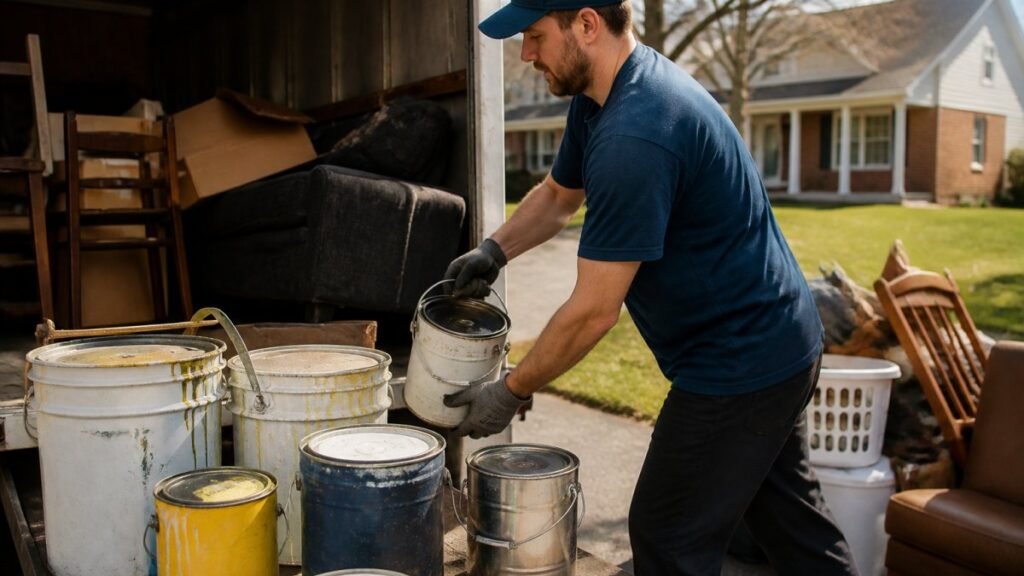
Most haulers accept dried latex paint, empty paint cans, and fully solidified paint. Most refuse liquid paint, oil-based paint, and any can leaking or unlabeled.
Here is the split you will see across the industry:
| Paint Type | Junk Hauler Pickup? | Why |
|---|---|---|
| Dried latex paint | Usually yes | Treated as regular solid waste |
| Liquid latex paint | Usually no | Needs solidifying first |
| Oil-based paint | No | Household hazardous waste |
| Empty paint cans | Usually yes | Recyclable or regular trash |
| Leaking or unlabeled cans | No | Safety and identification risk |
Most guides treat “paint” as one item. It is not.
Open the can. If a stir stick stands up on its own, the paint is solid enough for most pickup services. If it sloshes, it needs prep work first.
How to Dispose of Latex Paint
The easiest way to dispose of latex paint is to solidify it, then put the can in your regular trash. Latex paint is not classified as household hazardous waste in most areas, so curbside and bulk waste programs generally accept it once dry.
You have a few options to speed up drying:
- Leave the lid off in a warm, ventilated spot
- Stir in an absorbent like cat litter or sawdust
- Pour thin layers into a cardboard box lined with plastic
Once rock solid, leave the lid off and place the can at the curb, or hand it to a hauler as part of a larger load.
Do not pour liquid latex down the drain or into the yard. It can clog pipes and contaminate soil, and many municipal waste services will reject the load if they spot wet paint.
Solidify It, Then Toss It
Solidifying is the step people skip, and it matters most. Liquid latex weighs more, leaks more, and gets refused more often than a dried can. Give it a week in a warm garage, or use a hardener if you are in a hurry.
How to Dispose of Oil-Based Paint
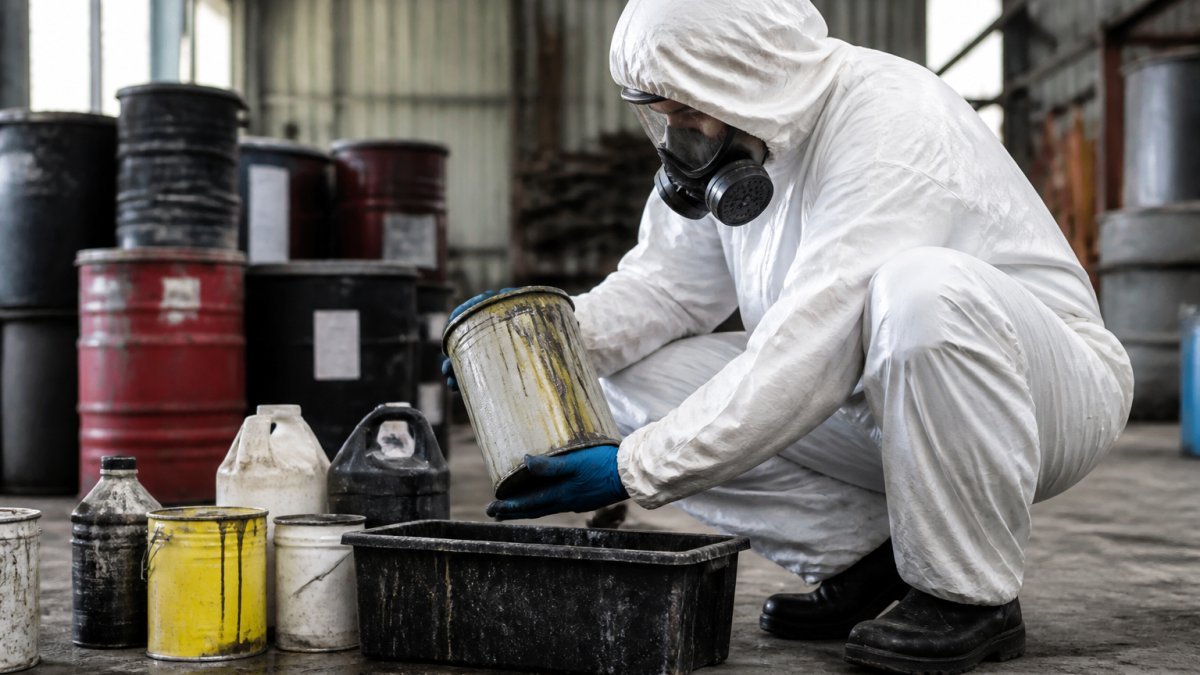
Oil-based paint (also labeled alkyd, enamel, or “solvent-based”) is almost always household hazardous waste. It does not dry out like latex, stays flammable, and can release VOCs for years. Your junk hauler will almost certainly refuse it, and so will curbside trash.
Confirm what you actually have. The label is the fastest test:
- “Clean up with soap and water” → latex (water-based). Not hazardous waste in most areas.
- “Clean up with mineral spirits,” “paint thinner,” or “turpentine” → oil-based. Hazardous waste.
- No label, unknown contents → treat it as hazardous. Do not guess.
Your Realistic Disposal Options
Ranked from easiest to most effort:
- Retailer take-back or paint stewardship program. A growing number of states run programs where retailers collect both latex and oil-based paint for recycling or disposal. If your state participates, this is usually the simplest path.
- Permanent household hazardous waste (HHW) facility. Most counties run a year-round drop-off for paint, solvents, and other chemicals. Usually free for residents, but often with per-visit limits.
- One-day HHW collection event. If your area has no permanent site, municipalities run periodic events. They fill up fast and often require pre-registration.
- Specialty hazardous-waste pickup. A licensed contractor comes to you, but expect a minimum charge plus a per-container fee. Most expensive route; only makes sense for large quantities.
- Junk hauler, only if they explicitly confirm it. Some haulers subcontract hazardous waste to a licensed handler and pass the cost through. Get the confirmation in writing before booking.
What NOT to Do With Oil-Based Paint
- Do not pour it down a drain, toilet, or storm sewer. Storm drains often lead directly to waterways with no treatment (the EPA).
- Do not mix it into a latex load to hide it. Facilities test or visually inspect loads, and a single oil-based can can get an entire truck rejected, sometimes with a surcharge back to you.
- Do not let it sit in a hot garage or trunk. Oil-based paint is flammable; heat and fumes are a real risk.
How to Tell If Oil-Based Paint Is Still Usable
Sealed and stored indoors, oil-based paint can last for years. Stir it thoroughly. If it mixes smooth with no lumps or skin, consider donating it to a community group, theater, or tool library. If it has skinned over, clumped, or smells strongly of solvent, it is done.
Never pour oil-based paint, thinner, or solvent down a drain or storm sewer. These are chemical waste, and improper disposal can carry real legal and environmental consequences.
Quick Decision Path
- Half-full, still liquid, labeled oil-based → HHW facility or retailer take-back.
- Dried solid, labeled oil-based → still hazardous in most areas; confirm with your HHW program before trashing.
- Unlabeled, unknown, or leaking → treat as hazardous; do not hand to a general junk hauler.
Household Hazardous Waste Paint Disposal
Household hazardous waste paint disposal runs through dedicated collection sites, not regular trash. Most communities run a permanent drop-off or periodic collection events for paint, solvents, and other chemical waste, usually free for residents.
What counts as household hazardous waste:
- Oil-based and alkyd paint
- Paint thinner, turpentine, and solvents
- Aerosol spray paint
Some programs also take liquid latex if you cannot dry it out, but check first. Rules vary a lot by city and county, so confirm before you load up the car.
How to Verify Local Hauler Policies Before Booking
Policies differ by hauler, so verify before you book. A quick call saves you a rejected pickup. Ask:
- Do you accept paint cans at all?
- Do you take liquid paint, or only solidified?
- Is there a disposal fee for paint?
Get the answer in writing if you can. A hauler who says “we take everything” without asking about the paint type is a red flag.
Paint Can Recycling and Empty Can Rules
Paint can recycling depends on whether the can is truly empty. Empty, dry metal cans are often accepted at scrap metal recyclers.
The test for “empty”: no liquid pours out when you tip it, and no more than a thin residue remains.
For cans with usable leftover paint, consider donation first, community groups, theater companies, and school art programs sometimes accept partial cans.
How to Prepare Paint for Disposal or Pickup
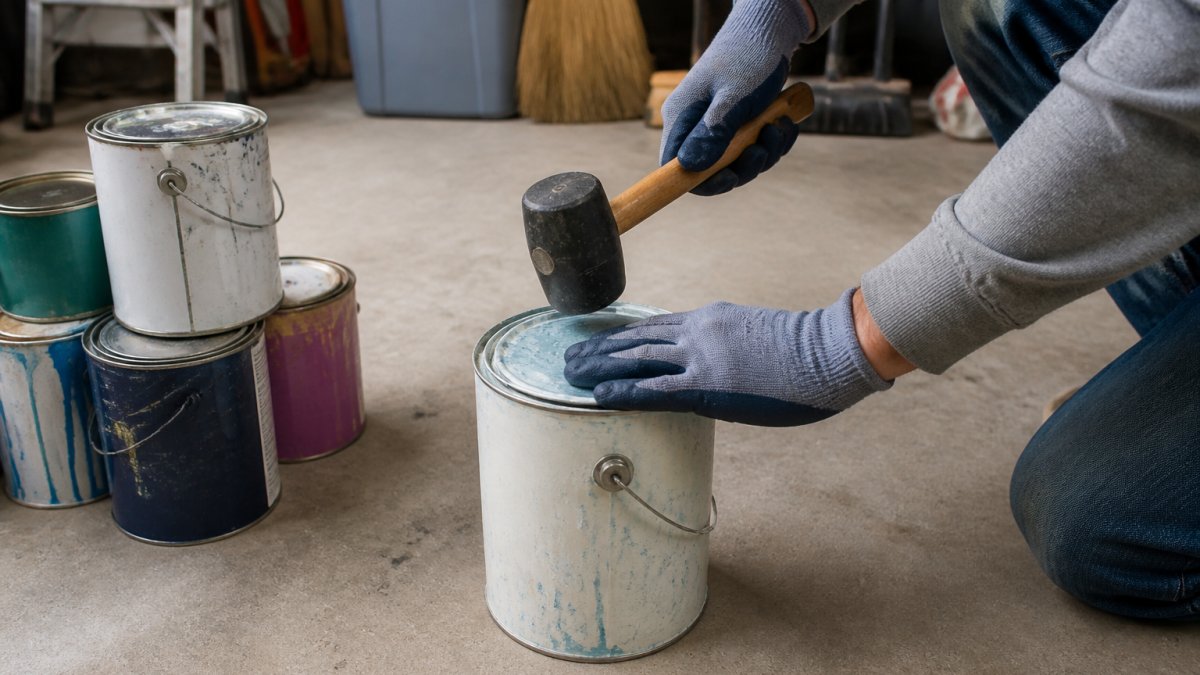
Preparing paint for disposal comes down to four steps: identify, solidify, seal, and label. Do these before any pickup service arrives, and the whole job goes faster.
- Identify the paint type. Read the label. Water-based goes one way, oil-based goes another.
- Check the condition. Solid or liquid? This decides your disposal route.
- Solidify liquid latex. Add hardener or absorbent and let it dry.
- Seal and label. Keep lids on solid cans, and mark unknown cans clearly.
Safe Handling and Transport of Liquid Paint
If you are moving liquid paint yourself, treat it like the chemical it is. Keep cans upright in a plastic bin or lined box so spills stay contained, never on their sides in a trunk.
For oil-based or unknown paint, wear gloves and avoid skin contact. If a can is leaking, set it inside a larger sealed container before transport.
What Happens to Collected Paint and What It Costs
Most guides stop at “get a quote.” That is not useful when you are standing in a garage with twelve cans and no idea whether it is a $40 problem or a $400 one. Here is how the money and material actually break down.
What Happens to Collected Paint
Once paint leaves your property, the destination depends on the type:
- Solidified latex → landfill or a waste-to-energy facility. It is treated as regular solid waste.
- Liquid latex (if accepted) → sometimes consolidated and dried at a transfer station before landfill.
- Oil-based and other hazardous paint → a licensed hazardous-waste handler, where it is either fuel-blended for energy recovery or incinerated under permit.
How Junk Removal Pricing Actually Works
Junk removal is priced by volume (how much space your stuff takes in the truck), not item count. Most haulers quote in fractions of a truck load, commonly 1/8, 1/4, 1/2, and full.
Typical patterns you will see across the industry:
- Dried latex cans mixed into a normal load → no separate charge; they count toward volume.
- Liquid latex that needs solidifying → some haulers charge a small handling fee, others refuse outright.
- Oil-based or unknown paint → a per-container or per-gallon hazardous surcharge, often in the range of a few dollars per can, plus a minimum fee. Exact numbers vary widely by region and hauler.
Because these numbers swing so much by market, get a written quote that itemizes the hazardous portion separately from the volume portion. A single flat number without asking what kind of paint you have is a red flag.
Quantity Limits You Should Expect
- HHW drop-off sites → often limit residents to a set number of gallons or containers per visit, sometimes per month.
- One-day collection events → frequently cap total volume and require pre-registration.
- Retailer take-back → usually limited to paint purchased in similar quantities, and some cap the number of cans per trip.
Alternatives to Hiring a Hauler
Before you book, price these against each other:
- HHW drop-off, usually free for residents; costs you a trip.
- Retailer / stewardship take-back, usually free; limited by store participation.
- Community collection event, free; limited by schedule and registration.
- Donation of usable paint, free; only works for sealed, still-usable cans.
- Junk hauler, most convenient; most expensive, especially with hazardous surcharges.
For a few dried cans, the hauler is overkill, solidify and curb them. For a full garage cleanout, a hauler makes sense because the paint rides along with everything else. For a shelf of oil-based paint, the HHW route is almost always cheaper and the hauler may refuse it anyway.
At Hoosier Junk Daddy, we offer transparent pricing and free on-site quotes, so you know the number before we lift a single can.
Frequently Asked Questions
Can junk haulers take paint?
It depends on the paint and the hauler. Many junk removal services accept latex paint if it is fully solidified, and some accept liquid latex with an added fee. Oil-based paint, spray paint, and other hazardous materials are frequently refused because they require special handling. Always confirm the hauler’s policy before booking, since rules vary by company and location.
How can I tell whether leftover paint is hazardous waste?
Check the label first. Words like flammable, combustible, toxic, or contains petroleum distillates signal hazardous waste. Oil-based paint, spray paint, and paint with solvents fall into this group. Latex and water-based paints are usually not hazardous once dry. If you are unsure, treat it as hazardous and take it to a household hazardous waste collection site rather than placing it in regular trash.
What should I do with empty paint cans?
Empty paint cans with no liquid residue can usually go in regular trash or curbside pickup if your local rules allow it. Remove the lid so collectors can see the can is empty, and let any remaining film dry completely. Some areas require empty cans to go to a paint can recycling program instead. Check your municipal waste services guidelines, because rules differ from one city to the next.
How should I prepare paint cans for disposal or pickup?
Keep liquid paint in its original sealed can with the label attached so the hauler can identify it. For latex paint you want to throw away, mix in a solidifier or cat litter and let it dry completely before placing it curbside. Never combine different paints in one container, and never pour liquid paint down a drain. Label any can that is leaking or damaged before handing it off.
Old paint is one of the most confusing items to get rid of, and guessing wrong means a rejected pickup or a bigger mess. Hoosier Junk Daddy handles the sorting, the heavy lifting, and the responsible disposal for you, with free on-site estimates, same-day service when possible, and eco-friendly practices that keep usable items out of the landfill. Get started with Hoosier Junk Daddy and clear out that garage, basement, or job site the right way.