Last Updated: October 27, 2026
Quick Summary
Hauled junk is sorted on site, then sent to a transfer station and material recovery facility where cardboard, metals, and plastics are separated from the waste stream. Hoosier Junk Daddy diverts up to 60% of hauled items from landfills, measured by weight rather than volume. What can’t be recovered goes to landfill, while usable goods go to donation and electronics to certified processors.
- Diversion rate is calculated by weight, not volume or item count.
- Scrap metal recovery often exceeds 90% thanks to established commodity markets.
- Ask your hauler for diversion figures broken out by material category.
- The waste hierarchy ranks reuse first, then recycling, waste-to-energy, and landfill.
- Ask where the load goes, for diversion numbers, and for disposal documentation.
Table of Contents
- The Chain of Custody: Following Your Hauled Junk From Curb to Destination
- Junk Removal Recycling and Donation: How Much Actually Gets Diverted
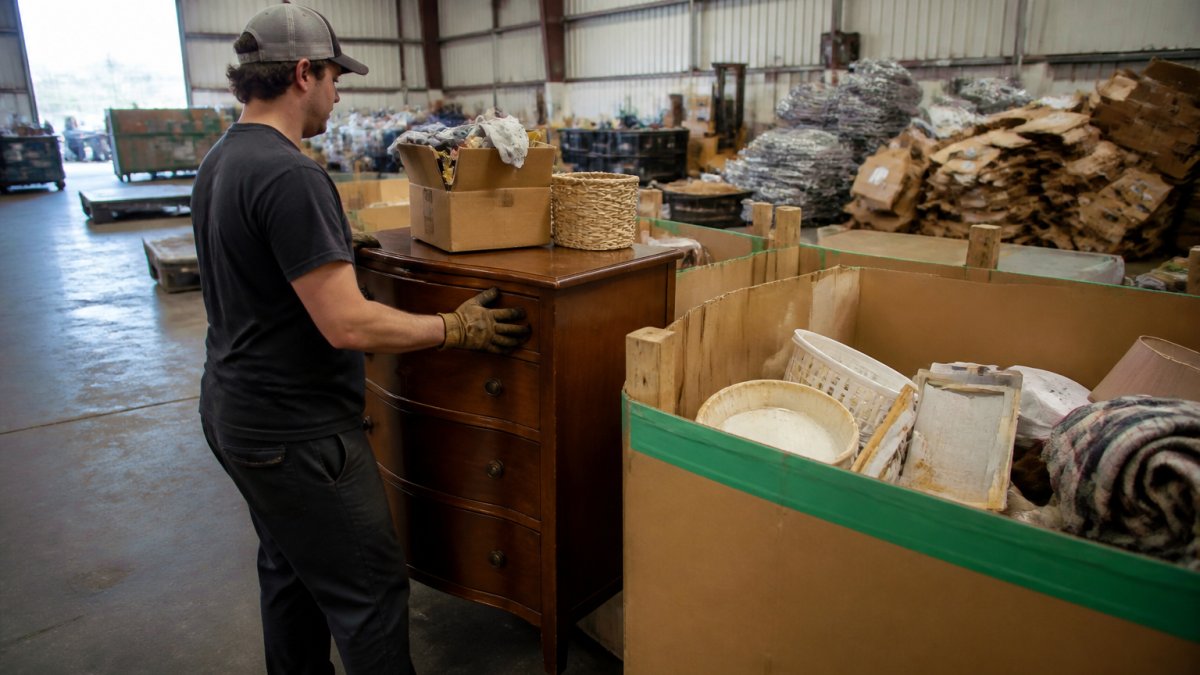
- What Happens to Furniture After Junk Removal
- Electronics Disposal After Junk Removal: E-Waste Rules You Should Know
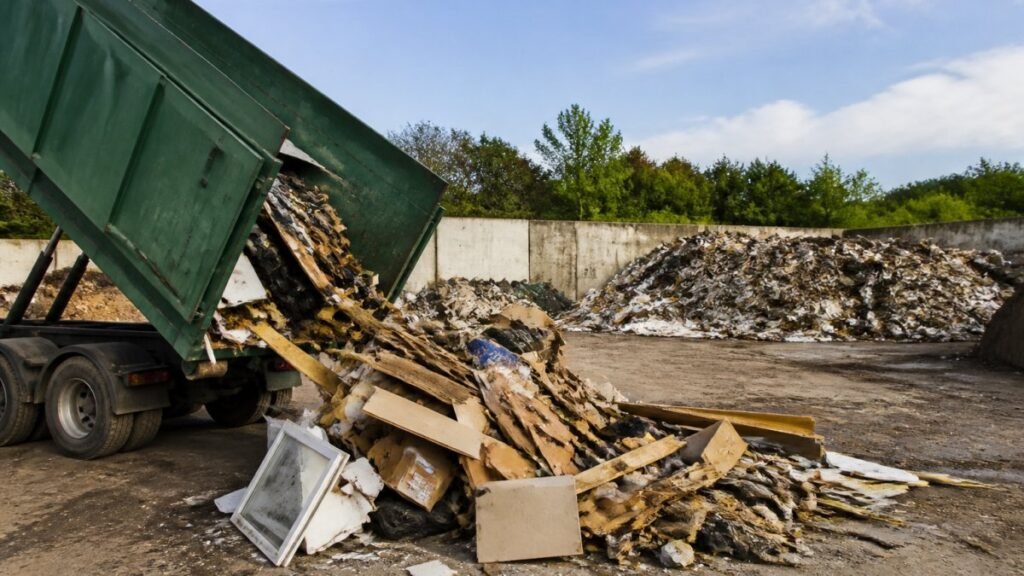
- Junk Removal Landfill Disposal: What Ends Up Buried and Why
- Hazardous Materials and Regional Disposal Regulations
- How to Verify Your Hauler Isn’t Just Dumping Everything
- Book a Free On-Site Estimate and See the Sorting for Yourself
- Frequently Asked Questions
The Chain of Custody: Following Your Hauled Junk From Curb to Destination
Most people hand over a pile of unwanted items and never think about where hauled junk ends up. That gap in knowledge is exactly where bad disposal happens.
The chain of custody is the path your items follow from your driveway to their final destination.
Step One: Pickup and On-Site Sorting
The process starts before anything touches the truck.
Step Two: The Transfer Station and Material Recovery Facility
The material recovery facility is where mechanical sorting separates cardboard, metals, and plastics from the waste stream. This is the step that determines your diversion rate.
Junk Removal Recycling and Donation: How Much Actually Gets Diverted
Diversion is the share of hauled items kept out of landfills through recycling, donation, or repurposing. Hoosier Junk Daddy diverts up to 60% of hauled items from landfills.
How Diversion Is Actually Measured
Diversion rate is calculated by weight, not by volume or item count:
Diversion rate = (weight diverted ÷ total weight hauled) × 100
Weight is the industry standard because volume is misleading, a truck full of Styrofoam and a truck full of scrap metal look similar but have wildly different weights and wildly different recovery outcomes. When a hauler quotes a diversion number, ask whether it’s by weight and whether it’s measured per load or averaged across a period. A per-load number is more honest; an annual average can hide bad loads.
Ask your hauler for a diversion figure broken out by material category, metal, cardboard, furniture, e-waste, and landfill. A single blended number is easy to inflate; a category breakdown is hard to fake.
The Realistic Ceiling by Material Type
| Material Category | Typical Recovery Rate | Why |
|---|---|---|
| Ferrous and non-ferrous scrap metal | Very high (often 90%+) | Established commodity markets, magnetic and eddy-current separation |
| Cardboard and paper | High | Mature recycling infrastructure, strong end markets |
| Clean wood and yard debris | Moderate to high | Composting and mulch markets, but contamination-sensitive |
| Usable furniture and household goods | Moderate | Depends entirely on donation partner capacity and item condition |
| Electronics | Moderate | Certified processors exist, but not every hauler uses one |
| Mattresses | Low to moderate | Specialized recyclers are scarce and geographically limited |
| Broken composites, soiled textiles, non-recyclable plastics | Very low | No viable recovery market; landfill is the correct destination |
Donation Versus Recycling: Which Path Wins
- Reuse (donation, resale, repurposing)
- Recycling (material recovery)
- Waste-to-energy (energy recovery)
- Landfill (disposal)
This is the same waste hierarchy the EPA waste management hierarchy describes, applied at the scale of a single pickup. A hauler who routes usable furniture to landfill because donation is inconvenient is skipping the top of the hierarchy, and that’s the single biggest driver of a low diversion rate.
How to Verify a Hauler’s Diversion Claim
EPA guidance on reducing and diverting waste outlines how communities track diversion, and the same principles apply to a single pickup: separate first, recover what has value, and bury only what’s left. For a closer look at how the donation-versus-landfill decision gets made, see our breakdown of junk removal donation versus landfill.
What Happens to Furniture After Junk Removal
If you want to donate furniture yourself rather than have it hauled, our guide on the best way to donate old furniture walks through pickup options and drop-off logistics.
Electronics Disposal After Junk Removal: E-Waste Rules You Should Know
For a step-by-step walkthrough of responsible electronics recycling, read our guide on how to recycle old electronics.
Junk Removal Landfill Disposal: What Ends Up Buried and Why
| Material Type | Typical Destination | Why |
|---|---|---|
| Scrap metal | Recycling facility | High resale value, infinitely recyclable |
| Usable furniture | Charitable donation | Extends product life, community benefit |
| Electronics | Certified e-waste processor | Contains regulated hazardous components |
| Mattresses | Specialized recycler | Steel and foam recoverable |
| Broken composites | Landfill | No viable recovery market |
| Yard debris | Composting or waste-to-energy | Organic material breaks down |
Hazardous Materials and Regional Disposal Regulations
If you’re handling these items yourself, our seven-step guide on how to handle hazardous waste safely covers identification, containment, and drop-off.
How to Verify Your Hauler Isn’t Just Dumping Everything
Ask three questions before you book anyone. First, where does the load go, specifically? Second, can you show me your diversion numbers? Third, do you provide a receipt or documentation of disposal?
Book a Free On-Site Estimate and See the Sorting for Yourself
Hoosier Junk Daddy offers free on-site estimates. To know exactly what the visit involves, read what to expect from a free on-site junk estimate.
Hoosier Junk Daddy provides full-service removal, including cleanup afterward, for residential and commercial clients. Same-day service is available when possible.
Frequently Asked Questions
What happens to junk after a junk removal company picks it up?
The route and destination depend on the hauler and the items collected. Hoosier Junk Daddy uses recycling, donation, or landfill transport for responsible disposal and diverts up to 60% of hauled items from landfills.
Do junk removal companies recycle or donate items, or does everything go to the landfill?
Hoosier Junk Daddy diverts up to 60% of hauled items from landfills through recycling, reuse, or donation.
Can electronics be recycled by junk removal companies?
The verified information does not specify how Hoosier Junk Daddy handles electronics. Ask the company about the disposal options for the items you need removed.
How can I make sure my unwanted items are disposed of responsibly?
Ask Hoosier Junk Daddy about disposal options for the items you need removed. The company offers free on-site estimates.
Your garage, attic, or estate cleanout doesn’t have to end with a mystery about where everything went. Hoosier Junk Daddy combines free on-site estimates, transparent pricing, and eco-friendly disposal that diverts up to 60% of hauled items from landfills, with full-service removal and cleanup included. Get started with Hoosier Junk Daddy and reclaim your space knowing your hauled junk was handled responsibly.