Last Updated: October 24, 2026
Quick Summary
Eco-friendly junk disposal means routing usable and recyclable items to donation centers, recycling facilities, or reuse programs instead of the landfill. At Hoosier Junk Daddy, we sort every load we haul and divert up to 60% of hauled items from landfills.
- Follow the ladder: reuse first, then repurpose, donate, recycle, and landfill last.
- Rinse containers and keep paper dry, since one greasy pizza box can contaminate a whole bin.
- Never put lithium-ion or rechargeable batteries curbside; they cause fires in trucks and facilities.
- Ask a hauler for a diversion rate, donation receipts, and weight tickets to verify green claims.
- Most haulers price by truck space, with heavy items and special handling priced separately.
Table of Contents
- What Eco-Friendly Junk Disposal Actually Means
- How to Recycle Household Items the Right Way
- Furniture Donation and Recycling: Give It a Second Life
- E-Waste Disposal Options That Protect Your Data
- Appliance Recycling: What You Can and Can’t Put Curbside
- Hazardous Waste and the Items Nobody Warns You About
- Sorting, Costs, and Verifying Your Disposal Is Really Green
- Book a Free On-Site Estimate and Get Started
- Frequently Asked Questions
What Eco-Friendly Junk Disposal Actually Means
Eco-friendly junk disposal methods are the practices that keep usable and recyclable items out of landfills by routing them to donation centers, recycling facilities, or reuse programs instead of the dump. At Hoosier Junk Daddy, we sort every load we haul for that reason, and we divert up to 60% of hauled items from landfills.
Most people assume “green disposal” means recycling a few boxes. It’s bigger than that. It’s a chain of decisions, and each one changes the outcome.
The Landfill Diversion Hierarchy
Think of disposal as a ladder. You want to climb as high as the item allows.
- Reuse first. Can someone else use this as-is?
- Repurpose second. Can it serve a new purpose?
- Donate third. Will a charity take it?
- Recycle fourth. Can it be broken down into raw material?
- Landfill last. Only when nothing above fits.
A common mistake is skipping straight to step four. That old dresser isn’t recycling material yet. It’s a working piece of furniture first.
If you’re weighing whether the extra effort pays off, our comparison of recycling vs landfill junk removal breaks down the trade-offs.
How to Recycle Household Items the Right Way
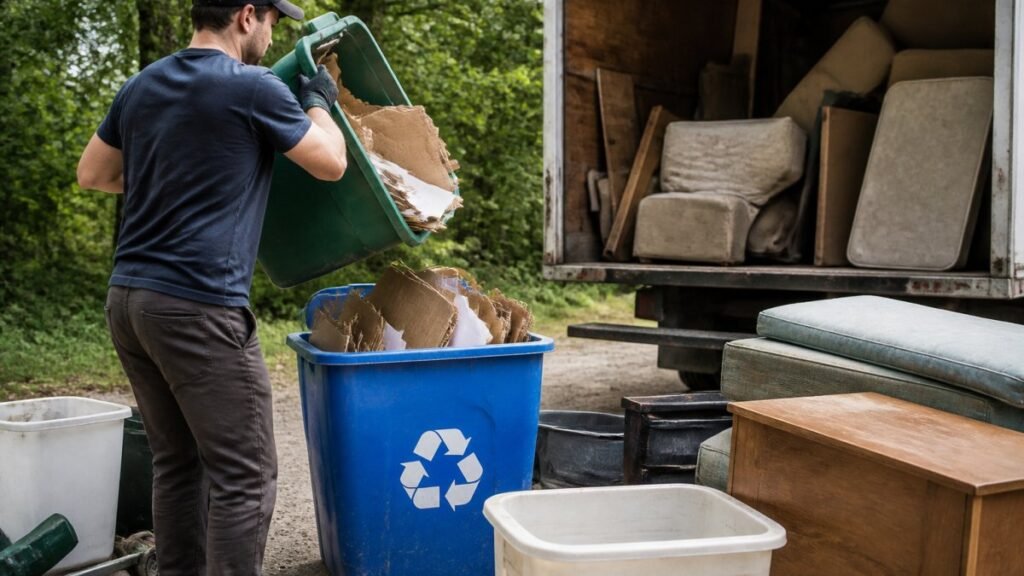
Recycling works only when items are clean, sorted, and accepted locally. One greasy pizza box can contaminate a whole bin, and contaminated bins often go straight to the landfill.
Here is how to recycle household items without wasting the trip:
- Rinse containers. Food residue ruins paper and cardboard.
- Keep paper dry. Wet or greasy paper is not recyclable.
- Check your local list. Every program accepts different plastics.
Curbside Rules vs. Drop-Off Centers
Curbside pickup is convenient but limited. Drop-off centers take more, including bulky items and some scrap metal.
Curbside usually takes paper, plastic bottles, glass, and metal cans. Drop-off sites often handle cardboard in bulk, scrap metal, and yard waste. The EPA’s recycling guidance is a solid starting point for what belongs in each stream.
Furniture Donation and Recycling: Give It a Second Life
Furniture donation and recycling starts with condition. If a piece is sturdy, clean, and safe, donate it.
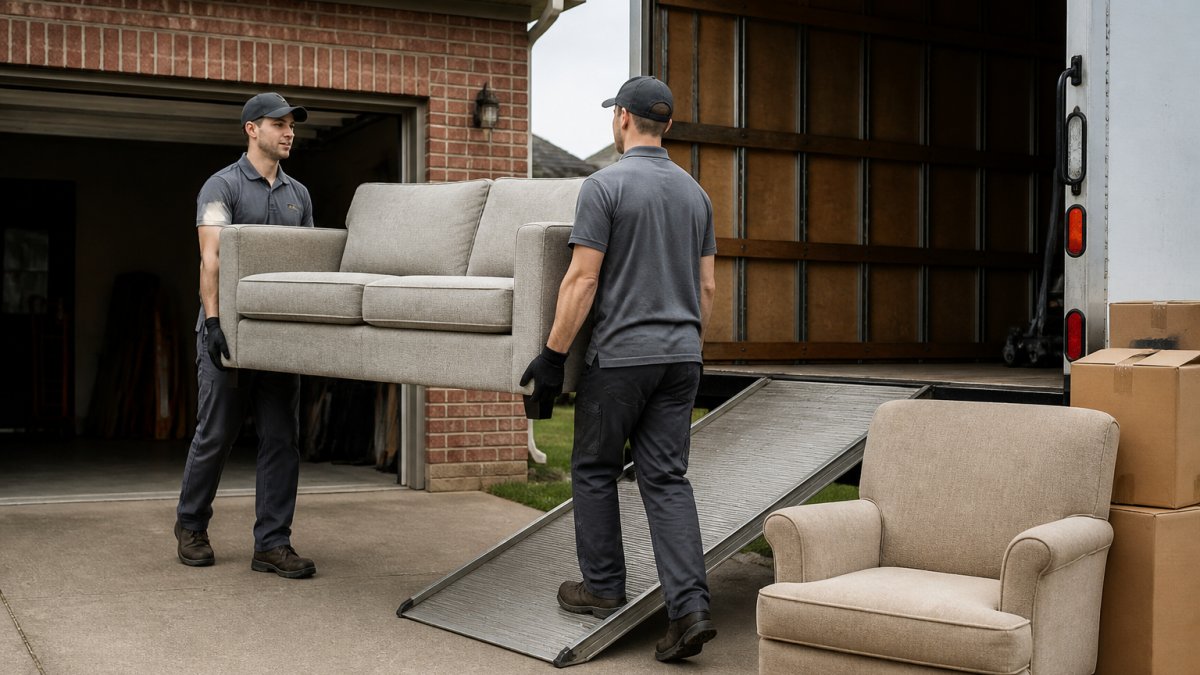
Donation centers turn away items with tears, stains, or missing parts. For a full walkthrough, see our guide on the best way to donate old furniture.
Books, clothing, and small housewares ride along with furniture donations well. Bundle them so one pickup handles more.
E-Waste Disposal Options That Protect Your Data
E-waste disposal means routing old electronics to certified recyclers who recover metals and destroy data safely. Never put electronics in curbside bins.
Old phones, laptops, and hard drives hold personal data. Wipe devices before they leave your hands. Many retailers and municipal sites host e-waste drop-off days.
- Wipe or destroy drives before recycling.
- Remove batteries where required.
- Use certified recyclers that confirm data destruction.
Our step-by-step guide on how to recycle old electronics covers wiping, drop-off, and what to ask a recycler.
Appliance Recycling: What You Can and Can’t Put Curbside
Appliance recycling depends on size and refrigerant. Large appliances like refrigerators and freezers usually need special pickup because of refrigerants and bulky metal.
Small appliances, like microwaves and toasters, often go to scrap metal drop-offs.
| Appliance | Curbside? | Best Route |
|---|---|---|
| Microwave | Sometimes | Scrap metal drop-off |
| Refrigerator | Rarely | Specialized pickup |
| Washer/dryer | Rarely | Scrap metal or hauler |
| Toaster | Sometimes | Metal recycling |
| Air conditioner | No | Certified refrigerant handler |
Mattresses are their own headache. Most curbside programs reject them. Look for a mattress recycler that separates steel, foam, and fabric.
If you can’t move a heavy appliance yourself, our appliance removal service handles the lifting and the paperwork.
Hazardous Waste and the Items Nobody Warns You About
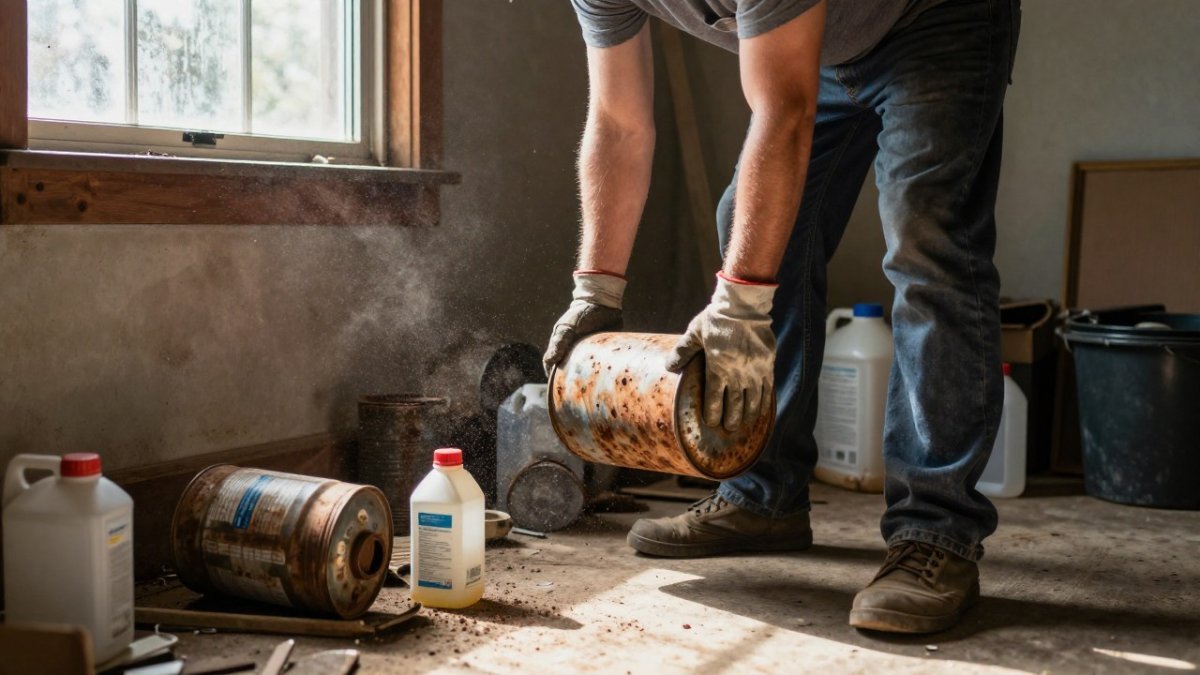
Hazardous waste is any item that can harm people or the environment if tossed in regular trash. Paint, pesticides, motor oil, and batteries top the list. The problem is that most people don’t know where these items are supposed to go, so they either sit in a garage for years or get quietly dropped in the curbside bin.
Here is the item-by-item route for the categories that cause the most trouble.
Batteries
- Alkaline batteries (AA, AAA, 9V): Many municipalities now accept them in curbside trash, but a growing number require retail drop-off. Check your city’s waste department page before you toss.
- Lithium-ion and rechargeable batteries (phone, laptop, power tool): Never curbside. These are the leading cause of fires in garbage trucks and recycling facilities. Take them to a retail drop-off (home improvement stores and electronics retailers commonly host them) or a municipal household hazardous waste (HHW) site.
- Car batteries: Auto parts stores typically accept them for recycling, often with a core credit. Do not put them in any curbside stream.
Paint and Solvents
- Latex paint: If the can is mostly full and still usable, donate it to a local reuse store or a neighbor. If it’s dried out, some programs allow it in curbside trash after you solidify it with an absorbent (kitty litter works). Check local rules first.
- Oil-based paint, stains, and solvents: These are hazardous waste. Take them to an HHW facility or a scheduled collection event. Never pour them down a drain, and never put them in a dumpster.
- Aerosol cans: Empty cans can often go in curbside recycling where programs accept them; partially full cans are hazardous waste.
Chemicals and Yard Products
- Pesticides, herbicides, and fertilizers: HHW facility or collection event only. Keep them in original containers with labels intact.
- Pool chemicals: HHW only. Never mix them with other chemicals.
- Propane tanks (small camping cylinders and large grill tanks): Certified handler or retailer exchange only. Never place a propane tank in a dumpster or curbside bin, even an “empty” tank can explode under compaction.
Motor Oil and Automotive Fluids
- Motor oil and filters: Most auto parts stores accept used oil and filters for recycling.
- Antifreeze, brake fluid, and transmission fluid: HHW site or a participating auto shop. Do not pour them on the ground or into a drain.
What Never Belongs in Curbside Recycling
Even if an item looks recyclable, keep these out of the blue bin:
- Batteries of any kind
- Paint and solvents
- Propane tanks
Mixing hazardous items into a regular load can contaminate an entire truck and send the whole load to the landfill. One leaking paint can or a single lithium battery can turn a recyclable load into a disposal problem, and a fire risk.
How to Find Your Local HHW Route
Most communities run HHW collection through the municipal waste department, a county environmental agency, or scheduled drop-off events. Search your city or county waste department website for “household hazardous waste” and confirm:
- Which items the site accepts
- Whether you need an appointment or proof of residency
- Whether there is a per-item or per-visit fee
If you’re clearing a garage or estate and find a shelf of unknown chemicals, don’t guess. Call the HHW site before you load the truck. A hauler who handles hazardous items should be able to tell you exactly where they go, and a hauler who can’t answer that plainly is a red flag.
Sorting, Costs, and Verifying Your Disposal Is Really Green
Sorting before disposal is where most of the environmental benefit is won or lost. A load that arrives at a facility pre-sorted, donation items separated from recyclables, hazardous items pulled out, trash bagged, diverts far more material than a mixed pile. The cost and the green claim both depend on that step.
The Four Disposal Routes and What They Cost
There are four common routes for household junk. Each has a different cost structure and a different diversion ceiling.
| Route | Typical cost pattern | Best for | Diversion ceiling |
|---|---|---|---|
| DIY drop-off | Per-load or per-item fees at the facility; your time and vehicle | Small loads, single categories (metal, yard waste) | High if you sort carefully |
| Municipal bulky pickup | Often included in your waste bill or a small per-item fee | One or two large items | Low to moderate, many programs landfill bulky items |
| Donation pickup | Usually free; some charities charge for pickup of low-value items | Usable furniture, clothing, housewares | High for accepted items |
| Professional hauling | Priced by volume, weight, and item type | Full cleanouts, heavy items, mixed loads | Varies widely by hauler |
Costs vary by volume, item type, and access. A single sofa costs less to remove than a full garage cleanout. Expect pricing to depend on how much you have, how heavy it is, and whether items need special handling (appliances with refrigerant, mattresses, hazardous materials).
Ask for the price in writing before anything moves. A quote that changes after the truck is loaded is the most common complaint in this industry.
What Drives the Price Up or Down
- Volume and weight: Most haulers price by how much space your items take in the truck, with heavy items (concrete, dirt, appliances) priced separately.
- Access: Stairs, long carries, and tight driveways add labor.
- Special handling: Refrigerant-containing appliances, mattresses, and hazardous items usually carry a surcharge because they need a separate route.
How to Verify Your Disposal Is Really Green
“We recycle” is easy to say. Proof is harder. Here is how to check before you book and after the job.
Before you book:
- Ask where each category goes, donation, recycling, HHW, landfill.
- Ask whether the hauler sorts on-site or at a facility.
- Ask for a diversion rate and how it is measured. A diversion rate is the share of material kept out of the landfill; it is only meaningful if the hauler can explain what counts as diverted.
After the job:
- Request a donation receipt for items that went to a charity. This is your proof the item was reused, not landfilled.
- Request a diversion record or weight ticket for recycling. A weight ticket from a recycling facility is stronger evidence than a verbal claim.
- Ask which facility received each stream. A hauler who can name the facility is more accountable than one who can’t.
A diversion rate is only as good as the documentation behind it. Ask for receipts and weight tickets, not just a percentage on a website.
Questions to Ask Any Hauler Before You Book
- Where do you take recyclables and donations?
- Can you show diversion records or receipts?
- How do you handle hazardous items?
A hauler who can’t answer these plainly is a red flag. At Hoosier Junk Daddy, we sort on-site and route items to recycling, donation, or landfill as each one allows.
Book a Free On-Site Estimate and Get Started
Getting a real number takes one visit. We walk your space, size the load, and give you a clear quote before anything moves.
If you want to know exactly what that visit looks like, read what to expect from a free on-site estimate first.
Hoosier Junk Daddy handles the heavy lifting, sorts for donation and recycling, and cleans up afterward.
Frequently Asked Questions
What is the most environmentally friendly method of waste disposal?
The most eco-friendly route depends on the item, but the general order is reuse first, then donation, then recycling, then landfill as a last resort. A usable sofa donated to a local charity keeps it out of the waste stream entirely. A broken one gets stripped for metal and wood at a recycling facility. Professional eco-friendly junk disposal services sort each load this way, which is how haulers that prioritize landfill diversion can keep a large share of items out of the dump.
How do I find a recycling option for bulky items like mattresses and appliances?
Start with your local solid waste authority or municipal website, which lists drop-off centers and bulky-item pickup rules. Many curbside programs won’t take mattresses or appliances, so you’ll often need a dedicated recycling facility or a hauler that separates them. Before booking, ask where the item actually goes and whether you’ll get confirmation of the drop-off. A hauler that can name the facility is a better sign than one that just says it recycles.
Is junk removal more eco-friendly than renting a dumpster?
It can be, mainly because of sorting. A dumpster rental usually means everything goes in one container and heads to a landfill together. A full-service junk hauling crew can pull out donation-ready furniture, e-waste, metals, and appliances before the rest is hauled away. That separation is what drives landfill diversion. If you rent a dumpster, plan to sort and drop off recyclables yourself first to get a similar result.
What should I do with paint cans, old electronics, and other items I can’t donate or recycle?
Treat paint, batteries, and similar items as hazardous household waste and take them to a designated collection event or facility rather than the curb. For e-waste, wipe your data first, then use a certified electronics recycler or a hauler that separates electronics from general debris. Items that truly can’t be reused or recycled go to landfill transport, which is the last step in responsible disposal, not the first.