
Quick Summary
The best way to donate inherited books is to first sort them into keep, research, donate, and recycle piles, then match each group to a suitable recipient. Libraries, schools, charities, and care settings each accept different types of donated books.
- Sort books by family interest, likely readers, condition, and recipient rules before choosing a charity.
- Check title and copyright pages for signed, first edition, or valuable copies before donating.
- Remove personal items like letters, photos, and receipts from books before donating them.
- Call libraries, schools, or charities ahead to confirm what they accept.
- For large collections, pack by destination and contact recipients before scheduling pickup.
Table of Contents
- What to Do With Inherited Books Before You Donate
- 1. Donate Books to Libraries and Friends Groups
- 2. Give Books to Schools, Teachers, and Students
- 3. Send Books to Charities, Shelters, and Care Settings
- 4. Donate Used Textbooks and Reference Books
- 5. Arrange Book Donation Pickup for Large Collections
- Choosing the Right Donation Route for Your Collection
- Get Help Clearing an Inherited Book Collection
- Frequently Asked Questions
What to Do With Inherited Books Before You Donate
Last Updated: November 19, 2026
Inherited books rarely arrive as a tidy, ready-to-donate set. They come as boxes from a closet, a garage, a storage unit, or an attic, often mixed with papers, photographs, and items that were never meant to leave the family, so the decision to donate inherited books should come only after a careful review. The most useful first step is not choosing a charity, it is triaging the collection into four piles: keep for family, research for value, donate, and recycle. Doing that triage before you contact any recipient can help prevent the wrong books from leaving the house.
A practical way to run the triage is to work one shelf or one box at a time and sort into labeled boxes as you go.
Sorting by Sentiment, Readers, Condition, and Donation Fit
Sort inherited books along four questions, in this order:
- Does a family member want it? Family Bibles, cookbooks with handwritten notes, childhood favorites, and books with inscriptions to the deceased usually matter more to relatives than to any charity. Give relatives a defined window, a couple of weeks is a common pattern, to claim items before anything is donated.
- Is there a likely reader for it? A complete run of a mystery series, recent bestsellers, and children’s picture books have ready audiences. Obsolete computer manuals, travel guides from past decades, and multi-volume encyclopedias generally do not.
- Is the condition acceptable? Check for mold, water staining, musty odor, loose or missing pages, and insect damage. Most libraries and charities decline books with mold or odor because one damaged book can affect a whole carton.
- Does it fit a recipient’s stated rules? Subject matter, publication date, format, and condition all vary by recipient. Sorting with those rules in mind means fewer rejected boxes later.
Watch out: a book that looks ordinary can be a signed or early printing. Check the title page and copyright page before tossing anything into the donation pile, because signatures, edition statements, and printing history are the details that change a book’s placement.
Identifying Rare, Valuable, Signed, and Historically Significant Books
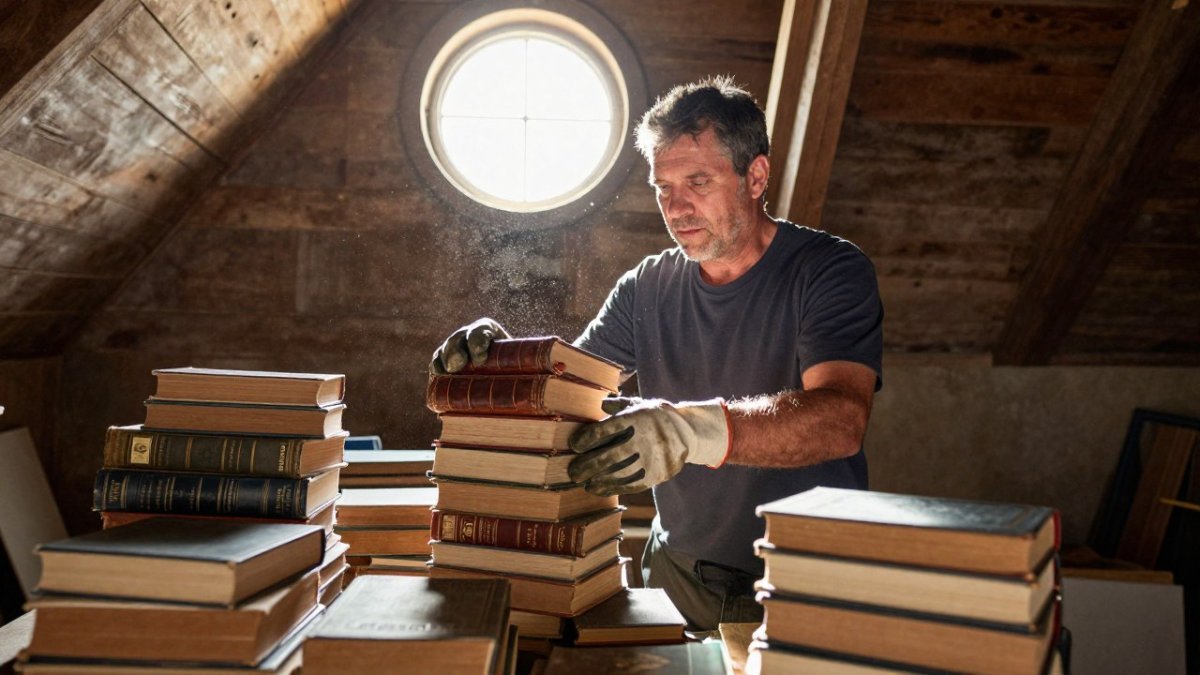
Set aside anything that might be worth more than a used-book price. Common candidates include first editions, signed or inscribed copies, limited printings, books with original illustrations or plates, older volumes with leather or cloth bindings, and titles tied to local or family history. Do not clean, tape, or rebind these before you know what they are, well-intentioned repairs can reduce value.
A reasonable research sequence is to check the title page for the publisher and date, look for a stated edition or printing line, and search completed-sale listings for the same title and edition rather than asking prices. For anything that appears genuinely old, signed, or regionally significant, a professional appraisal or a consultation with a specialist dealer or archival institution is the safer route than donating it as an ordinary used book.
Removing Personal Materials and Protecting Privacy
Inherited books are full of things that were never meant to be shared: letters used as bookmarks, photographs, receipts, pressed flowers, business cards, and handwritten notes in margins. Flip through each book, not just the cover, and shake it gently over a table so loose items fall out. Set anything personal aside for the family before the book moves on.
Also check for identifying information written inside the book, such as a name, address, or phone number on the endpaper. A name and date in a family Bible is often a keepsake; a name and address in a paperback is a privacy detail worth removing or obscuring before donation. Once the personal materials are out, the remaining books are ready to be matched to a recipient.
1. Donate Books to Libraries and Friends Groups
Public libraries are often the most natural home when you decide to donate inherited books of fiction, nonfiction, and children’s titles. Many libraries rely on a Friends of the Library group to run used book sales that raise money for library programs. Donating to a Friends group can keep your collection in the community while supporting local services.
Call ahead to ask what the library accepts. Some libraries will only take recent, popular titles, and others may decline older encyclopedias or outdated textbooks. A quick phone call can save a trip.
2. Give Books to Schools, Teachers, and Students
Classroom teachers often welcome children’s books, reading-level titles, and reference books for student libraries. Schools may also accept books for book fairs or reading programs. Reach out to a school librarian or teacher directly rather than dropping boxes at the front office, because they can tell you which titles fit their needs.
Keep in mind that many schools have strict policies about donated materials. Check whether they need a donation form or a specific age range before you bring anything in.
3. Send Books to Charities, Shelters, and Care Settings
Charities, homeless shelters, hospitals, and senior care facilities sometimes accept donated books for patients, residents, or families. Veterans organizations and some military support groups also collect reading materials. Each recipient has different needs, so match the books to the setting. Hardcover fiction and large-print titles often suit care facilities, while paperback thrillers may work better for shelters.
Always confirm acceptance first. Some hospitals and shelters have infection-control rules or limits on the types of books they can keep.
4. Donate Used Textbooks and Reference Books
Used textbooks and reference books are harder to place, but they are not impossible to donate. Community colleges, adult education programs, and some tutoring centers may accept them. Check the edition, since outdated textbooks are rarely useful to schools. Encyclopedias, dictionaries, and technical manuals often go unused, so consider recycling them if no recipient wants them.
5. Arrange Book Donation Pickup for Large Collections
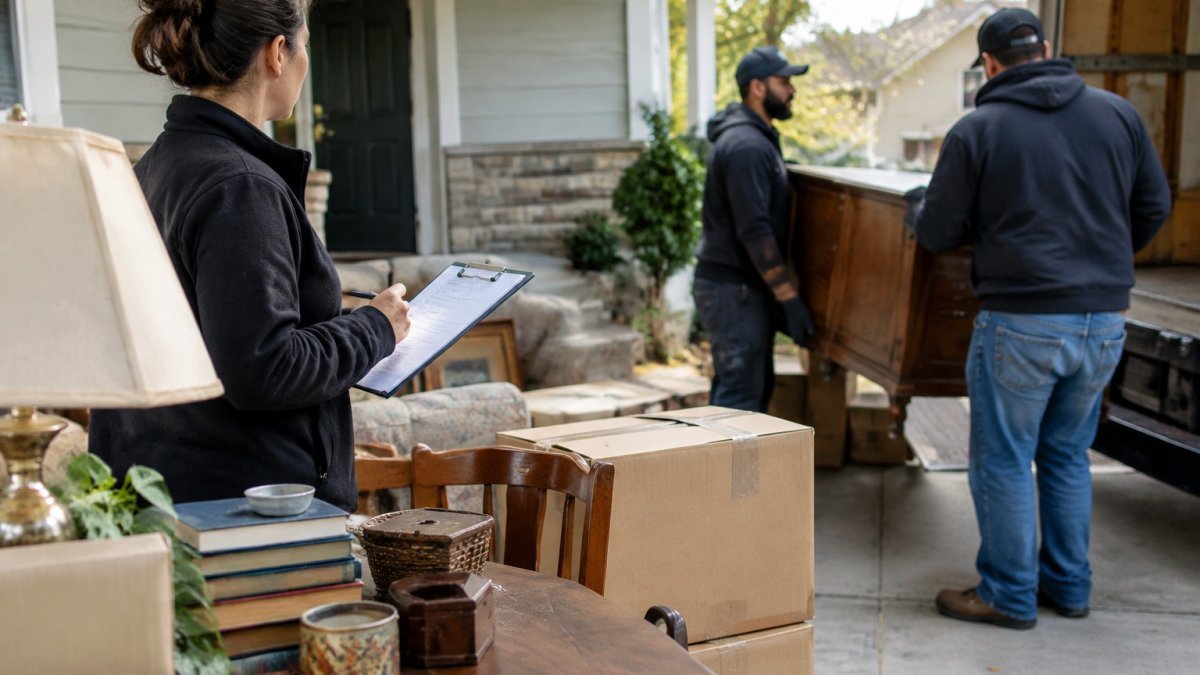
A full estate can produce dozens of boxes, and the logistics, not the donation itself, are usually what stalls the project. A workable plan is to inventory, pack by destination, line up recipients in parallel, and only then schedule pickup or transport. That order keeps you from paying to move books that a recipient would have declined.
Inventory and Pack by Destination
Start with a rough count by category rather than a title-by-title list: children’s books, recent fiction and nonfiction, textbooks and reference, antique or collectible, and unsellable. A simple tally per category is enough to have a useful conversation with each recipient.
Pack in small, sturdy boxes, a common rule of thumb is that a box of books should be liftable by one person, which usually means no larger than a standard moving box and often half-full for hardcovers. Label each box with its category and intended destination. Keep the research and family piles physically separate from the donation boxes so nothing gets handed over by mistake.
Line Up Multiple Recipients in Parallel
Large collections rarely fit one recipient. A practical split is to send children’s and reading-level books to schools or teachers, recent popular fiction and nonfiction to a library Friends group, large-print and hardcover fiction to care settings, and current-edition textbooks to community colleges or adult education programs. Contact each recipient before you pack for them, confirm what they accept, and ask about drop-off hours, loading access, and any limit on volume.
Watch out: some recipients accept donations only on certain days or in limited quantities, and a few will turn away a truckload that arrives without notice. Confirm volume and timing in writing, even a short email, before you load a vehicle.
Transport, Bulk Pickup, and Junk Removal
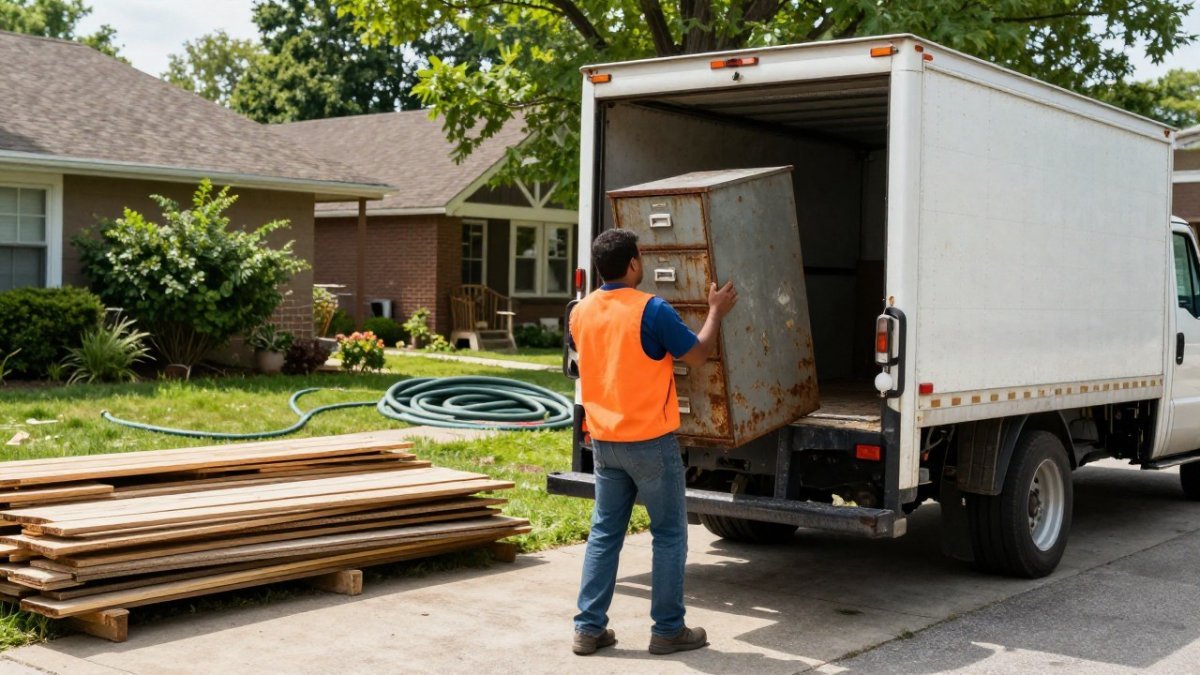
For a collection that fits a few boxes, a series of drop-offs works. For a garage or estate’s worth of books, compare three options: a donated pickup from a charity that offers one, a hired hauling or junk removal service, and a self-driven rental truck. A hauling service is the usual choice when the volume is large, the home has stairs or limited access, or the family is coordinating from out of town.
Before any crew arrives, separate the donation boxes from trash and recycling and mark them clearly. Point out the donation pile first so the crew knows what to leave. Hoosier Junk Daddy provides book a free junk removal estimate for homes in Indianapolis and surrounding areas, and the team handles the heavy lifting and ensures responsible disposal through recycling, donation, or landfill transport.
Documenting Donations for Your Records
Keep a simple donation log: date, recipient, a general description of the books, and the approximate count. Ask each recipient whether they provide a receipt, since practices vary widely. For anything that may be valuable, keep your appraisal or research notes with the log. Tax treatment of donated property depends on the recipient’s status and your situation, so confirm the rules with a qualified tax professional rather than assuming a deduction (Topic no. 506, Charitable contributions).
Choosing the Right Donation Route for Your Collection
The right route depends on the quantity, condition, and type of books. Use the table below to compare the five options.
| Donation Route | Best For | Ease | Typical Logistics | Pros | Cons |
|---|---|---|---|---|---|
| Libraries and Friends groups | Fiction, nonfiction, children’s books | Moderate | Call ahead, drop off or schedule | Stays local, supports programs | Strict acceptance rules |
| Schools and teachers | Children’s and reading-level books | Moderate | Contact teacher or librarian | Direct impact on students | Limited demand for older titles |
| Charities and care settings | Hardcovers, large print, paperbacks | Moderate | Confirm needs first | Reaches people who need reading material | Infection-control and condition limits |
| Textbooks and reference | Current editions, academic titles | Harder | Check edition and recipient | Useful to students | Outdated editions often rejected |
| Pickup for large collections | Bulk inherited collections | Easiest | Schedule pickup, sort beforehand | Saves time and hauling | Requires sorting first |
If you have a small stack, a library or school may be enough. For a full estate, combining several routes usually works best.
Get Help Clearing an Inherited Book Collection
Clearing an inherited home takes time, and books are often the hardest part. Hoosier Junk Daddy provides free on-site junk removal estimates for homes, garages, and estates in Indianapolis and surrounding areas. Before the crew arrives, review how to prepare for junk removal service so the pickup goes smoothly. Families handling a full estate may also find guidance on preparing an estate cleanout helpful. For homeowners clearing household items beyond books, residential junk removal services cover appliances, furniture, and yard debris.
Hoosier Junk Daddy has nearly five years of experience removing and responsibly disposing of unwanted items across Indianapolis. Our team can handle the sorting, hauling, and recycling so you can focus on the family memories behind the collection. Call (317) 506-7943 for a free estimate and get your space cleared.
Frequently Asked Questions
Where can I donate inherited books?
Common options include public libraries and their Friends groups, schools and classroom teachers, charities and thrift shops, shelters and care facilities, and Little Free Libraries. Acceptance rules differ by location, so call ahead to confirm what each organization can take, especially for older, damaged, or very large collections.
Will libraries accept inherited books?
Many public libraries accept donations but do not guarantee they will add every title to their shelves. Libraries often pass books to Friends of the Library sales or recycle items they cannot use. Check the library’s donation guidelines first, and consider asking a Friends group for a list of current needs.
How do I donate a large collection of books?
Sort the collection into keep, donate, and recycle piles, then match donate-worthy books to recipients that need them. Split the donations across several organizations rather than sending everything to one place. For a very large estate collection, arranging pickup or hiring a removal service can save many trips.
Can I arrange pickup for donated books?
Some book-donation organizations and resale services offer pickup for larger quantities, and some charities run their own collection schedules. Availability, minimum quantities, and service areas vary, so contact the organization directly. Hoosier Junk Daddy can also help remove a full collection; visit its website for current pricing or a quote.