
Table of Contents
- Why Decluttering Before Moving Saves You Time and Money
- Your Decluttering Timeline for Moving: A Week-by-Week Plan
- The Four-Box Method: Keep, Donate, Sell, Trash
- How to Clear Out Garage Clutter Without Getting Stuck
- Room-by-Room Decluttering Strategy That Actually Works
- Digital Decluttering Before a Move: Don’t Pack Old Data
- Junk Removal Services for Moving: When to Call a Pro
- Eco-Friendly Disposal Logistics: Donate, Recycle, or Haul
- Frequently Asked Questions
Last Updated: September 30, 2026
Why Decluttering Before Moving Saves You Time and Money
Decluttering before moving is the practice of sorting, purging, and organizing your belongings before packing day, so you move only what you actually need. This guide from Hoosier Junk Daddy covers the week-by-week timeline, room strategies, and disposal options that make a move cheaper and faster.
Your Decluttering Timeline for Moving: A Week-by-Week Plan
A decluttering timeline for moving works best when you start four to six weeks before the move date and work backward, tackling high-volume areas first and leaving final hauls for the last two weeks. Here’s the plan.
| Timeframe | Focus | Goal |
|---|---|---|
| 4-6 weeks out | Garage, attic, basement | Sort high-volume, low-emotion spaces |
| 3 weeks out | Kitchen, bathroom | Purge expired and hazardous items |
| 2 weeks out | Donations and hauls | Schedule pickups and junk removal |
| 1 week out | Essentials only | Pack a labeled “first night” box |
Four to Six Weeks Out: Sort High-Volume Areas First
Start where volume is highest and emotion is lowest: garages, attics, and basements. These spaces hold the most cubic feet and the least sentimental attachment, which makes them the fastest wins on your moving timeline. A common mistake is starting in the bedroom closet, where every item triggers a memory and progress stalls.
Two Weeks Out: Finalize Donations and Schedule Hauls
By the two-week mark, your donate and trash piles should be gone, not sitting in the driveway. Schedule donation center drop-offs and junk removal pickups now so nothing blocks packing day. If you’re working against a closing date, book removal early; same-day service exists but shouldn’t be your plan A.
The Four-Box Method: Keep, Donate, Sell, Trash
The four-box method is a sorting strategy that assigns every item to one of four categories: Keep, Donate, Sell, or Trash. It removes in-the-moment debate because each item has exactly one destination. What separates a working four-box sort from a stalled one is the decision rule behind each box, not the labels themselves.
- Keep: Items you’ve used in the past year and will use in the new home. Pack these. The one-year rule is a proxy, not a law: seasonal gear, formal wear, and tools you genuinely use annually are Keep items even if they’ve sat untouched for eleven months.
- Donate: Good-condition items you no longer need. Thrift stores and donation centers take most household goods, but call ahead, many won’t accept mattresses, cribs recalled under federal safety rules, or upholstered furniture without a fire-retardant tag.
- Sell: Items with real resale value. Set a hard deadline; if it doesn’t sell, it moves to Donate. Price at roughly half of what comparable used listings ask, and expect lowball offers as a normal part of the process.
- Trash: Broken, expired, or unsalvageable items. This pile grows faster than people expect, and it’s the one most likely to hide hazardous materials that can’t go curbside.
The Decision Rules That Keep the Sort Moving
Most people stall because they re-litigate the same item three times. Fix that with three rules:
- The 20/20 rule. If replacing an item would cost less than about twenty dollars and take less than twenty minutes to buy, let it go. Duplicates, spare cables, and basic kitchen tools rarely justify the box.
- The last-use test. Ask when you last used it and when you’ll realistically use it again. If the second answer is “no idea,” it’s Donate or Trash.
- The one-in-one-out cap. For collections, books, mugs, holiday decor, set a number before you start and hold to it. A cap forces a ranking instead of an endless maybe pile.
Selling: Where the Money Actually Comes From
Selling is the slowest box and the one most likely to derail a move. Furniture, tools, bikes, and brand-name kids’ gear move fastest; clothing, books, and small kitchen items usually aren’t worth the listing time. Photograph items the same day you sort them, list on a local marketplace or a consignment shop, and set a pickup window that ends at least a week before packing day.
The Psychological Barrier Nobody Warns You About
The hardest box isn’t Trash. It’s the sunk-cost trap: the belief that because you paid for something, you owe it a place in your new home. The money is already spent; the only live question is whether the item earns its square footage going forward. A useful reframe is to price the move itself, every box you carry costs loading, unloading, and unpacking time at the other end.
Photograph your Sell pile and list it the same day you sort it. Items that sit in a “sell later” pile for more than two weeks almost never sell, and they end up as moving-day dead weight.
Run the four boxes in this order: Trash first (fastest decisions), Donate second, Sell third, Keep last. Saving Keep for the end means you’re choosing what to bring rather than defending what to leave.
How to Clear Out Garage Clutter Without Getting Stuck
Learning how to clear out garage clutter is mostly about sequence: clear the floor first, then work the walls and shelves. Garages stall because people start with the most interesting box instead of the biggest obstruction.
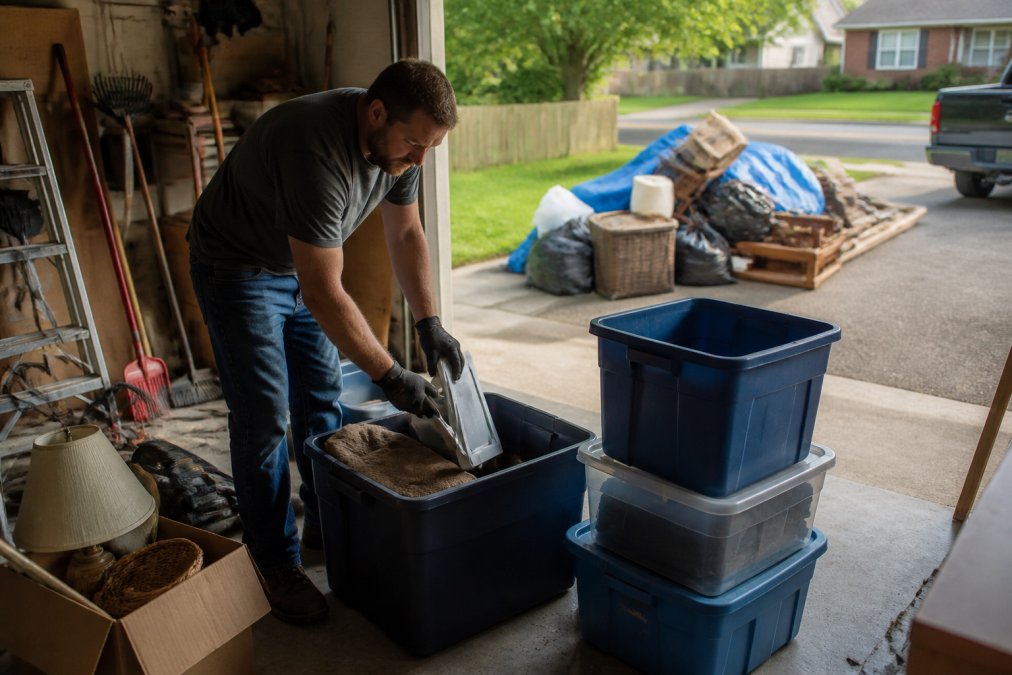
Never pour paint, oil, or lawn chemicals down a drain or into the trash. Most municipalities run dedicated hazardous waste collection days, and improper disposal can carry real fines.
Room-by-Room Decluttering Strategy That Actually Works
A room-by-room decluttering strategy beats a whole-house approach because it gives you visible finish lines. Complete one room before opening the next, and use a labeling system on every Keep box so unpacking stays organized.
Kitchen and Bathroom: Expired Items and Hazardous Waste
Kitchens and bathrooms hide the most expired items in the house. Check dates on medications, spices, and cosmetics, then separate expired medications for proper disposal rather than flushing them. Paint, cleaners, and other chemicals from these rooms belong with your hazardous waste pile, not the moving truck.
Bedrooms and Living Areas: Sentimental Value vs. Space
Bedrooms and living areas are where sentimental value fights space optimization. A practical rule: keep items you’ve displayed or used in the last year, photograph the rest, and let the physical object go. Photographs preserve the memory without the box.
Sentimental items are the hardest to purge, so cap them. One clearly labeled memory bin per person keeps the emotional weight manageable without derailing the whole move.
Digital Decluttering Before a Move: Don’t Pack Old Data
Digital decluttering before a move is the step almost every moving guide skips. Old hard drives, dead laptops, and boxes of tangled cables move with you for years and never get touched. Clear them before packing day.
Junk Removal Services for Moving: When to Call a Pro
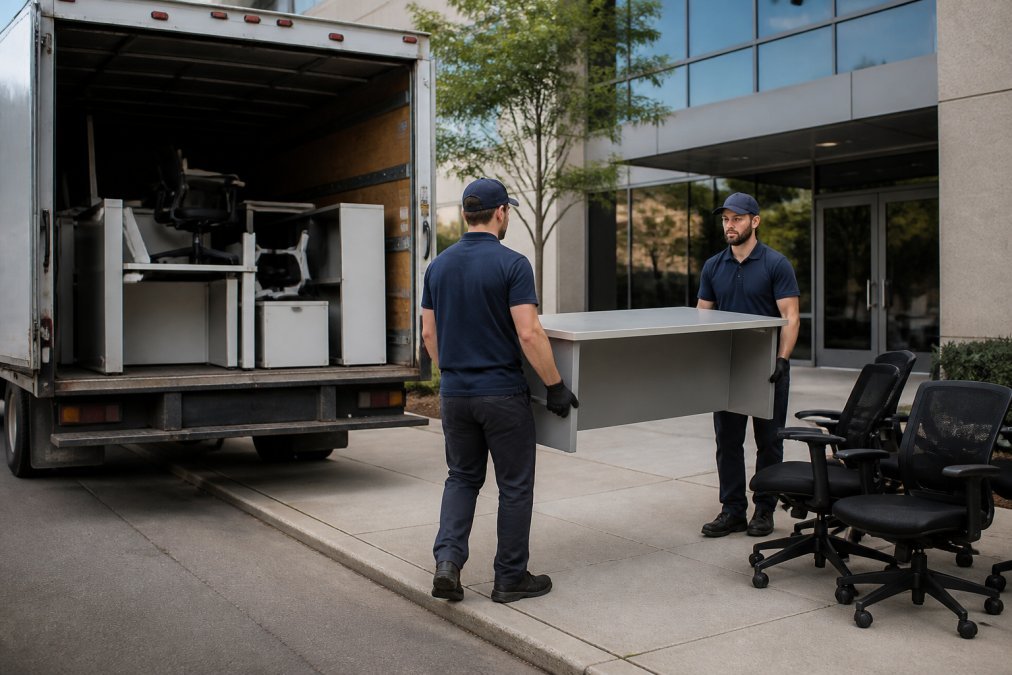
Junk removal services for moving make sense when your purge pile is too big, too heavy, or too hazardous to handle yourself. Bulky items like couches, mattresses, and appliances are the usual tipping point. FEMA guidance on debris disposal notes that large-scale debris needs coordinated removal, and the same logic applies at household scale.
Eco-Friendly Disposal Logistics: Donate, Recycle, or Haul
Eco-friendly disposal logistics come down to three routes: donate what’s usable, recycle what’s accepted locally, and haul the rest responsibly. The gap in most moving guides is the middle step, “recycle” is treated as one action when it’s actually a material-by-material decision. Here’s how to route each pile without a landfill detour.
Match the Material to the Right Channel
- Clothing and textiles. Donation centers take wearable items; worn-out textiles often go to textile recyclers that turn them into insulation or wiping rags. Curbside bins usually don’t accept them.
- Electronics. Televisions, monitors, laptops, and printers don’t belong in curbside recycling. Retailers that sell electronics are required in many states to accept some e-waste for recycling, and municipal drop-off events are common. EPA guidance on electronics recycling explains why old electronics shouldn’t go in the curbside bin.
- Paint, solvents, and lawn chemicals. These are household hazardous waste. Most municipalities run dedicated collection days or permanent drop-off sites; a few states allow dried latex paint in regular trash, but oil-based paint never qualifies.
- Mattresses and box springs. Bulky, hard to recycle, and banned from many curbside programs. Mattress recyclers exist in most metro areas and strip the steel, foam, and fiber for reuse.
- Appliances. Working appliances are donation candidates; non-working ones contain refrigerants and metals that require a certified recycler. Many utilities and retailers offer haul-away when you buy a replacement.
- Yard waste and untreated wood. Usually accepted at municipal compost sites. Treated lumber, painted wood, and pressure-treated posts are not.
How to Find the Right Drop-Off Near You
Don’t guess. Two searches do most of the work: your county or city solid waste department’s website, which lists hazardous waste days, bulky-item rules, and recycling drop-offs; and a national recycling locator that filters by material and ZIP code. Call before you load the truck, many sites have residency requirements, appointment windows, or per-item fees, and a rejected load means the material rides home with you.
When to Donate, When to Recycle, When to Haul
A simple hierarchy: donate anything usable, recycle anything accepted locally, and haul only what’s left. Hauling is the right call when the pile is too heavy, too bulky, or too hazardous for a DIY run, a mattress, a sectional, a dead refrigerator, or a garage full of mixed debris. A reputable hauler will separate recyclable and donatable material from true trash, which is where the landfill-diversion numbers come from.
Post-Move Decluttering Maintenance
Eco-disposal doesn’t end at the new front door. The same three-route system prevents clutter from rebuilding: keep a labeled donate box in the garage or utility room, a small e-waste bin for dead cables and chargers, and a hazardous-waste shelf for paint and chemicals you’ll need for touch-ups. Empty the donate box monthly and schedule an e-waste drop-off once or twice a year.
Build the disposal plan before packing day: identify your county’s hazardous waste site, your nearest e-waste and mattress recyclers, and one donation center that accepts furniture. Three phone calls now save a truckload of landfill trips later.
Frequently Asked Questions
What is the 3-3-3 rule for decluttering?
The 3-3-3 rule is a quick decision-making method: find three items to throw away, three to donate, and three to keep. It works well when you feel overwhelmed because it sets a small, achievable target. Apply it to one drawer, shelf, or box at a time. Repeat the cycle until the space is clear. This approach builds momentum without requiring you to sort everything at once, which is especially useful during a move when time is tight.
What items are not worth moving to a new home?
Items not worth moving include expired medications, old paint cans and other household hazardous waste, broken furniture, outdated electronics, mattresses with visible wear, and heavy items with low resale value like old textbooks or encyclopedias. Moving them costs more than replacing them. For anything hazardous, check local disposal rules or call a junk removal service that handles special waste. Donating usable items to thrift stores keeps them out of landfills.
Should I declutter before or after packing?
Declutter before packing. Sorting through items first means you only pack what you actually need, which reduces the number of boxes and the cost of moving supplies or a moving truck. Start with high-volume areas like the garage, attic, and basement. Use a decluttering timeline for moving that gives you at least four weeks. If you pack first, you risk moving items you would have tossed, then paying to store or dispose of them later.
How do I handle hazardous waste like paint cans and old electronics?
Hazardous waste such as paint, motor oil, batteries, and old electronics should never go in regular trash. In many areas, you can drop them at a household hazardous waste facility or a designated collection event. Some junk removal services for moving accept these items and ensure proper disposal. Check with your local waste authority for rules. Planning this early avoids a last-minute scramble before moving day.
What is the 5-5-5 rule for decluttering?
The 5-5-5 rule asks you to find five items to throw away, five to donate, and five to keep. It is like the 3-3-3 rule but with a larger set, making it useful for medium-sized spaces like a closet or home office. Set a timer for 15 minutes and work through one area. This method helps you make quick decisions without overthinking, which is key when you are decluttering before moving.
How do you declutter when you feel overwhelmed by stuff?
Start small. Pick one drawer or one shelf instead of a whole room. Use a sorting strategy like the four-box method: keep, donate, sell, trash. Set a timer for 20 minutes and stop when it rings. Celebrate the progress. For large items or emotional clutter, ask a friend to help or hire a professional organizer. If the task still feels impossible, a junk removal service can clear bulky items so you can focus on decisions.
Can junk removal services handle bulky items like furniture and appliances?
Yes. Most junk removal services for moving handle sofas, mattresses, refrigerators, and other bulky items. They do the heavy lifting and transport items for recycling, donation, or landfill disposal. When booking, describe the items and ask about any special handling fees. Scheduling a pickup before moving day keeps your home clear for packing and showings. Same-day service may be available depending on your location and schedule.
Moving is stressful enough without hauling boxes of things you’ll never use again. Hoosier Junk Daddy makes the disposal side simple with full-service removal, free on-site estimates, and eco-friendly practices that keep usable items out of landfills. Get started with Hoosier Junk Daddy and move into your new home with only what you actually need.