Quick Summary
Stop before moving any container that is leaking, bulging, corroded, unlabeled or stored beside incompatible products. Keep it sealed and labeled, never mix products, and take identifiable hazardous items to a local household hazardous waste program or a licensed hazardous-waste contractor. Keep a written record of what was found and where it went.
- Wear gloves, closed shoes and eye protection when moving containers.
- Never mix cleaners or products together to get rid of them, since mixing can release toxic gas.
- Do not open or move leaking, bulging or crystal-crusted containers; seal them in an outer container.
- Confirm accepted materials with the county or city solid waste office before loading a vehicle.
- Keep receipts and drop-off confirmations to document disposal for the executor and estate file.
Table of Contents
- How to Handle Hazardous Items in Estates Safely
- Why Hazardous Items Turn Up in Estate Cleanouts
- Step 1: Identify Common Household Hazardous Waste Examples
- Step 2: Inspect the Property Before You Touch Anything
- Step 3: Handle and Store Hazardous Items Safely
- Step 4: What to Do With Unknown Chemicals and Damaged Containers
- Step 5: How to Dispose of Hazardous Waste at Home or Through a Facility
- Finding Household Hazardous Waste Disposal Near You
- Booking Hoosier Junk Daddy for Your Estate Cleanout
- Frequently Asked Questions
How to Handle Hazardous Items in Estates Safely
Last Updated: November 7, 2026
Why Hazardous Items Turn Up in Estate Cleanouts
Estate cleanouts often uncover paint, cleaners, pesticides, old oils and other hazardous items that were stored for years. The Federal Hazardous Substances Act, enacted in 1960, requires precautionary labeling on hazardous household products so people can store and use them safely (U.S. Consumer Product Safety Commission guidance on FHSA labeling requirements).
Many people who inherit a home have no idea what is stored in the garage, basement or attic. Labels fade, containers rust and lids get stuck. A careful, slow approach protects the people doing the work and the property itself.
Step 1: Identify Common Household Hazardous Waste Examples
Start by learning what hazardous household waste looks like. Common examples include:
- Paint, stains and paint thinners
- Motor oil, gasoline and other fuels
- Cleaning products such as bleach, drain openers and oven cleaners
- Pesticides, herbicides and weed killers
If a label is missing or unreadable, treat the item as unknown until it is checked. Reading the label before you move a container is the simplest protection you have.
Step 2: Inspect the Property Before You Touch Anything
Walk through the property before starting any lifting. Look for leaking containers, stains on the floor, strong odors and piles of old cans. Note anything that looks damaged. If you see a chemical smell in a closed room, ventilate the space or leave it alone until you have a plan.
Check the basement, garage and shed first, since they often hold the most hazardous material. Take photos of anything unusual so you have a record for the executor or the family.
Step 3: Handle and Store Hazardous Items Safely
Wear gloves, closed shoes and eye protection when moving containers. Keep children and pets out of the area. Work in a space with good airflow, and open windows or doors if you can.
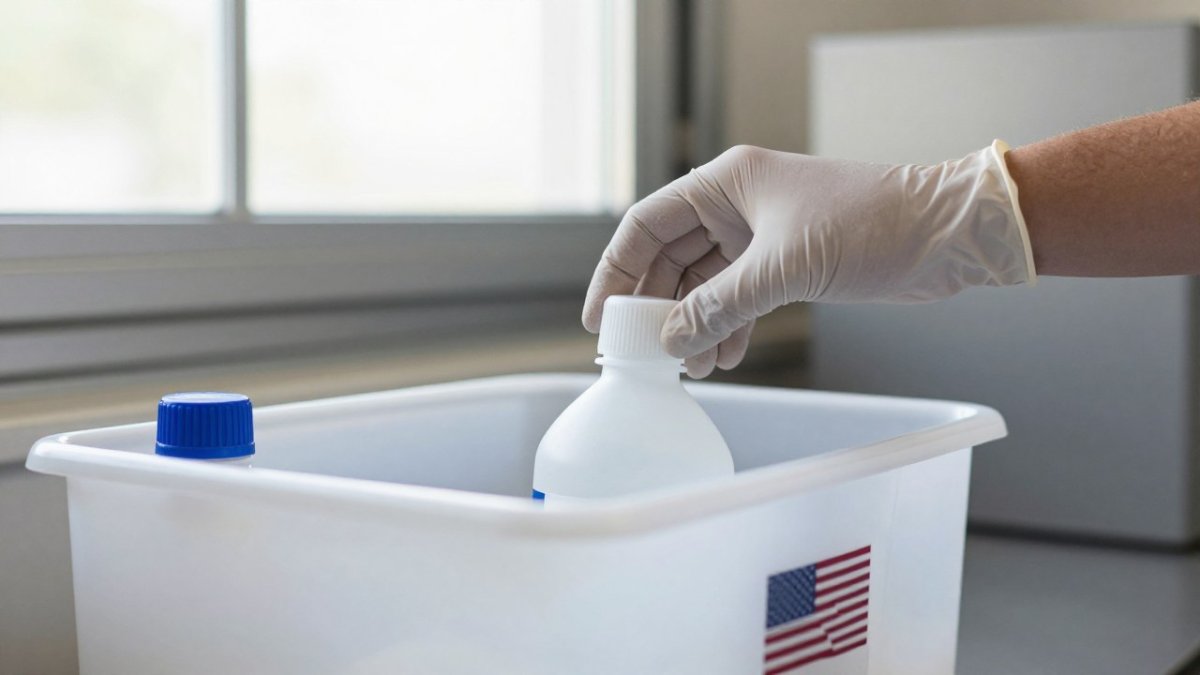
Store items in their original containers whenever possible. Keep lids tight and place containers upright on a sturdy surface.
Watch out: never mix products together to “get rid of” them. Mixing cleaners can release toxic gas.
Step 4: What to Do With Unknown Chemicals and Damaged Containers
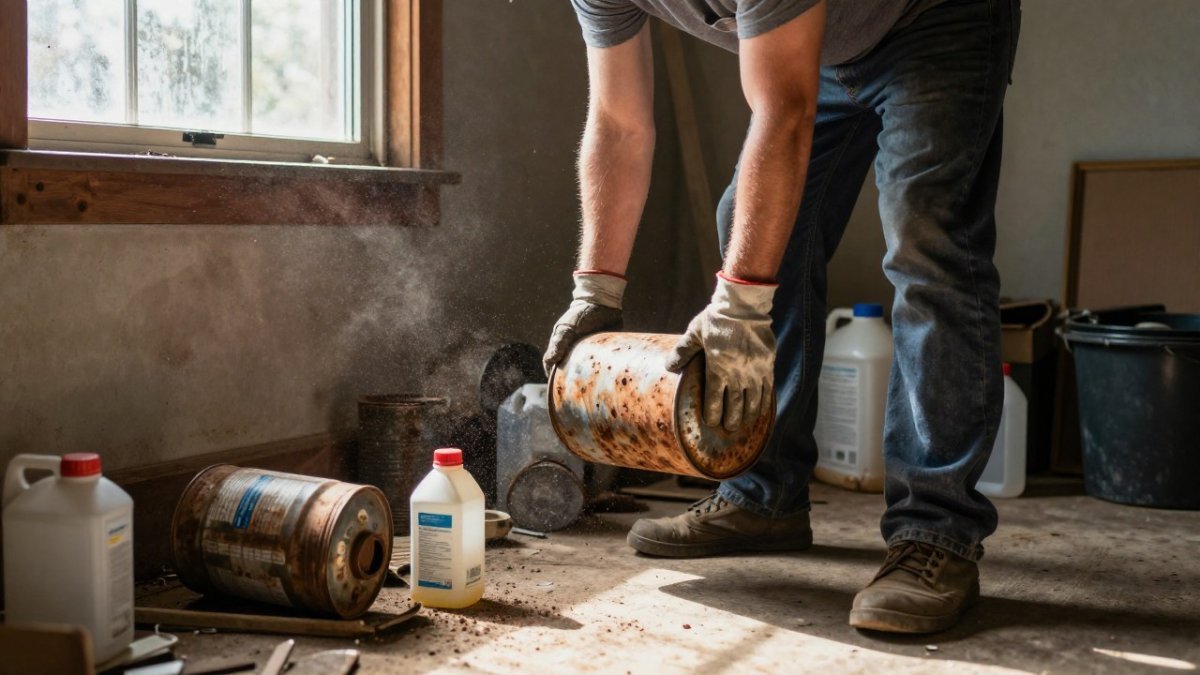
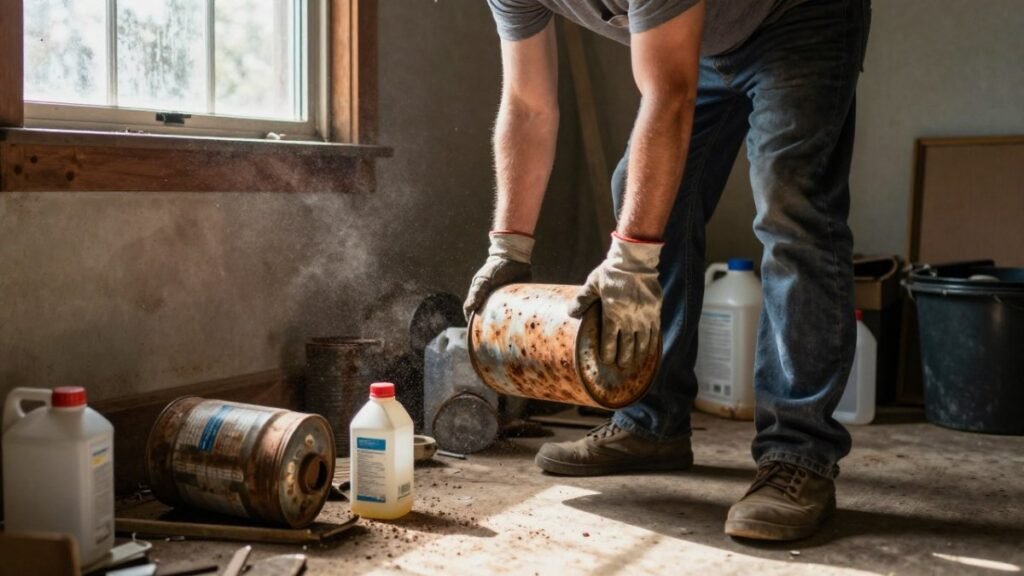
Unknown and damaged containers are where estate cleanouts go wrong fastest. A rusted can of thinner in a garage that has been closed up for a decade, a bulging aerosol can, a mason jar of amber liquid with no label, each one calls for a different response. Treat every unlabeled container as hazardous until it is identified by someone qualified to do so.
Stop-work triggers
Stop what you are doing and do not move the item if you see any of the following:
- Leaking, weeping, or wet residue on or under the container
- Bulging, dented, or corroded metal, or a lid that is cracked or popped up
- Crystalline buildup around the cap or rim (a sign of evaporation and re-crystallization)
- Strong, sharp, or sweet chemical odor in a closed space
If a container is leaking, bulging, rusting, or unlabeled, do not open it. Place it inside a larger sealable container, a heavy plastic bin with a tight lid works, and label the outer container clearly with “Unknown Contents – Do Not Mix.” Keep it in a cool, dry, ventilated place away from heat, sparks, and flames, and away from where people are working.
Item-by-item identification guide
Most estate hazards fall into a handful of recognizable categories. Use this list to sort what you find before you decide how to handle it:
- Unlabeled liquids and powders in food or drink containers, jars, soda bottles, and coffee cans are common disguises for solvents, pesticides, and pool chemicals. Never smell or taste to identify. Keep them sealed and set them aside for a household hazardous waste program or a licensed hauler.
- Paint and paint products, look for cans with hardened skins, rusted seams, or missing labels. Oil-based paint, stain, varnish, and thinner are hazardous; latex paint may be accepted at some collection sites but rules vary. Do not pour paint down a drain or into soil.
- Pesticides, herbicides, and fertilizers, granular and liquid products, including banned or legacy products such as older chlordane or DDT containers that may still turn up in sheds. Keep them in their original packaging if intact; if not, seal and label as unknown.
- Batteries, car and lead-acid batteries, lithium-ion packs from tools and electronics, button cells, and rechargeable batteries. Tape the terminals of lithium and 9-volt batteries to prevent short circuits, and keep them out of ordinary trash.
Spills and exposure
Spills need quick attention. Put down absorbent material such as kitty litter or sand, keep people away from the area, and avoid walking through it. Do not use a household vacuum on a chemical spill; vapors and fine dust can ignite or spread. If someone breathes in fumes and feels unwell, get them to fresh air and call for medical help right away.
When to call a professional or an authority
If you cannot identify a substance, if a container is damaged in a way that makes moving it risky, or if the situation feels unsafe, stop and bring in a licensed hazardous-waste contractor.
Certain signs mean a container should be left alone and handled with extra care, so the table below lists the warning signs and what to do about each.
| Warning sign | Why it matters | What to do |
|---|---|---|
| Leaking or wet residue | Contents may be escaping | Stop, do not move it, seal in outer container |
| Bulging, dented or corroded metal | Pressure or breakdown may be building | Stop, do not open or move it |
| Crystalline buildup around cap | Sign of evaporation and re-crystallization | Stop, do not open it |
| Strong chemical odor in closed space | Vapors may be hazardous | Ventilate or leave the area until you have a plan |
| No label or unreadable label | Contents cannot be verified | Treat as unknown, keep sealed and labeled |
| Incompatible neighbors | Mixing can release toxic gas | Separate them immediately |
| Reachable by children or pets | Exposure risk | Restrict access right away |
Step 5: How to Dispose of Hazardous Waste at Home or Through a Facility
Disposal is where estate cleanouts stall. Families load a truck, drive to a collection site, and get turned away because the site does not accept medical waste, ammunition, or latex paint that week. A little planning before you load saves a second trip and keeps the estate moving.
Find the right program first
Household hazardous waste programs are run locally, not federally, so accepted materials, fees, hours, and residency requirements vary by county and city. Start with the county or city solid waste office where the property is located, then check the state environmental agency’s household hazardous waste page. The U.S. Environmental Protection Agency maintains a state-by-state directory of household hazardous waste programs that can point you to the right local contact.
Common patterns across programs:
- Permanent drop-off sites in larger metro areas, often open year-round on limited days
- One-day collection events in smaller counties, usually spring and fall
- Retailer take-back for batteries, fluorescent bulbs, and some electronics at hardware and home-improvement stores
- Pharmacy and police take-back for medications, often on designated days
What to expect at drop-off
Keep products in their original containers when possible, and keep labels legible. Leave lids on and containers upright. Do not mix products together to “get rid of” them, mixing cleaners can release toxic gas, and collection staff will refuse commingled unknowns. Place containers in a sturdy box or bin so they do not tip during transport, and line the vehicle with a tarp in case something leaks.
DIY versus professional: a decision tree
Use ordinary household channels, trash, recycling, retailer take-back, and municipal collection, only when all of the following are true:
- The item is labeled and identifiable
- The container is intact and not leaking
- The material is accepted by a local program you have confirmed
- You can transport it safely in a personal vehicle without special equipment
Call a licensed hazardous-waste contractor or a professional cleanout service when any of the following is true:
- Containers are unlabeled, leaking, bulging, or corroded
- The volume is large, multiple five-gallon pails, drums, or a full shed of mixed chemicals
- Suspected asbestos, lead paint, or mercury is present
- Ammunition, flares, or medical waste is mixed in
- The property is remote, the weather is hot, or the vehicle is not suitable for the load
Call emergency services for fire, visible vapor, strong fumes, or anyone injured. Call the state environmental agency or the local health department when you suspect an illegal dump, a buried tank, or contamination that goes beyond household quantities.
Keep the estate’s paper trail
Estate-specific documentation matters as much as the disposal itself. Keep a simple inventory: what was found, where it was found, how it was handled, who transported it, and where it went. Save receipts, drop-off confirmations, and any contractor invoices. Share the record with the executor, the estate’s attorney, and the property insurer if a claim is involved. If the home will be sold, a clean disposal record reassures buyers and their inspectors that the property was handled responsibly.
Finding Household Hazardous Waste Disposal Near You
Search for household hazardous waste disposal near you by checking your county solid waste website or the U.S. Environmental Protection Agency’s list of local programs. Call ahead to confirm hours, accepted materials and any limits on quantity. Many sites accept paint, pesticides and cleaners but not medical waste or ammunition.
Booking Hoosier Junk Daddy for Your Estate Cleanout
If the cleanout includes hazardous items, a planned approach saves time and reduces risk. Sorting hazardous items carefully is only one part of a manageable estate cleanout, and Rubbish Outlaw Junk Removal offers another perspective on keeping the process organized.
Pricing depends on the size and type of the job, so check the Hoosier Junk Daddy website for current rates or request a free on-site estimate before deciding.
Ready to take the next step? Call (317) 506-7943 or fill out the form to request a free estimate for your estate cleanout today.
Frequently Asked Questions
What are common hazardous household items found in an estate?
Estates often contain paints, solvents, pesticides, motor oil, cleaners, aerosol cans, batteries, fuel, and older products that may contain lead or other heavy metals. Garages, basements, and sheds tend to hold the largest share. Do not assume an item is safe because it looks ordinary. When a label is missing or unreadable, treat the container as unknown and handle it with extra caution until a qualified disposal service or local program can identify it.
Should you move or open unknown chemical containers?
No. Do not open, mix, or move unknown chemical containers unless you have to, because friction, heat, or contact can cause leaks, fumes, or reactions. Keep people and pets away from the area, ventilate if it is safe to do so, and document where the container sits. Then contact a licensed hazardous waste contractor or your local household hazardous waste program for guidance on safe removal and transport.
Can household hazardous waste be thrown in the trash?
In most cases, no. Many paints, solvents, pesticides, and batteries are regulated and should not go into household trash or down drains. Rules vary by county and municipality in Indiana, so check with your local solid waste authority or household hazardous waste program before disposing of any item. Keep original labels where possible, since they help the disposal facility identify and handle materials correctly.
When should you call a professional for hazardous estate items?
Call a professional when containers are leaking, damaged, corroded, or unidentified, when you find large quantities of chemicals or fuel, or when the property has signs of asbestos or lead-based materials. Professionals also help when time is short, such as before a property sale, or when you lack the protective equipment and ventilation needed for safe handling. Hoosier Junk Daddy can provide a free on-site estimate; contact the company for current pricing and availability.