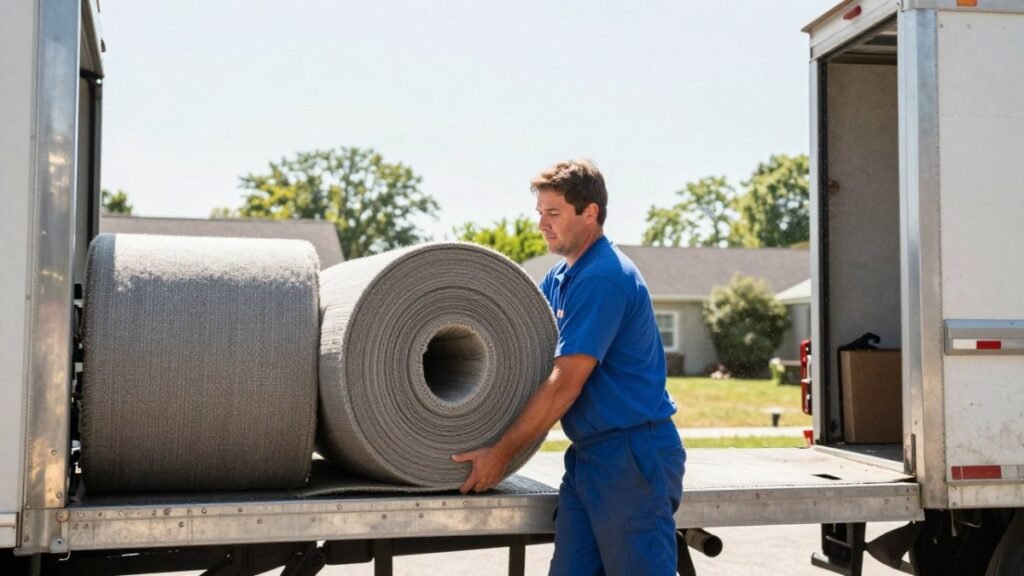
Quick Summary
To dispose of carpet remnants safely, first check their condition, size, and contamination, then handle dusty or moldy pieces with gloves and a respirator. Next, confirm with your local waste provider whether clean carpet can be recycled or donated. Damp or moldy carpet should be bagged and sent to a landfill or special-handling site.
- Sort remnants into clean, questionable, and contaminated piles before moving anything.
- Wear gloves and an N95 respirator when dust or visible mold is present.
- Never roll up damp or moldy carpet and store it in a closed space.
- Cut oversized pieces to roughly 4 feet by 4 feet so one person can carry them.
- Call the site first to confirm fiber, backing, padding, and size limits.
Table of Contents
- Why Carpet Remnants Need a Different Disposal Plan
- Step 1: Assess Condition, Size, and Contamination
- Step 2: Safely Handle and Prepare Dusty or Moldy Pieces
- Step 3: Check Local Waste Rules and Recycling Options
- How to Dispose of Carpet Padding Along with Carpet
- Carpet Disposal Cost: What Affects the Price
- Reuse Old Carpet Scraps Before You Throw Them Out
- Book Your Carpet Remnant Pickup With Hoosier Junk Daddy
- Frequently Asked Questions
Why Carpet Remnants Need a Different Disposal Plan
Last Updated: November 14, 2026
Carpet remnants are small leftover pieces from a bigger job, and they are easy to overlook. Many homeowners toss them out with the rest of the trash, but old carpet can hold dust, mold, pet odors, and stains. That makes it a poor fit for a standard curbside bin.
Carpet remnants need a different plan because they are bulky, dirty, and often not accepted by every waste service. A small piece may look harmless, but it can still create a mess on the truck or at the curb. A simple plan keeps the job safe and saves time.
Here is what makes remnants different:
- They often carry dust, pet hair, or mildew that spreads when disturbed.
- Their backing can be hard to recycle, depending on the material.
- Local waste rules may limit what can go into household trash.
- Some recycling sites accept carpet only in clean, dry condition.
Watch out: Never roll up a damp or moldy piece and store it in a closed space. Trapped moisture speeds up mold growth and makes the next step harder.
Step 1: Assess Condition, Size, and Contamination
Start by looking at the carpet before you move anything. Check its condition, its size, and whether it has any contamination. These three details decide your best disposal route.
Use this quick check:
- Condition: Is it clean, worn, or water-damaged?
- Size: Can one person carry it, or does it need two?
- Contamination: Is there mold, pet urine, or heavy staining?
A clean, dry remnant may be accepted for recycling or donation. A badly stained or moldy piece usually goes to a landfill or a special handling site. Knowing this early keeps you from driving to a site that will turn you away.
Sort your pieces into three piles: clean, questionable, and contaminated. This simple step makes the rest of the job faster and safer.
Step 2: Safely Handle and Prepare Dusty or Moldy Pieces
Protect yourself before you lift a single piece. Dust, loose fibers, and mold spores can irritate the lungs, skin, and eyes, and disturbing an old remnant sends those particles into the air.
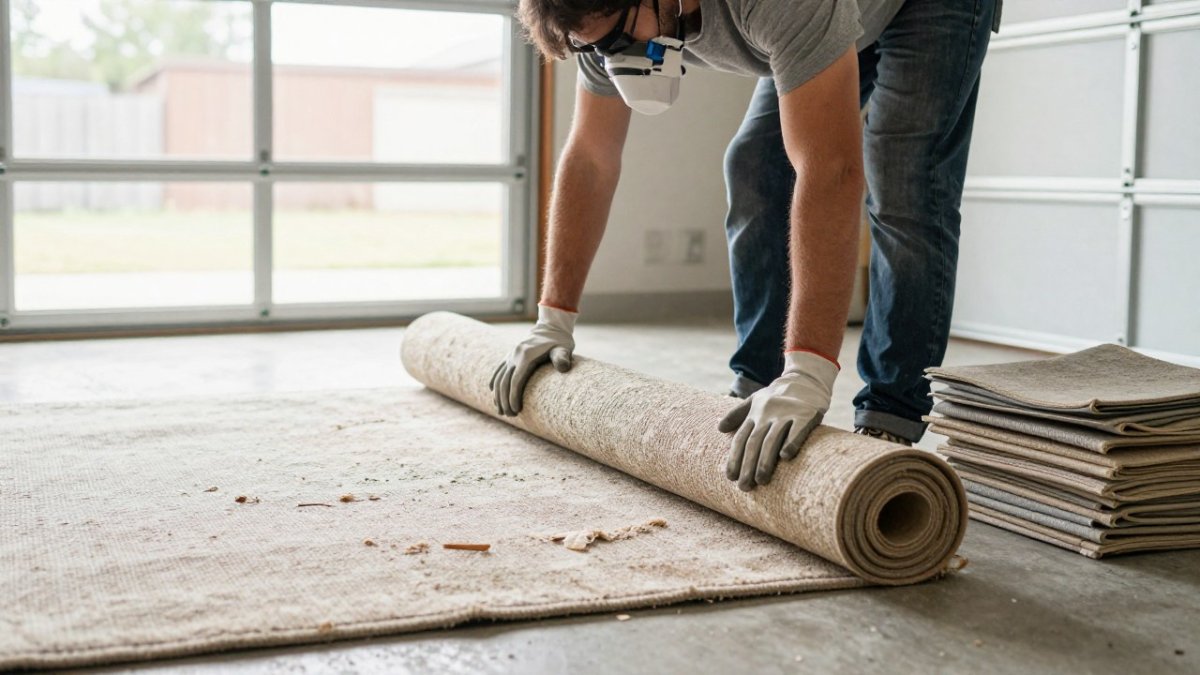
Wear these items:
- Nitrile or work gloves (latex-free if you have sensitivities)
- A NIOSH-approved N95 respirator when dust or visible mold is present (the CDC)
- Long sleeves, long pants, and closed-toe shoes
- Eye protection if dust is heavy or you are cutting
Work outdoors or in a well-ventilated space like an open garage or driveway.
Match the handling to the contamination level. This is the step most guides skip, and it is the one that decides whether a remnant can be recycled, donated, or must go to a landfill:
- Clean and dry: Vacuum with a HEPA-filter vacuum, roll dirty-side-in, and it can usually go to recycling or donation.
- Dusty or pet-haired but dry: Vacuum and shake outdoors, then bag it before transport so loose fibers stay contained.
- Damp or musty: Do not roll and store it. Mold spreads in trapped moisture. Bag it in heavy-duty plastic, keep it out of living spaces, and route it to landfill or a special-handling site, not donation or recycling.
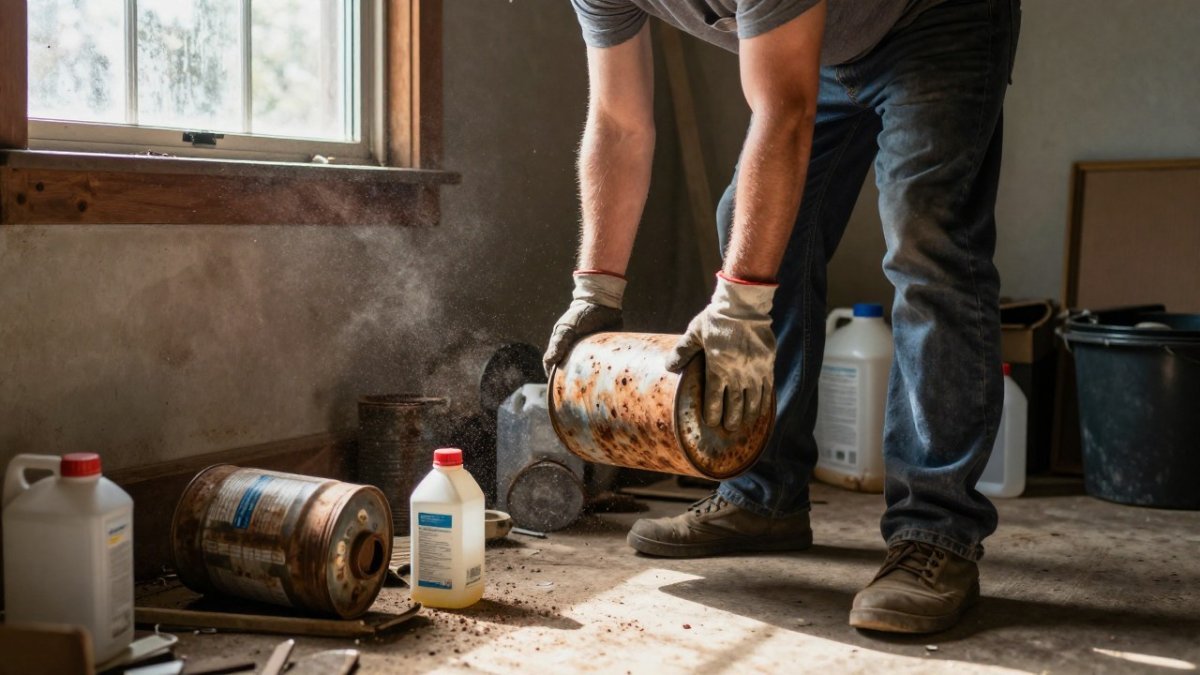
- Visible mold, sewage, or chemical contamination: Treat it as regulated waste. Double-bag it, wear full PPE, and confirm with your county solid waste office whether it can go in household trash or needs a special drop-off.
Prepare each piece carefully:
- Shake or sweep off loose dirt outdoors, away from doors and windows.
- Vacuum the surface with a HEPA-filter vacuum if you have one.
- Cut oversized remnants down to a size one person can carry, roughly 4 feet by 4 feet is a common working size, so the roll stays tight and manageable.
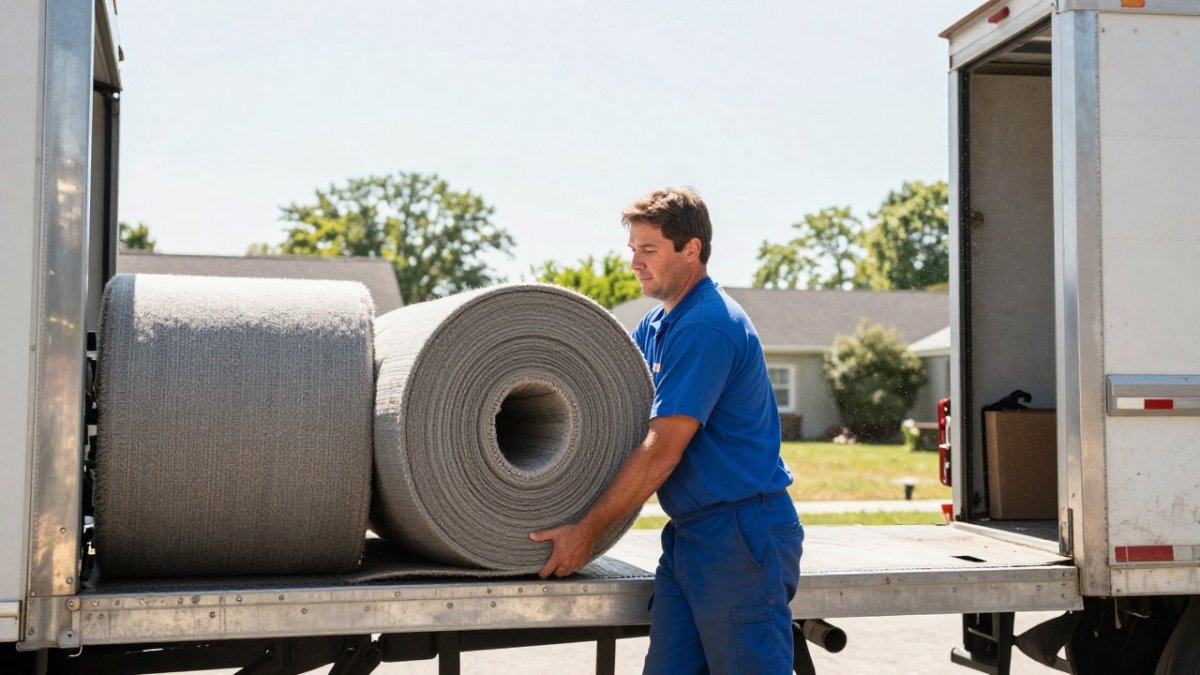
- Roll the piece with the dirty side in, and secure it with rope, tape, or stretch wrap every 12 to 18 inches so it cannot unroll in a truck or at the curb.
- Bag contaminated pieces separately and label the bag (for example, “moldy carpet, landfill”) so a hauler or site attendant knows what it is.
- Keep every bundle dry until pickup or drop-off; a tarp or garage floor works, but not a damp basement.
Watch out: Never roll up a damp or moldy piece and store it in a closed space.
Clean, dry carpet is easier to accept at most drop-off sites. Dampness and odor often mean a site will refuse the load, so sort and bag before you load the vehicle.
Handling depends on how contaminated each piece is, so match your approach to its condition.
| Contamination level | Recommended handling | Where it can go |
|---|---|---|
| Clean and dry | Vacuum with HEPA vacuum, roll dirty-side-in | Recycling or donation |
| Dusty or pet-haired but dry | Vacuum and shake outdoors, then bag | Bagged before transport |
| Damp or musty | Bag in heavy-duty plastic, keep out of living spaces | Landfill or special-handling site |
| Visible mold, sewage, or chemicals | Double-bag, wear full PPE | Confirm with county solid waste office |
Step 3: Check Local Waste Rules and Recycling Options
Rules for carpet differ from one city or county to the next, and they also differ by material. A site that takes nylon carpet may refuse polyester, and a program that accepts carpet often will not take the padding.
Start with your local waste provider or county solid waste office. Ask whether carpet is allowed in household trash, bulk pickup, or recycling bins, and whether remnants are treated differently from whole rooms of carpet.
Know what affects acceptance before you call. These are the details site staff will ask about, and the ones that most often cause a wasted trip:
- Fiber: Nylon and polypropylene (olefin) are the most commonly recycled face fibers; polyester and wool are accepted less often.
- Backing: Latex, polyurethane, and jute backing can change whether a piece qualifies. Carpet with attached cushion or heavy adhesive is frequently rejected.
- Padding: Rebond and foam padding are handled separately from carpet at many sites, and some programs take one but not the other.
- Quantity: Ask about size and weight limits per visit, and whether a commercial-size load needs an appointment.
- Condition: Confirm whether wet, moldy, or heavily soiled pieces are allowed at all.
- Fees: Ask whether there is a per-load or per-pound charge, and what forms of payment the site takes.
Compare your main options:
- Recycling: Best for clean carpet and padding, when a local site accepts the fiber and backing.
- Donation: Good for usable remnants in good shape; call ahead because many charities no longer take carpet.
- Landfill or bulk waste: The fallback for contaminated, wet, or non-recyclable pieces.
Before you drive anywhere, call the site and confirm the specifics. A quick call can save a wasted trip and a disposal fee.
Here is a simple checklist for verifying local acceptance:
- Confirm the site accepts carpet remnants (not just whole carpet)
- Ask which fibers and backings they take
- Ask about padding and whether it must be separated
- Check size, weight, and quantity limits per visit
- Ask if wet or moldy pieces are allowed
- Confirm whether an appointment is required
- Note hours, fees, and accepted payment methods
- Ask what they do with rejected loads
If no local site takes your remnant, ask the county solid waste office for the nearest regional drop-off or a permitted hauler.
How to Dispose of Carpet Padding Along with Carpet
Carpet padding often goes out with the carpet, but the two are not always handled the same way. Padding is usually made of foam or rebond material, and many recycling sites will not accept it. Some local programs take padding only when it is separated from the carpet.
Separate the two when you can. Cut the carpet from the pad, then bag each one separately. Label the bags so the hauler or site knows what they are.
Check your local rules for padding. If your area does not recycle it, the padding may need to go to a landfill or a bulk waste service.
Carpet Disposal Cost: What Affects the Price
Carpet disposal costs depend on several factors, and prices vary widely. Quantity, weight, condition, and location all play a role. Carpet recycling costs also change based on whether you drop it off yourself or hire a removal service.
Common cost factors include:
- How much carpet and padding you have
- Whether the pieces are clean or contaminated
- Access, such as stairs or a tight driveway
- Whether you haul the load yourself or hire help
Pricing depends on quantity, dates, and delivery, so an exact figure is hard to predict. For current prices or a free estimate, check the pricing details on Hoosier Junk Daddy’s website. If you want to reduce costs, sort clean carpet from dirty carpet before you call anyone.
Reuse Old Carpet Scraps Before You Throw Them Out
Before you toss a remnant, consider whether it still has a use. Carpet scraps can work well in many home and garden projects.
Here are some ideas:
- Lay a piece in the garage or shed to protect the floor.
- Use it as a pet bed liner or a mat for a dog crate.
- Cut it into pads for furniture legs to stop scratches.
- Offer usable pieces to neighbors, shelters, or local listings.
Reuse keeps carpet out of the landfill and can save you a trip. Only reuse clean, dry pieces that have no mold or strong odor.
Book Your Carpet Remnant Pickup With Hoosier Junk Daddy
If sorting, hauling, and driving to drop-off sites sounds like too much, Hoosier Junk Daddy can handle the job for you. The company offers residential junk removal for Indianapolis homes. Free on-site estimates are available to help you know what to expect before you commit.
Hoosier Junk Daddy works to recycle, reuse, or donate items it hauls. Same-day service is available when possible, which helps if you need the space cleared fast.
Get your free estimate and book a carpet remnant pickup today.
Frequently Asked Questions
What can I do with old carpet remnants?
Old carpet remnants can be recycled at a carpet recycling drop-off site, donated to a charity or reuse program if the piece is clean and usable, sold or given away through local listings, or reused for small projects such as garage floor mats, pet bedding, or moving-day floor protection. If the piece is damp, moldy, or heavily stained, it usually cannot be donated and should go to a recycler or be hauled away with other bulk waste. Check local rules before you load anything into a vehicle.
Can I throw carpet remnants in the trash?
It depends on where you live. Many Indianapolis-area households can place carpet in bulk or trash pickup, but rules on size, weight, and bagging vary by municipality, and some waste haulers will not accept carpet at curbside. Carpet padding is handled the same way in most areas. Before setting anything out, confirm with your local waste provider or public works office. Keeping carpet separate from other garbage makes it easier to recycle if a drop-off site is available.
Can carpet remnants be recycled?
Yes, many carpet remnants can be recycled, but acceptance depends on the material, condition, and local recycling programs. Carpet recyclers generally accept clean carpet, and some accept padding separately. Dirty, wet, or contaminated pieces are often rejected. Use a carpet recycling location finder to locate drop-off sites, and call ahead to confirm they accept small quantities and the type of carpet you have before you travel.
How should I prepare carpet remnants for disposal?
Vacuum the surface, let any damp pieces dry fully in a ventilated area, and remove tack strips, staples, or loose debris. Roll or fold pieces so they are easy to lift and transport, and keep carpet and padding separated. Wear gloves and a dust mask when handling old or dusty carpet. Do not transport moldy material in an enclosed vehicle cabin. Tie the bundles securely and confirm the drop-off site’s requirements before you leave.