Quick Summary
Handle inherited clutter one step at a time: pause to acknowledge grief, build a written inventory with keep, donate, sell, or discard decisions, agree on rules with family before sorting, and work room by room with stopping points. Plan how items will leave the house early, so piles do not stall the job.
- Set a time limit for each session, such as 60 minutes, and stop when it ends.
- Use a checklist with room, item, condition, estimated value, and decision columns.
- Agree on final decision-makers, claim deadlines, and removal dates in writing before sorting.
- Work from the easiest rooms to the hardest, such as basements and attics, which take 10 to 20 hours.
- Keep medications, firearms, and financial documents out of general removal loads.
Table of Contents
- Why Inherited Clutter Feels So Overwhelming
- Step 1: Pause and Acknowledge the Grief
- Step 2: Build an Inherited Belongings Checklist
- Step 3: Divide Inherited Belongings Among Siblings
- Step 4: Work Through Sentimental Items Without Getting Stuck
- Step 5: Clear Out a Parent’s House Room by Room
- Booking Help for the Heavy Lifting in Indianapolis
- Frequently Asked Questions
Why Inherited Clutter Feels So Overwhelming
Last Updated: November 9, 2026
Inherited clutter is hard for a reason that has little to do with the stuff itself. Every box carries a memory, and every drawer holds someone you miss. The good news is that it can be handled one step at a time.
Clutter overwhelm usually has three sources:
- Emotional weight. Each item can feel like a decision about the person who owned it.
- Sheer volume. Decades of belongings can fill every room, garage, and attic at once.
- Unclear authority. Family members may disagree about what to keep, sell, or throw away.
Here is the approach this guide follows. Start small, make a plan, and let the process move at the speed of the people doing it.
Step 1: Pause and Acknowledge the Grief
Before you open a single box, stop and name what you are feeling. Grief often shows up as exhaustion, irritability, or a sudden urge to rush the job.

- Take a short walk before you start each session.
- Set a time limit, such as 60 minutes, and stop when it ends.
- Agree with family members that breaks are part of the work.
You do not have to finish quickly. A slow pace protects your energy for the decisions that matter.
The article suggests a few ways to keep the pace manageable while you work through grief.
| Tactic | How it helps | Limit |
|---|---|---|
| Short walk | Resets energy before each session | Before each session |
| Timed session | Stops work before fatigue | 60 minutes |
| Agreed breaks | Treats rest as part of the work | Agreed with family |
Step 2: Build an Inherited Belongings Checklist
A written inventory turns a mountain into a list. Create a simple sheet or notebook with these columns: room, item, condition, estimated value, and decision (keep, donate, sell, or discard).
Use one line per item or per group of similar items, like “kitchen dishes, 3 boxes.” Photograph valuable pieces so you can share them with relatives or an appraiser later. This is also the easiest place to track digital inventory, such as a shared spreadsheet that every family member can see.
Sort items into four categories as you go:
- Keep: items with real personal or practical use.
- Donate: usable goods that a charity can use.
- Sell: items with market value, such as furniture, tools, or collectibles.
- Discard: broken, unsafe, or unusable items.
Step 3: Divide Inherited Belongings Among Siblings
Disagreements are common when several people inherit the same home, and they are the single most reliable reason a cleanout stalls for months. A clear process protects the relationships you still need after the work is done.
Set the rules before anyone touches a box. Hold a short family meeting, in person or by video, and agree on four things in writing: who has authority to make final calls, how disputed items will be resolved, the claim deadline, and the removal date. Put the agreement in a shared document or group text so it can be referenced later. Families that skip this step often relitigate the same item three or four times.
Choose a distribution method and commit to it. The most common approaches are:
- Alternating picks. Family members draw numbers, then take turns choosing one item at a time. Simple and transparent, but it favors whoever has the most available time.
- Rotating by category. Assign categories (furniture, tools, photos, kitchenware) and rotate who picks first in each category. This spreads advantage across different interests.
- Sealed-bid or silent auction. Each person writes down what an item is worth to them; the highest declared interest wins, and the others receive credit toward other items. Useful when two people want the same heirloom.
- Buyout. One person keeps a high-value item and pays the others their share of its appraised value. Requires an independent appraisal to avoid resentment.
Set a hard claim deadline. A common pattern is two to three weeks from the first inventory share. After the deadline, unclaimed items move to the donate or sell pile. Announce the deadline twice, once at the meeting and once a week before, and put it in writing. Extensions are fine if everyone agrees in advance; open-ended timelines are not.
Handle competing claims with a written tiebreaker. When two people want the same item, write it on a shared “disputed items” list with both names and the date. Resolve disputes in a single batch at the end, not in the moment. Options include the sealed-bid method above, a coin flip for low-value items, or a trade where one person gives up a claim elsewhere.
Communicate boundaries in plain language. Short scripts work better than long explanations.
Include family who cannot attend. Take photos of every item over a set value, share them in a single album, and give remote family members the same claim deadline.
Watch out: If one family member is also the executor, they may have legal authority the others do not, and treating the process as a pure family vote can create problems later. Confirm the executor’s role before promising anyone a final say.
Write every decision down as you go: item, claimant, date, and status. A shared spreadsheet or even a paper log prevents the “you said I could have it” conversation that derails so many cleanouts.
Step 4: Work Through Sentimental Items Without Getting Stuck
Sentimental items are where most cleanouts stall. Try these tactics to keep moving:
- Set a holding area. Place sentimental items in one labeled box and return to it later.
- Take a photo. A picture can preserve the memory even when the object leaves the house.
- Ask a simple question. “Will I use this, display it, or pass it on?” If the answer is no, let it go.
- Keep a small representative sample. Choose one or two items from a large collection, such as a few letters or one piece of a dinner set.
- Ask a friend to help. A declutter buddy can keep you focused and talk you through hard moments.
Letting go of an object does not erase the person. The memory stays with you.
Step 5: Clear Out a Parent’s House Room by Room
A room-by-room plan keeps the work manageable, but the plan only works if it includes realistic time estimates and clear stopping points. Most families underestimate the job by half.
Work in this order. Start with the easiest space, then move to the hardest, so you build momentum before the emotional rooms.
- Entryways and hallways (2 to 4 hours). Clear a safe path in and out. Remove obvious trash and broken items first.
- Kitchen and dining (6 to 10 hours). Expect duplicates and expired food. Set aside usable dishes and small appliances for donation.
- Bathrooms and utility spaces (3 to 5 hours). Check for medications, which need secure disposal, and chemicals, which need hazardous-waste handling.
- Bedrooms and closets (8 to 12 hours). Clothing, linens, and personal papers. Papers take the longest; sort them into keep, shred, and review.
- Living rooms and home office (6 to 10 hours). Furniture, electronics, and paperwork.
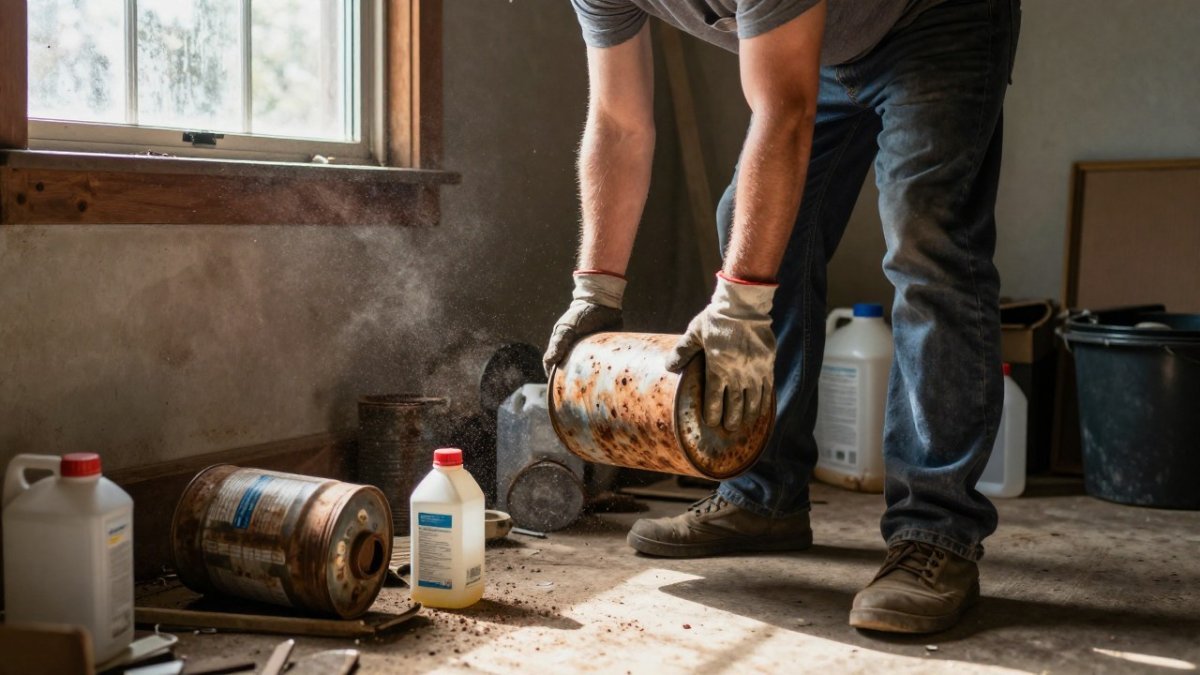
- Basement, attic, and garage (10 to 20 hours). These usually take the longest and hold the most hazards: paint, solvents, old fuel, damaged wiring, and heavy items.
Build a schedule with stopping points. A workable pattern is two weekend days on the main living areas, one weekend on bedrooms and closets, and two weekends on storage spaces, with a buffer weekend for removal. Stop each session at a set time, even if a room is not finished, so fatigue does not drive bad decisions. Mark a visible “done” line in each room, such as a cleared wall or emptied closet, so progress is obvious.
Plan removal before you fill the room. Sorting creates piles, and piles create a second problem. Decide early how items will leave the house:
- Donation pickup. Some charities offer home pickup for usable furniture, clothing, and household goods. Check with the charity for availability and scheduling.
- Junk removal. Useful for mixed loads, heavy items, and tight timelines. Pricing depends on quantity, dates, and delivery, so check the Hoosier Junk Daddy pricing page or request a quote.
- Storage unit. Useful as a short-term holding area for disputed or sentimental items, but monthly rent adds up quickly and storage can become a second clutter problem if items stay too long.
- Estate sale. An option when the home holds enough sellable furniture, tools, or collectibles to justify the commission and setup time.
- **
Watch out: Hazardous items, medications, firearms, and financial documents should not go into a general removal load. Medications need a take-back program or secure disposal, and documents with account numbers should be shredded or reviewed before disposal.
Keep a clear route to the exit. Move items out as you go rather than stacking them in hallways. A clear path protects people from trips and falls and makes the final removal day faster. Photograph each room before and after; the before photos are useful for insurance and estate records, and the after photos show family members what has already been decided.
Booking Help for the Heavy Lifting in Indianapolis
Some cleanouts are too big to handle alone. If the work feels like more than your family can manage, professional help can take the physical strain off your shoulders and let you focus on the decisions that matter.
Hoosier Junk Daddy is a locally owned and operated junk removal company serving Indianapolis and nearby areas. The team handles the lifting and hauling, and it aims to recycle, reuse, or donate up to 60% of what it removes. Same-day service is available when possible, and free on-site estimates help you plan your budget. For current prices or a quote, visit the Hoosier Junk Daddy pricing page.
When you are ready, contact us to talk through your cleanout. You can also request free estimates for residential junk removal in Indiana. If you are sorting a parent’s home and want to see which removal services are available for each room, our residential junk removal options page lists the most common jobs.
Frequently Asked Questions
How do I start sorting through a loved one’s belongings?
Start with one small, low-stakes area, such as a single drawer, closet shelf, or kitchen cabinet, rather than the whole house. Set a timer for 30 to 45 minutes, and work in four piles: keep, donate, sell, and discard. Take photos of sentimental items before you decide, and step away when you feel overwhelmed. Many families find that tackling one bounded space builds momentum without forcing a decision on everything at once.
How can siblings divide inherited belongings fairly?
Begin by making a shared inventory so everyone sees the same list. Agree on ground rules first, such as taking turns choosing items or assigning a value to each piece. Items with no monetary value are often easier to divide when each sibling picks a set number at a time. If disagreements persist, a neutral mediator or the estate executor can help settle who gets what, and a written agreement protects everyone involved.
What should I do with inherited items I don’t want?
Sort unwanted items into sell, donate, or discard before you give up on them. Usable furniture and household goods often go to local charities, while items with resale value can go to an estate sale company or online marketplace. Offer family heirlooms to relatives or friends first. Items that are broken, damaged, or unsafe can be taken to a licensed junk removal service for disposal, which can save a large amount of time on a full cleanout.
How do I decide what to keep when everything feels sentimental?
Ask whether you have space for the item and whether you will actually use or display it. Choose a limited number of sentimental keepsakes, and photograph the rest so the memory is preserved without the physical clutter. Keeping a small box for each family member can make the choice more manageable. Revisit the decision after a few weeks, since many people find that their priorities become clearer over time.