
Table of Contents
- Start with Attic Decluttering: Sort, Donate, Discard
- What Not to Store in an Attic: Safety and Damage Risks
- Choosing Attic Storage Containers: Clear Bins, Labels, and More
- Attic Shelving Ideas: Vertical Storage and Awkward Spaces
- How to Organize Attic Storage: Grouping, Labeling, and Retrieval
- Protecting Your Attic Storage from Moisture, Pests, and Fire
- Frequently Asked Questions
Last Updated: October 7, 2026
Start with Attic Decluttering: Sort, Donate, Discard
Learning how to organize attic storage starts with one hard truth: you cannot organize clutter, you can only move it around.
People keep things because sorting feels overwhelming, not because the items have value. The fix is a simple system you can finish in one weekend.
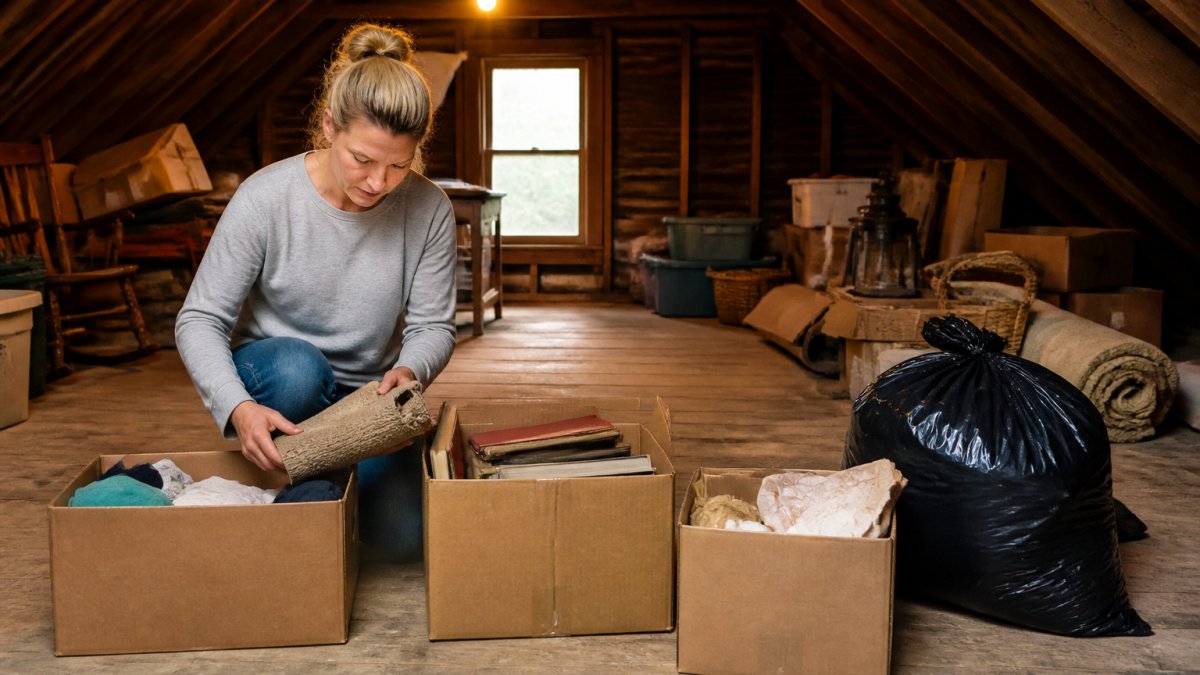
The Four-Pile Sorting Method
Set up four zones before you touch a single box:
- Keep: Items you used in the past year or truly need
- Donate: Good-condition items someone else can use
- Sell: Valuable items worth your time to list
- Discard: Broken, moldy, or expired items
Work one box at a time and make fast decisions. If you hesitate on an item, it belongs in the donate pile. Most people find that the donate and discard piles grow much faster than the keep pile.
Bring trash bags and a permanent marker upstairs with you. Label each bag as you fill it so nothing gets mixed up on the way down. It sounds obvious, but it saves a second sorting session.
What Not to Store in an Attic: Safety and Damage Risks
An attic is not a garage. Temperature swings, humidity, and pests make it a hostile place for many common household items. Knowing what not to store in an attic protects both your belongings and your home.
Items that should never go in an attic include:
- Paper and photos: Moisture warps and molds them fast
- Electronics: Heat and cold destroy circuit boards
- Candles and wax: They melt and warp in summer heat
- Paint, solvents, and chemicals: Fumes build up and create fire risk
- Leather and fur: Pests chew through both
- Food and pet supplies: They attract rodents and insects
- Musical instruments: Wood cracks and glue fails with temperature shifts
If you are unsure about an item, ask one question: would a hot, damp garage ruin it? If yes, keep it somewhere climate-controlled.
Attic Safety and Structural Load Limits
Attic floors are often built to hold only the ceiling below them, not heavy storage. Before you stack boxes, check the joist spacing and look for any sagging.
Safety matters for you too. Use a sturdy ladder, wear shoes with grip, and never walk on exposed joists between ceiling boards. For guidance on safe ladder use and fall prevention, see OSHA’s ladder safety guidance. One misstep in a dark attic causes serious injuries every year.
Choosing Attic Storage Containers: Clear Bins, Labels, and More
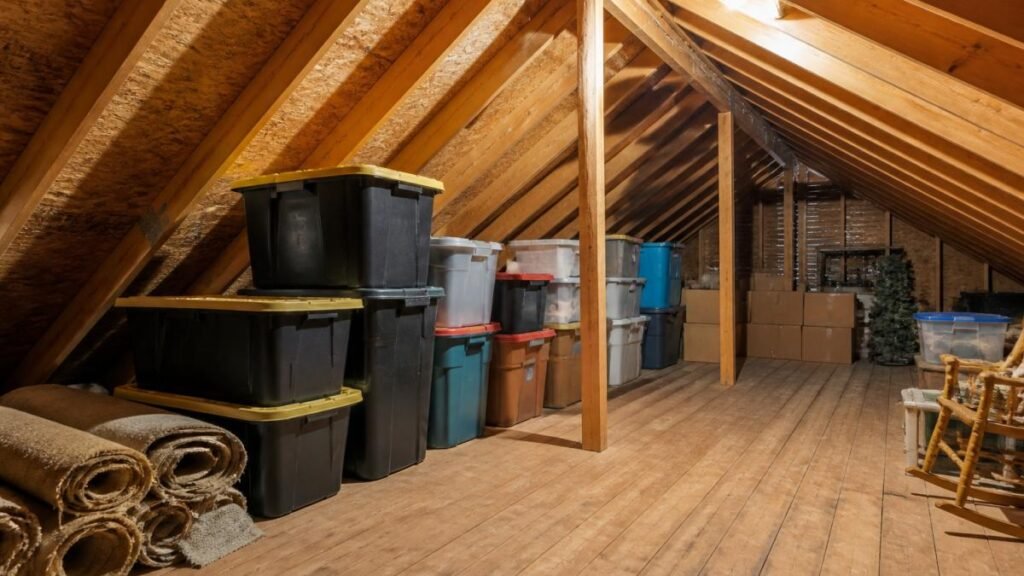
Clear plastic bins beat cardboard boxes in almost every attic situation. Cardboard absorbs moisture, attracts pests, and hides what is inside. Clear bins let you see contents at a glance, stack evenly, and keep rodents out. But “clear bin” is not a single product category, and the wrong plastic fails in an attic just as fast as cardboard.
Read the Plastic Before You Buy
Look for bins molded from polypropylene (recycling code 5) rather than polyethylene (code 2 or 4). Polypropylene holds its shape better through freeze-thaw cycles and resists cracking when you pull a loaded bin off a cold shelf in January.
Lid style matters as much as the plastic. Snap-on lids with a full-perimeter gasket seal out dust and rodents far better than lids that simply rest on top.
Match the Container to the Item and the Attic Condition
| Item Type | Best Container | Why It Works in an Attic |
|---|---|---|
| Holiday decorations | Clear polypropylene bins with gasketed lids | Protects fragile items, resists cold cracking, easy to spot |
| Off-season clothing | Vacuum-sealed bags inside a rigid bin | Saves space, blocks pests, but the rigid bin prevents punctures |
| Documents and photos | Airtight plastic boxes with desiccant packets | Blocks moisture; desiccant absorbs what seeps in during humid months |
| Small tools | Stackable latching containers | Stops clutter, easy to carry, keeps metal away from condensation |
| Electronics and small appliances | Do not store in the attic | Heat and cold destroy circuit boards and LCD screens |
| Leather, fur, and wool | Do not store in the attic | Pests chew through them and humidity warps the shape |
| Candles, wax, and crayons | Do not store in the attic | They melt and warp in summer heat |
| Paint, solvents, and chemicals | Do not store in the attic | Fumes build up and create fire risk |
| Musical instruments | Do not store in the attic | Wood cracks and glue fails with temperature shifts |
If you are unsure about an item, ask one question: would a hot, damp garage ruin it? If yes, keep it somewhere climate-controlled. The attic is for things that tolerate temperature swings, not for things that need stability.
Labeling That Survives the Attic
A label maker or permanent marker on label tape finishes the job, but adhesive labels peel in attic heat. Write the contents on the side facing out, not the lid, so you can read it while bins are stacked. For a belt-and-suspenders approach, write the contents on a strip of painter’s tape pressed onto the bin’s side, then cover it with a second strip of clear packing tape.
Photograph the contents of each bin before you seal it and keep the photos in a phone album named “Attic.” When you need the holiday lights in November, you can check the photo instead of hauling three bins down the ladder.
Attic Shelving Ideas: Vertical Storage and Awkward Spaces
Attic shelving ideas work best when they follow the roofline instead of fighting it. Most attics waste their best storage space because everything sits in a low pile on the floor. Build up, not out.
Options that fit most attics:
- Wall shelves mounted between studs for light items
- Freestanding shelving units placed along the center walkway
- Hanging straps for skis, ladders, and long tools
- A clothing rack for off-season garments
- A workbench or file cabinet against a knee wall
Keep a clear walkway down the center. If you cannot walk to the back of the attic, you will never use what is stored there.
Making Use of Corners, Nooks, and Crannies
Every attic has dead space: the triangles under the roof slope, the gap behind the chimney, the corners beside the access hatch. These nooks and crannies are perfect for small bins, rolled items, and things you rarely touch. Measure the height at the lowest point before buying containers. A short, wide bin often fits where a tall one will not.
Never block the attic access hatch or the path to it. In an emergency, or when a repair tech needs to reach your HVAC unit, a blocked hatch turns a five-minute job into a dangerous scramble.
How to Organize Attic Storage: Grouping, Labeling, and Retrieval
The final step is the one most people skip: grouping and labeling so you can actually find things later. Group similar items together. All holiday decorations in one zone, all off-season clothing in another, all documents in a third. But grouping alone does not keep an attic organized, a retrieval plan and a simple inventory do.
Zone the Attic by Frequency of Use
Think of the attic as three zones based on how often you need what is stored there:
- Zone 1, near the access hatch: Items you pull down at least a few times a year. Holiday decorations, seasonal clothing swaps, camping gear.
- Zone 2, mid-span, reachable by walking: Items you touch once or twice a year. Baby gear you are saving, extra kitchen appliances, luggage.
- Zone 3, the far corners and low knee-wall spaces: Items you may not touch for years. Old tax records, inherited furniture, memory boxes.
This zoning matters because it forces the retrieval question up front. If you store the holiday bins in Zone 3, you will resent every December. If you store rarely touched items in Zone 1, you waste your best real estate.
Build a Simple Inventory
An inventory list is the difference between a working storage system and a pile you dread opening. You do not need software. A spreadsheet with four columns works:
- Bin number, write it on the bin in permanent marker
- Contents, a short description, not a full manifest
- Zone, 1, 2, or 3
- Last reviewed, the date you last opened it
Tape a printed copy to the attic door or keep it as a note on your phone. When you add or remove a bin, update the list. That habit takes thirty seconds and saves an hour of searching later.
Plan for Retrieval, Not Just Storage
A few retrieval habits keep the system working:
- Keep a clear walkway down the center of the attic. If you cannot walk to the back, you will never use what is stored there.
- Place frequently used bins near the attic access and stack them no higher than chest level so you can lift them down safely.
- Store heavy bins on lower shelves and light bins up high. Lifting a loaded 50-gallon tote from overhead is how people get hurt.
- Keep a small headlamp or a battery-powered lantern hanging near the hatch so you are never searching in the dark.
Schedule a Twice-a-Year Review
Pick two dates, many people use the spring and fall daylight saving time changes as a reminder, and walk the attic with your inventory list. Open a few bins, check for moisture, pests, or dust on wiring, and update the “last reviewed” column.
For fire safety, keep stored items at least three feet away from any heat source, including furnace flues and chimneys. The U.S. Fire Administration’s home fire safety resources explain why clearance around heat sources matters.
An organized attic is not the one that looks neat on day one, it is the one you can still find things in two years later. Zone by frequency, keep a four-column inventory, and review it twice a year.
Protecting Your Attic Storage from Moisture, Pests, and Fire
Protection is not a one-time task. Attics take on moisture, invite pests, and hide fire risks. A few habits keep your storage safe year after year.
- Moisture: Use a dehumidifier or improve ventilation. Never store damp items.
- Pests: Seal bins tightly, avoid cardboard, and check for droppings each season.
- Fire: Keep clutter away from wiring and heat sources. Never store flammables.
- Temperature: Rotate sensitive items out before extreme summer or winter swings.
Check your attic twice a year. Look for leaks, chew marks, and dust buildup on wiring. Catching a small problem early beats replacing everything you stored.
When an attic cleanout produces more than you can haul yourself, that is where we come in.
Frequently Asked Questions
What is the 7 and 7 rule for attics?
The 7 and 7 rule is a decluttering guideline: if you haven’t used an item in seven years, or it would take more than seven minutes to retrieve it from the attic, consider letting it go. It helps you avoid storing items you’ll never need and keeps your attic storage from becoming a permanent dumping ground.
What should not be stored in an attic?
Avoid storing electronics, photographs, artwork, candles, wine, musical instruments, and anything made of leather or fur. Attic temperatures swing from extreme heat to freezing cold, and humidity can cause warping, cracking, or mold. Also skip flammable items like propane tanks or paint thinners, and never store heavy items like books or tools directly on ceiling joists.
What containers are best for attic storage?
Clear plastic bins with tight-fitting lids work best for attic storage. They let you see contents without opening them, protect against moisture and pests, and stack securely. Use smaller bins for heavy items and larger ones for lightweight seasonal decorations. Avoid cardboard boxes, which attract pests and break down in humidity, and never use garbage bags for long-term storage.
How do you organize an attic with limited space?
Use vertical storage: install wall shelves or a ceiling-mounted rack to keep items off the floor. Group similar items together in clear bins, label each bin on multiple sides, and place frequently accessed items near the attic access. Leave a clear walkway down the center. For awkward corners, use stackable containers or hanging straps for lightweight items like wreaths or clothing.
A clean, organized attic is not about buying more bins. It is about sorting honestly, storing smart, and knowing when to let go. If the decluttering pile has grown past what your car can handle, Hoosier Junk Daddy can clear it out for you. We provide full-service removal, free on-site estimates, and eco-friendly disposal that keeps usable items out of landfills. Get started with Hoosier Junk Daddy and reclaim your attic space today.