Table of Contents
- Why Hiring Junk Removal for Office Furniture Beats DIY Hauling
- The Cost of Commercial Junk Removal: What Drives Your Quote
- How the Office Furniture Removal Process Works, Step by Step
- What Happens to Your Furniture: Recycling, Donation, and Resale Value
- How to Donate Office Furniture and Claim the Tax Deduction
- Commercial Office Cleanout Services: Who They’re For and How to Book
- How to Donate Office Furniture and Claim the Tax Deduction
- Commercial Office Cleanout Services: Who They’re For and How to Book
- Frequently Asked Questions
Last Updated: September 25, 2026
Why Hiring Junk Removal for Office Furniture Beats DIY Hauling
Most office managers underestimate one thing about a furniture cleanout: the furniture is the easy part. Freight elevator windows, dock reservations, building sign-offs, and liability paperwork turn a two-hour job into a two-week project. That is why junk removal for office furniture almost always costs less than DIY once you count the hidden hours.
What Full-Service Removal Actually Includes
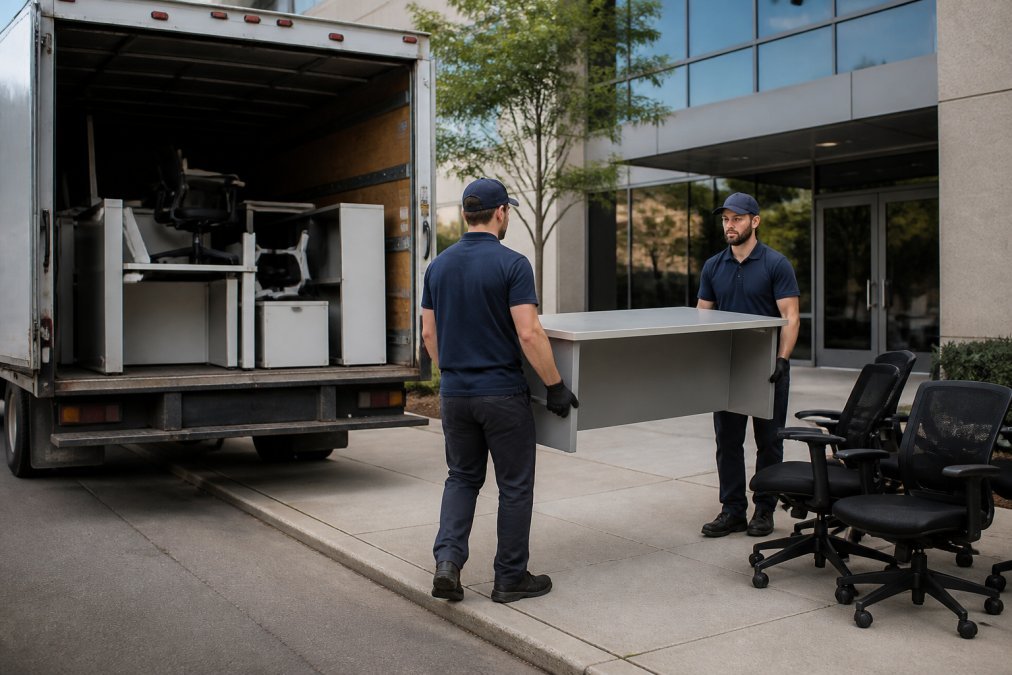
A full-service office cleanout covers more than carrying things to a truck:
- On-site estimate before any work begins
- Cubicle dismantling and workstation removal
- Desk removal, filing cabinets, conference tables, and ergonomic chairs
- Heavy lifting from any floor, including stairwells when elevators are booked
- Loading, transport, and cleanup afterward
- Sorting for recycling, donation, or landfill diversion
Before booking, photograph every item you want gone and email the images with your estimate request. It speeds up the quote and prevents “that wasn’t included” disputes on pickup day.
The Cost of Commercial Junk Removal: What Drives Your Quote
The cost of commercial junk removal depends on four variables: volume, weight, access difficulty, and disposal method. No honest provider quotes a flat number over the phone.
How Free On-Site Estimates Work
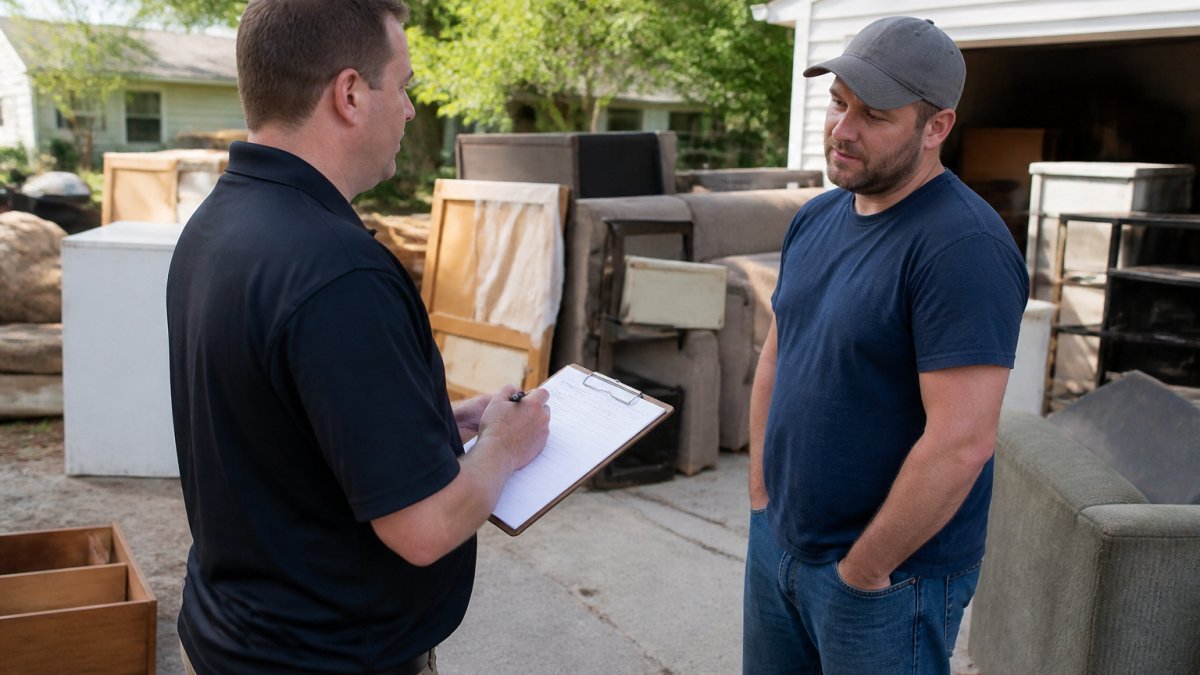
A legitimate free estimate means no charge, no obligation. A crew member walks the space, counts items, checks access points, and gives you a written number. If a provider wants money before the walkthrough, walk away.
How the Office Furniture Removal Process Works, Step by Step
The removal process follows a predictable sequence, and knowing it helps you avoid delays on pickup day. For a multi-floor cleanout, each step has a building-side dependency that can stall the job if not handled in order.
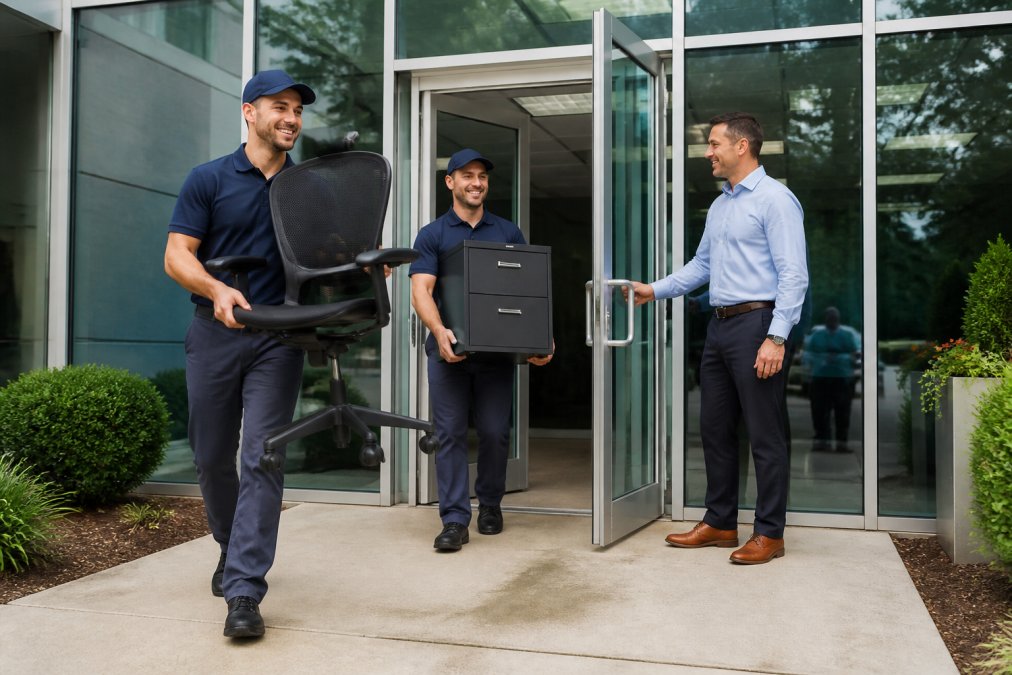
- Book your estimate. Call or book online and describe the scope. For commercial jobs, mention building type, floor count, and whether freight elevator access is required.
- Confirm access logistics. Share freight elevator windows, dock reservations, and building management requirements. If the building requires a COI, request its insurance specifications in writing.
- Submit your certificate of insurance. Most commercial buildings require a COI from any contractor before entry. Send the building’s requirements early, a COI can usually be issued within a business day, but building management review can take longer.
- Crew arrives and stages. The team protects floors and doorways, then sorts items into keep, donate, recycle, and dispose piles. On multi-floor jobs, staging areas sit near the freight elevator or dock to minimize carry distance.
- Heavy lifting and loading. Everything comes out, including items in stairwells and back rooms. If the elevator window is tight, the crew may stage items in a hallway between runs.
- Sweep and hand back the space. The crew cleans up before leaving. Confirm in advance whether this includes vacuuming and removal of debris like screws, brackets, and packing material.
Multi-Floor Logistics: Freight Elevators, COIs, and Docks
Multi-floor logistics are where amateur haulers fail. A certificate of insurance proves a contractor carries liability coverage, and most property managers will not let a crew past the lobby without one. Freight elevators need advance booking, and missing your dock window means rescheduling the whole job.
What Actually Goes Wrong on Multi-Floor Jobs
The failure modes are predictable, and rarely involve the furniture:
- COI wording rejected. Building management may require the property owner named as an additional insured with specific minimum limits. A generic COI gets bounced and the crew is turned away.
- Elevator window missed. Freight elevators are shared. If the prior tenant’s move runs long, your window shrinks.
- Dock reservation mismatch. The dock and elevator windows must align. If the dock is booked for 8 a.m. and the elevator for 10 a.m., the truck sits idle.
- After-hours rules discovered late. Some buildings prohibit moves during business hours, so a daytime quote may only be possible at night.
- Stairwell-only access. Older buildings without freight elevators force crews into stairwells, adding labor hours and sometimes requiring extra crew for safety.
Questions to Ask Building Management Before You Book
A short email to the property manager prevents most delays:
- What are the insurance requirements for a contractor, and where do I send the COI?
- How far in advance must a freight elevator be reserved, and what are the available windows?
- Is there a loading dock, and does it require a reservation?
- Are moves restricted to after-hours or weekends?
- Is there a building fee or deposit for move coordination?
Forward the building’s written requirements directly to your removal provider. A COI request that arrives with the building’s exact wording and limits attached gets processed faster than one that requires a follow-up call.
What Happens to Your Furniture: Recycling, Donation, and Resale Value
Responsible disposal starts with sorting. Office furniture falls into four material streams, each with a different end-of-life path.
Furniture Resale Value Assessment: What Holds Value and What Does Not
Before hauling everything as trash, run a quick resale screen. The pattern most used-office-furniture dealers follow is consistent:
- Holds value: Steelcase, Herman Miller, Knoll, and Haworth task chairs and systems furniture; solid wood executive desks; large conference tables with real wood tops; name-brand filing systems in working condition.
- Sometimes holds value: Mid-grade laminate workstations less than five years old; adjustable-height desks from recognizable brands; matching conference room sets.
- Rarely holds value: Particleboard bookcases, generic cubicle panels, mismatched task chairs, anything with water damage, broken casters, or missing hardware.
Tracking Sustainability for Your Business
If your company publishes an annual sustainability or ESG report, a furniture cleanout is a measurable event. Ask your removal provider for a diversion report listing:
- Total weight removed
- Weight diverted to recycling
- Weight donated
- Weight sent to landfill or waste-to-energy
- The diversion rate as a percentage
The single biggest mistake in an office cleanout is hauling everything as trash. Sorting for donation and recycling first, then disposal, keeps usable furniture out of landfills, can reduce your total disposal cost, and gives you documentation you can use in a sustainability report.
How to Donate Office Furniture and Claim the Tax Deduction
Donating office furniture starts with confirming the charity accepts furniture and can provide a receipt. Not every organization takes desks or chairs, and some require working condition. Goodwill and Habitat for Humanity ReStore accept furniture at many locations, but rules vary by store, call ahead with photos and dimensions before scheduling a drop-off or pickup.
Documentation the IRS Expects
For tax deduction documentation, the IRS requires a written acknowledgment from the charity. For non-cash contributions, the rules scale with value:
- Under $250: A receipt or bank record showing the charity name and date is generally sufficient.
- $250 to $500: You need a written acknowledgment from the charity that describes the property and states whether any goods or services were provided in exchange.
- Over $500: You must also complete Form 8283, Section A, and attach it to your return.
- Over $5,000: A qualified appraisal is generally required, and Form 8283, Section B, must be signed by the appraiser.
A charity receipt that only says “miscellaneous furniture” will not survive scrutiny. Ask the charity to itemize categories (e.g., “3 task chairs, 2 desks, 1 conference table”) and keep your own photos and inventory list as backup.
Commercial Office Cleanout Services: Who They’re For and How to Book
Commercial office cleanout services fit businesses that are relocating, downsizing, closing a location, or clearing out after a tenant turnover. Property managers use them for recurring unit cleanouts, contractors use them for job site debris, and business owners use them for e-waste and warehouse clutter.
Certificate of Insurance (COI)
Most commercial property managers require any contractor entering the building to provide a certificate of insurance naming the property owner or manager as an additional insured. The COI proves the removal company carries general liability coverage and usually must be on file before the crew passes the lobby. Request the building’s insurance requirements early, some managers want specific minimum limits (commonly $1 million per occurrence) and wording.
Freight Elevator and Loading Dock Logistics
Freight elevators in commercial buildings are shared and must be reserved in advance, sometimes days or weeks ahead in a busy tower. Loading docks often have assigned windows, and missing yours can mean rescheduling the entire job. Confirm three things before pickup day:
- The COI is on file with building management.
- The freight elevator is booked for a specific window that matches the crew’s arrival.
- The dock reservation matches the elevator window and the crew’s schedule.
After-Hours and Weekend Scheduling
Many office buildings restrict moves to nights and weekends to avoid disrupting tenants, especially multi-tenant towers and medical buildings. After-hours scheduling usually carries a premium, but it is often the only option. Ask your provider whether they routinely work after-hours jobs and whether the quote reflects that premium, a weekday daytime quote will not hold if the building requires a Saturday night move.
Booking Is Straightforward, If You Start Early
Booking is straightforward: request a free on-site estimate, confirm scope and access logistics, and schedule a pickup window. Same-day service is available when possible, which matters when a lease deadline is days away. But for multi-floor commercial jobs, the building’s requirements, not the removal company’s calendar, are usually the bottleneck.
Do not wait until the week of your lease deadline to book. Freight elevator windows and dock reservations fill up fast in commercial buildings, and a missed window can push your cleanout past your move-out date. Start the COI and elevator reservation process at least two weeks before your target date.
How to Donate Office Furniture and Claim the Tax Deduction
For tax deduction documentation, the IRS requires a written acknowledgment from the charity for any donation, and Form 8283 for non-cash contributions above certain thresholds. Keep an itemized list with descriptions and fair market values, and photograph items before donation. Consult a tax professional about your specific situation, since deduction rules depend on your business structure.
Commercial Office Cleanout Services: Who They’re For and How to Book
Commercial office cleanout services fit businesses that are relocating, downsizing, closing a location, or clearing out after a tenant turnover. Property managers use them for recurring unit cleanouts, contractors use them for job site debris, and business owners use them for e-waste and warehouse clutter.
Frequently Asked Questions
How do I dispose of large quantities of office furniture?
Book a full-service junk removal company that handles bulk item removal in one visit. The crew dismantles cubicles, removes desks and conference tables, and hauls everything to a recycling facility, donation center, or landfill. Trying to dispose of 50+ pieces yourself means multiple trips, dumpster rentals, and heavy lifting. A professional crew clears a typical office suite in a few hours, and Hoosier Junk Daddy diverts up to 60% of items from landfills through recycling and charitable donation.
What is the most cost-effective way to remove old cubicles?
The cost of commercial junk removal depends on volume, labor, and disposal fees, so the cheapest route is usually a single full-service pickup instead of multiple dumpster rentals. Cubicle dismantling is labor-intensive; a professional crew with the right tools finishes faster and avoids damage to walls and elevators. Get a free on-site estimate first, and ask whether donatable items can be separated out, since donation reduces disposal fees and may qualify you for a tax deduction.
Are there tax benefits to donating office furniture?
Yes, in many cases. If your business donates gently used furniture to a qualified 501(c)(3) organization, you may be able to claim a charitable contribution deduction on your federal tax return. The IRS generally requires documentation for noncash donations, including a receipt and, for larger gifts, Form 8283. Keep an itemized list of desks, chairs, and filing cabinets with fair market values, and confirm the receiving charity provides a written acknowledgment.
How long does a professional office furniture removal take?
A single office suite with 20 to 30 workstations typically takes two to four hours with a professional crew. Larger spaces with multiple floors, cubicle dismantling, or freight elevator scheduling can take a full day. Booking ahead helps, especially for end-of-month lease deadlines, and same-day service may be available when the schedule allows. Confirm the scope during your free on-site estimate so you know exactly how long the job will take.
Clearing an office is a logistics problem before it is a hauling problem. Hoosier Junk Daddy handles both: free on-site estimates, transparent pricing, full-service removal with cleanup, and recycling or donation for up to 60% of hauled items. We are locally owned, we book same-day service when possible, and we work directly with property managers on recurring cleanouts. Get started with Hoosier Junk Daddy and reclaim your space without the weekend truck rental.